

Key Takeaways
- Sedating pets for air travel is generally discouraged by veterinary organizations due to documented safety risks.
- Sedated animals lose the ability to balance and regulate body temperature, increasing danger at altitude.
- Anxiety-reduction alternatives - like crate training and pheromone products - are safer and often more effective.
- Any sedation or calming medication must be discussed with a licensed veterinarian before travel.
- Individual health factors, breed, and travel method all affect what's appropriate for a specific pet.
Why the Sedation Question Keeps Coming Up
It's a completely understandable instinct: your pet is anxious, travel is stressful, and sedation sounds like a humane shortcut to a calmer journey. Millions of American families face this question every year before road trips, flights, and long relocations. The problem is that the assumptions behind it - that sedation is safe, effective, and vet-approved as standard practice - don't hold up well under scrutiny.
This article walks through the most common myths pet owners carry into travel planning and replaces them with what veterinary guidance actually says. For a broader overview of safe travel preparation, see our end-to-end pet travel guide.
Myth
Sedating my pet will make flying less stressful and completely safe for them.
Fact
Major veterinary organizations, including the American Veterinary Medical Association, have cautioned against routine sedation for air travel due to documented risks.
At altitude, sedated animals have reduced ability to maintain balance and regulate their cardiovascular and respiratory systems. In the cargo hold - where temperature and pressure can fluctuate - a sedated pet may be less able to respond to distress. The risk is highest in brachycephalic (short-nosed) breeds like bulldogs and pugs, but it applies broadly. Stress reduction is a legitimate goal; sedation is not the default safe route to get there.
Myth
If a medication calms my pet at home, the same dose will work just as well during travel.
Fact
Travel introduces physiological stressors - motion, noise, pressure, confinement - that can dramatically alter how a pet responds to a sedative.
A dose that produces mild relaxation in a quiet home environment may cause excessive sedation, disorientation, or cardiovascular depression when the animal is already physiologically stressed. This is one reason vets frequently recommend a trial run of any prescribed calming medication before the actual travel day - to observe the pet's individual response in a lower-stakes setting.
Myth
Over-the-counter calming products sold at pet stores are basically the same as sedatives.
Fact
Most OTC calming products - supplements, chews, sprays - are not sedatives and work through different, generally milder mechanisms, if they work at all.
Ingredients like L-theanine, melatonin, and chamomile extract appear in many pet calming products. Some have limited evidence of mild benefit for low-level anxiety; none are equivalent in effect to prescription sedatives. That's mostly good news - their safety profile is generally more favorable - but owners shouldn't expect them to address severe anxiety or replace a conversation with their vet about a genuinely distressed animal.
Myth
Cats handle sedation better than dogs, so it's a safer choice for feline travelers.
Fact
Cats face the same core risks from travel sedation as dogs, and in some respects their physiological response to sedatives in stressful conditions is harder to predict.
Cats are often more sensitive to environmental stressors than dogs and tend to mask discomfort until it becomes severe. Sedating a cat before travel doesn't eliminate the underlying stress response - it may simply suppress visible signs while the animal's body continues reacting. Feliway-type pheromone products and carrier familiarization are typically recommended as first-line approaches for cats, with any medication decisions made by a vet familiar with that individual cat's history.
Myth
Sedation is the only real option for pets with diagnosed anxiety disorders.
Fact
Pets with diagnosed anxiety conditions may actually be poorer candidates for travel sedation and often benefit more from structured behavioral preparation combined with vet-guided medication strategies.
A pet with generalized anxiety may already have an elevated baseline stress response, which travel compounds further. In these cases, vets sometimes discuss longer-term behavioral interventions, situational prescription medications specifically designed for anxiety (not sedatives), or - in some situations - whether travel is appropriate at all. The Pet Care Basics hub is a useful starting point for understanding your pet's overall wellbeing framework.
Safer Alternatives Worth Knowing
The good news: anxious pets aren't without options. Behavioral strategies, environmental modifications, and - when appropriate - veterinarian-prescribed medications designed specifically for travel anxiety are all on the table.
~1 in 3
Pets estimated to show travel-related anxiety
Veterinary behaviorists estimate a significant proportion of pets experience stress during car or air travel, though individual variation is high.
Trial run
Recommended before any new travel medication
Veterinary guidelines consistently advise testing any calming or anxiety medication at home before the travel day to observe individual response and adjust dosing.
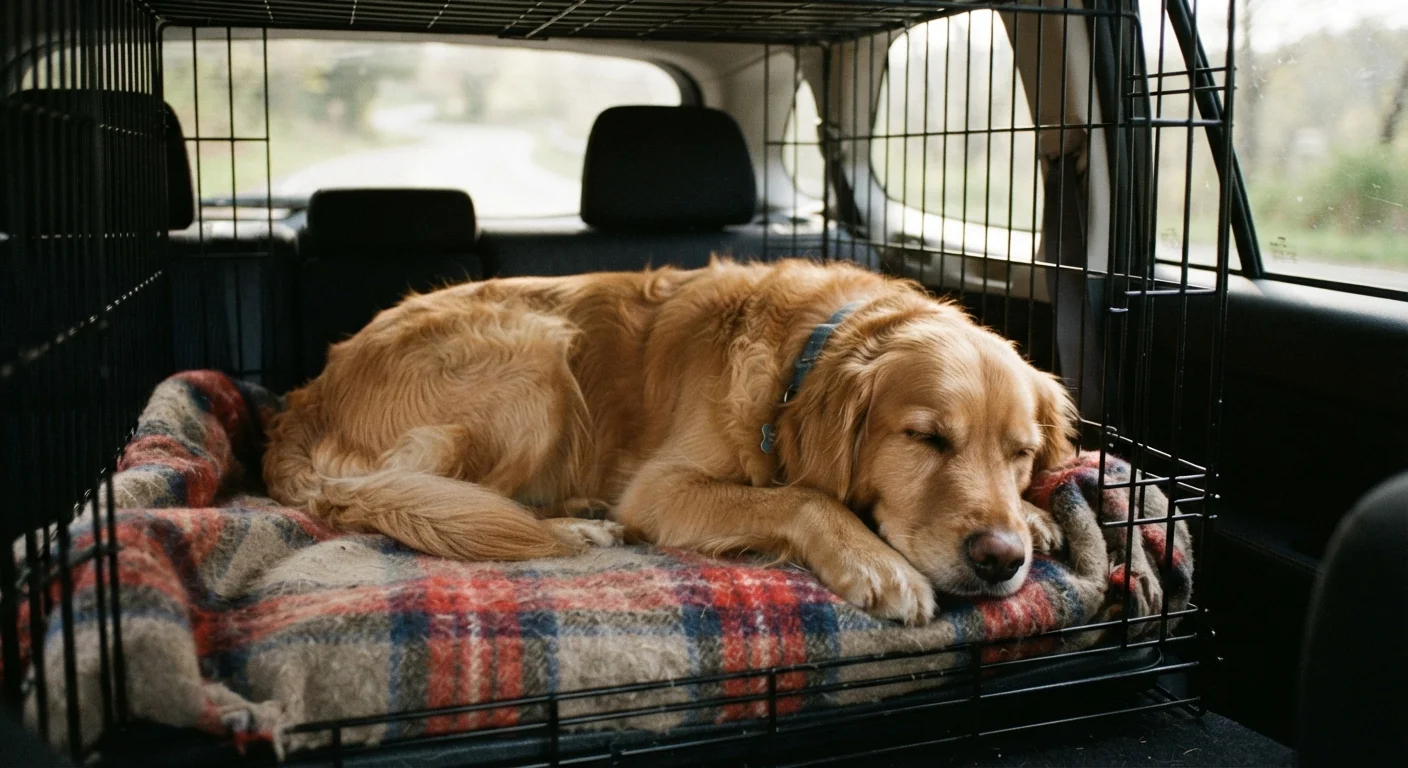
Crate conditioning is one of the most consistently recommended approaches. When a crate becomes a familiar, positive space at home, many pets experience it as a refuge rather than a trap during travel. Pheromone sprays and collars (synthetic versions of naturally calming compounds) have some evidence supporting their use for mild anxiety, though results vary by individual animal.
For pets with more significant anxiety, a vet may discuss anti-nausea medications, situational anti-anxiety prescriptions, or other options appropriate to the animal's health profile. The key phrase is your vet - these aren't decisions to make based on online forums or a neighbor's experience. Our guide on keeping anxious pets calm on long journeys covers evidence-informed strategies in detail.
Never Give Human Medications to Your Pet
Some owners consider giving pets human antihistamines or anti-anxiety drugs they have at home. This is dangerous. Many human medications are toxic to cats and dogs, and safe human doses can be lethal to animals. Only give your pet medications that have been explicitly approved for that animal by your veterinarian.
Dog owners planning road trips specifically should explore keeping your dog calm on long car rides for practical, vet-aligned techniques. And before any long trip, a pre-travel checkup is worth scheduling - what vets actually recommend before a long trip explains exactly what that visit typically covers.
This article is for general informational purposes only and is not a substitute for veterinary advice. Always consult a licensed veterinarian before making any decisions about your pet's health or travel medications.