

Key Takeaways
- The cabin filter cleans air entering the passenger compartment; the engine filter cleans air entering the engine - they serve completely separate purposes.
- Engine air filters typically need replacement every 15,000-30,000 miles; cabin filters generally every 15,000-25,000 miles, though driving conditions matter.
- A clogged engine filter can reduce fuel economy and strain the engine; a dirty cabin filter can worsen interior air quality and reduce HVAC airflow.
- Both filters are usually accessible without specialized tools, though replacement complexity varies by vehicle model.
- Inspect both filters at every major service interval - visible dirt alone doesn't always tell the full story.
Option A
Cabin Air Filter
The passenger protection filter - keeping your interior air breathable.
Best for: Drivers concerned with air quality inside the vehicle, especially those with allergies or who frequently drive in urban or dusty environments.
Option B
Engine Air Filter
The performance protection filter - keeping combustion clean and efficient.
Best for: Any driver who wants to protect engine longevity, maintain fuel efficiency, and avoid costly mechanical damage from airborne contaminants.
If you notice reduced airflow from your vehicle's vents or increased dust inside the cabin
Cabin Air Filter
A clogged cabin filter directly restricts airflow through the HVAC system and allows more airborne particles into the passenger space. Replacing it is the first corrective step.
If your fuel economy has dropped or your engine feels sluggish
Engine Air Filter
A restricted engine air filter reduces the air supply needed for proper combustion, which can affect power output and fuel efficiency. This is the filter to inspect first.
If you drive frequently on unpaved roads or in high-pollution areas
Engine Air Filter
Dusty or heavily polluted environments accelerate engine filter contamination, making more frequent inspection and earlier replacement advisable to protect engine internals.
If you or your passengers have respiratory sensitivities or allergies
Cabin Air Filter
The cabin filter is your vehicle's first line of defense against pollen, dust, and fine particulates inside the car. Keeping it clean meaningfully improves interior air quality.
What Each Filter Actually Does
Most drivers know their car has an air filter - but fewer realize there are two, each doing a completely different job in a completely different location.
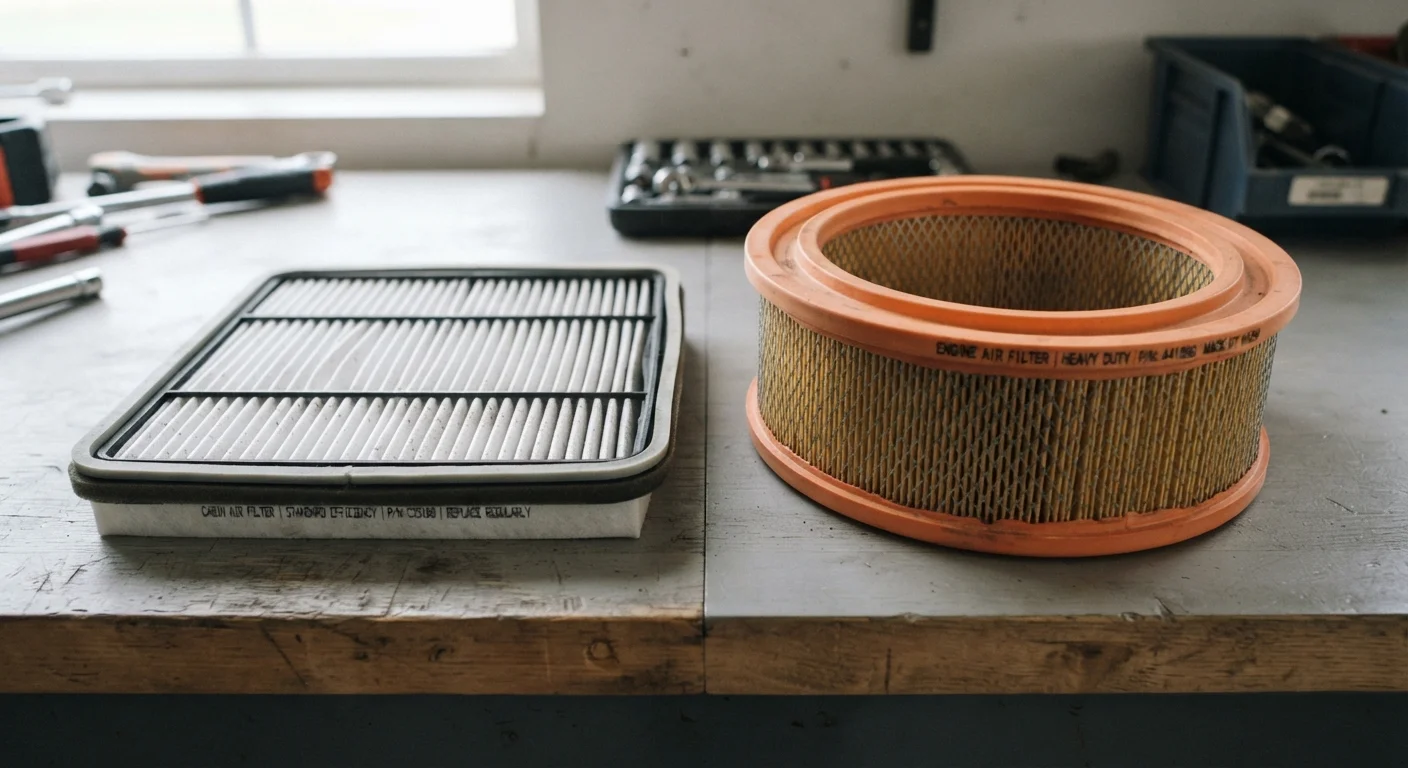
The engine air filter sits between the outside air intake and your engine's combustion system. Its job is to trap dust, dirt, insects, and debris before they can enter the engine. Internal combustion engines mix air with fuel to generate power, and that air must be clean. Even small abrasive particles can cause accelerated wear on cylinder walls, pistons, and other precision components over time.
The cabin air filter, by contrast, is positioned in the HVAC (heating, ventilation, and air conditioning) system - typically behind the glove box or under the dashboard. It filters the air that flows into the passenger compartment through your vents. It captures pollen, dust, mold spores, and fine particulates before they reach you and your passengers. Some cabin filters also include activated carbon layers designed to reduce odors and gaseous pollutants. For a deeper look at filtration standards like HEPA and what they actually capture, see our guide to HEPA filtration.
| Criterion | Cabin Air Filter | Engine Air Filter |
|---|---|---|
| Primary function | Filters air entering passenger cabin | Filters air entering engine combustion system |
| Location | HVAC system, often behind glove box | Engine bay, inside the air intake airbox |
| What it protects | Passengers - from pollen, dust, pollutants | Engine internals - from abrasive particles |
| Typical replacement interval | Every 15,000-25,000 miles | Every 15,000-30,000 miles |
| Signs it's overdue | Weak airflow, musty odor, more interior dust | Reduced fuel economy, sluggish acceleration |
| Impact if neglected | Poor cabin air quality, HVAC strain | Engine wear, reduced efficiency |
Replacement Intervals and Warning Signs
Neither filter lasts forever, and both have consequences when neglected - just different ones.
Engine Air Filter
A general rule of thumb is replacement every 15,000 to 30,000 miles, but this range shifts considerably based on environment. Drivers who regularly travel on dirt or gravel roads, or who live in areas with heavy airborne dust, may need to inspect and replace theirs more frequently. Symptoms of a severely restricted engine filter can include a noticeable drop in fuel economy, reduced acceleration, or a rough idle - though these symptoms can also stem from other causes, so a filter inspection should be part of broader diagnostics.
Cabin Air Filter
Cabin filters are often recommended for replacement every 15,000 to 25,000 miles, or roughly once a year for average drivers. Signs that it's overdue include reduced airflow from your vents even at high fan settings, musty or stale odors when the HVAC runs, or noticeably more dust settling on your dashboard. If you or a regular passenger has allergies, staying on top of this interval is particularly worthwhile.
25,000 mi
Max typical cabin filter service interval
Many vehicle manufacturers specify cabin filter inspection or replacement within a 15,000-25,000 mile window under normal driving conditions.
30,000 mi
Max typical engine filter service interval
Engine air filter replacement intervals commonly range from 15,000 to 30,000 miles, with shorter intervals recommended for dusty or off-road driving conditions.
Always check your vehicle owner's manual for the manufacturer's specific recommendation - it overrides any general guideline.
DIY Access and What to Expect
Both filters are among the more accessible maintenance items on most vehicles, and many drivers choose to inspect or replace them at home. That said, ease of access varies by make and model.
The engine air filter is usually housed in a plastic airbox near the top of the engine bay, secured by clips or a few screws. On most vehicles, the process involves opening the airbox, removing the old filter, and inserting the new one in the correct orientation - typically a 10-15 minute job. However, on some turbocharged or compact-engine vehicles, the airbox may be more tightly packaged, requiring a bit more effort to reach.
The cabin air filter is most commonly accessed behind the glove box - many designs require you to release retention tabs and lower the glove box door to reveal the filter housing. On other vehicles, it's located under the dashboard on the passenger side or beneath a cover at the base of the windshield. Consult your owner's manual or a vehicle-specific guide before starting, as forcing the wrong panel can cause damage.
If you're unsure about either replacement, a qualified mechanic can handle both quickly during a routine service visit. It's a low-complexity job professionally, and having it done as part of a scheduled service is a reasonable approach if you prefer not to DIY.
This article is for general informational purposes. Always refer to your vehicle's owner's manual and consult a qualified mechanic for maintenance decisions specific to your vehicle.