

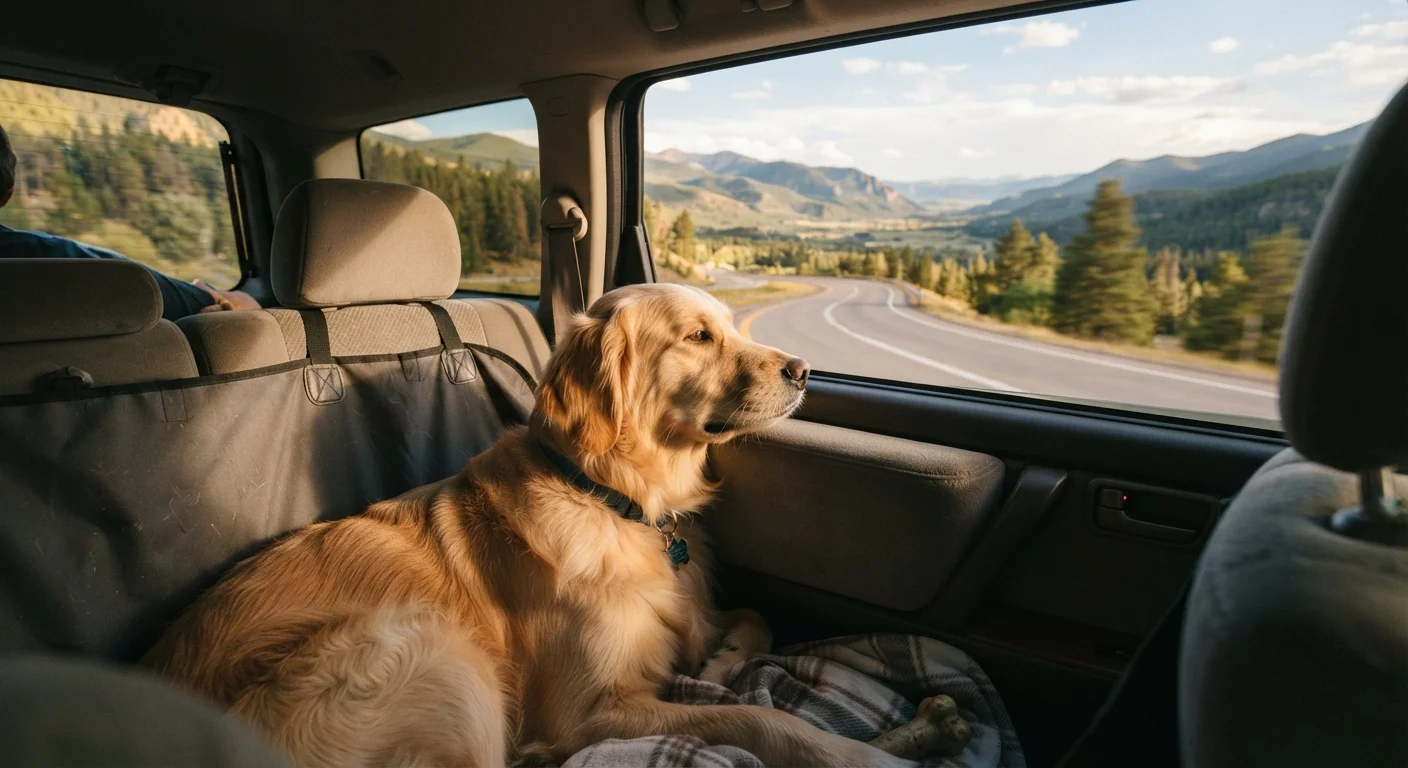
Key Takeaways
- Travel anxiety in pets is common and rooted in biology - not disobedience or stubbornness.
- Gradual crate and car desensitization before the trip is one of the most effective calming strategies available.
- Familiar scents, consistent routines, and scheduled breaks reduce stress significantly during long journeys.
- Always consult a veterinarian before using any calming supplement or medication for travel.
- Recognizing early stress signals lets you intervene before anxiety escalates into a crisis.
Why Travel Stresses So Many Pets
Most pets are creatures of habit. Their sense of safety is tied to familiar smells, routines, and spaces - so the moment you load them into a carrier and hit the highway, their nervous system starts firing distress signals. Motion, engine noise, unfamiliar roadside stops, and the absence of their usual environment all register as potential threats.
Dogs and cats process the world through scent above almost anything else. A car interior - full of exhaust fumes, synthetic upholstery, and the stress pheromones of previous anxious rides - can feel genuinely overwhelming. For cats especially, even the carrier itself may trigger panic if it only ever appears before a vet visit.
Understanding that this response is biological, not behavioral, is the first shift every traveling pet owner needs to make. Your pet isn't being dramatic. They're doing exactly what their nervous system was built to do in an unpredictable situation. The good news: that same nervous system can be gradually reconditioned. See our end-to-end travel guide for pet owners for broader planning context.
Evidence-Informed Practices for Calmer Journeys
The following approaches are grounded in veterinary behavioral science and widely recommended by animal welfare organizations. No single method works for every pet - combining several strategies tends to produce the best results.
Desensitize your pet to their carrier weeks before departure.
A carrier associated only with vet visits becomes a stress trigger the moment it appears. Gradual positive associations - feeding meals near it, placing familiar bedding inside, letting the pet explore voluntarily - rewire that association over time. This is one of the most evidence-backed interventions in animal behavioral science.
Take short practice drives before the long one.
Many pets have only experienced car rides that end at the vet or groomer - both stressful destinations. Short drives that end somewhere pleasant (a park, a sniff-walk, back home) help rebuild the emotional context around car travel. Motion sickness, which is common in young animals, also tends to diminish with repeated low-stakes exposure.
Maintain your pet's normal feeding and rest schedule on travel days.
Disruption to routine is itself a stressor for most domesticated animals. Eating at familiar times, sleeping in familiar positions, and having access to their usual water bowl and bedding signals that core elements of life remain stable even when the scenery changes.
Plan regular stops that allow for movement and decompression.
Sustained confinement without breaks compounds anxiety and physical discomfort. For dogs especially, structured sniff breaks at rest stops allow the nervous system to reset. Even cats benefit from having a carrier door opened briefly in a quiet, secure location to allow stretching.
Use calming pheromone products as a complementary, not standalone, tool.
Synthetic pheromone sprays and diffusers that mimic species-specific calming signals (such as dog-appeasing pheromone or feline facial pheromone analogs) have a reasonable evidence base for reducing anxiety in some animals. They work best when combined with behavioral preparation, not used as a last-minute fix.
If your pet shows signs that go beyond typical travel nerves - such as uncontrolled trembling, vomiting, or self-injury - that's a signal to loop in your vet before the next trip. You may also find it helpful to review how pets mask discomfort, since travel distress and physical pain can sometimes look similar.
Quick Wins You Can Act on Right Now
Not every family has weeks to prepare before a road trip. These high-impact actions can be put into motion immediately and will make a meaningful difference even on short notice.
For dog-specific road trip strategies, our guide to keeping dogs calm on long car rides goes deeper on breed considerations and motion sickness management.
A Note on Sedation and Calming Products
Many pet owners assume that sedating an anxious animal is the kindest option. Veterinary guidance is more nuanced than that. Sedatives can suppress the physical signs of stress without resolving the emotional experience - and at altitude in a cargo hold, certain sedatives carry documented risks to respiratory and cardiovascular function.
Always Consult Your Vet Before Medicating
No calming product - prescription or over-the-counter - should be given to a traveling pet without veterinary guidance. Dosing, timing, and drug interactions vary by species, weight, age, and health history. Your vet can also help you do a trial run at home so you know how your individual pet responds before the travel day itself.
Over-the-counter calming supplements - including products containing ingredients like L-theanine or melatonin - are widely marketed but vary significantly in quality and evidence base. Some pets respond well; others don't. None should be given without a vet's input, particularly for animals with existing health conditions. Our companion piece myths about sedating pets for travel walks through the evidence in detail.
“The goal isn't a sedated pet - it's a pet who has learned, through repeated positive experience, that travel doesn't mean danger. Behavior modification takes longer than a pill, but the results are more durable and genuinely kinder to the animal.”
— Dr. Karen Overall, Veterinary behaviorist and author of works on clinical behavioral medicine in animals
If you're traveling with more than one pet, the logistics multiply quickly. Traveling with multiple pets offers a practical framework for keeping the whole crew settled.