

Key Takeaways
- Multi-pet travel requires individualized prep for each animal, not a one-size-fits-all approach.
- Vehicle space, separate containment zones, and feeding logistics are the three biggest friction points.
- Planning rest stops around the neediest pet's schedule keeps the whole group more settled.
- Costs multiply quickly when traveling with more than one pet - budget accordingly before you go.
- Inter-pet dynamics at home don't always hold during travel stress; plan for containment contingencies.
What you will need
Why Multi-Pet Travel Is a Different Beast
Bringing one pet on a trip is a logistics puzzle. Bringing two or more is a logistics puzzle inside a moving vehicle, on a schedule, with competing needs. Dogs and cats that coexist peacefully at home may respond to travel stress very differently - and that gap can surface fast once you hit the highway.
The fundamentals of single-pet travel still apply here. If you haven't mapped out the full picture of what pet travel involves, the end-to-end guide to traveling with pets is a solid starting point. For multi-pet households, though, the variables compound in ways that need their own game plan.
The three areas where families most often run into trouble are space and containment, feeding and medication schedules, and behavioral dynamics under stress. The steps below address each one.
What you will need
Step-by-Step: Building Your Multi-Pet Travel System
Work through these steps during the planning phase - ideally two to three weeks before departure - so nothing gets improvised on the day you leave.
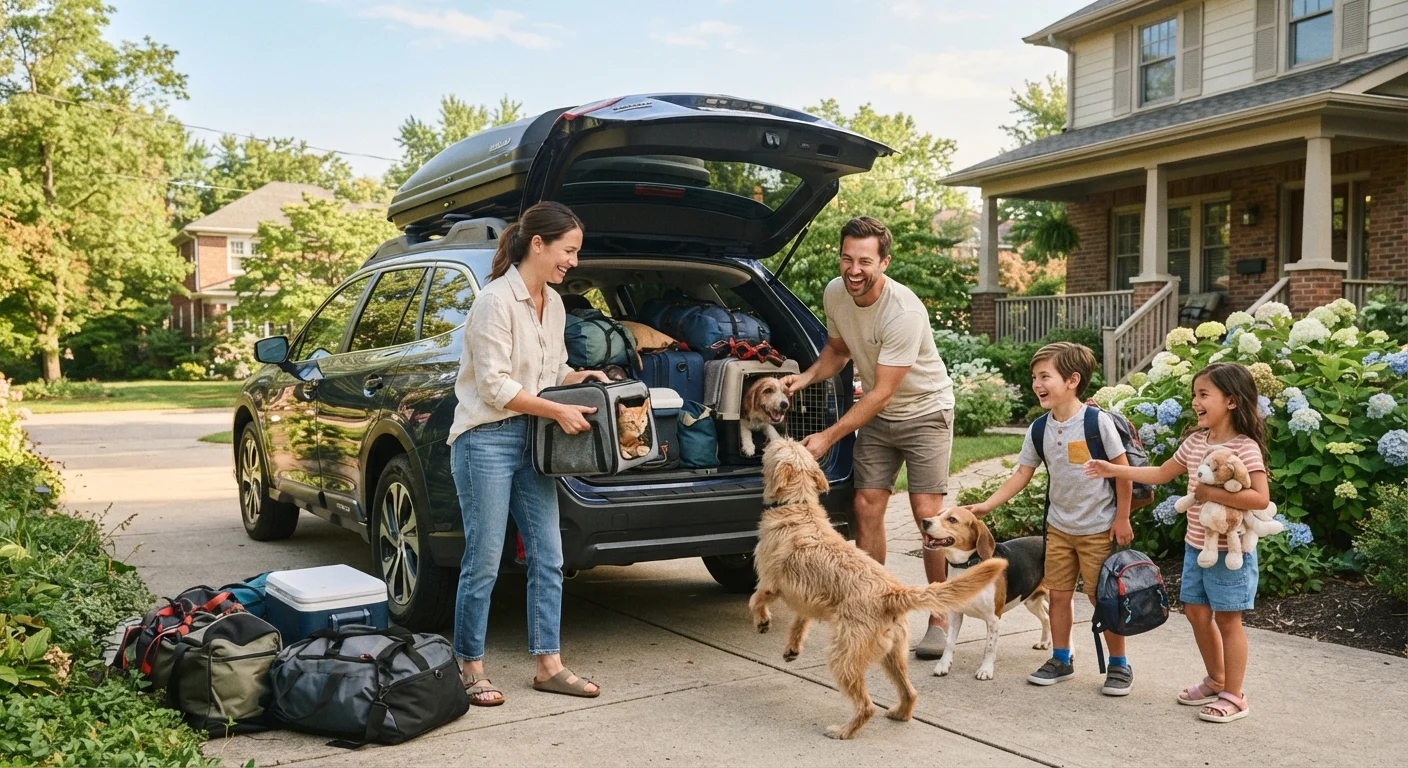
Assign each pet its own containment zone
Every animal should have a dedicated, secured space in the vehicle - not a shared crate unless they already sleep together and travel well together. For dogs, crash-tested harnesses or secured crates prevent movement that can agitate other animals. Cats almost always travel better fully enclosed in a carrier rather than loose or in a mesh-top bag.
Map out your vehicle's layout before packing anything else. The containment plan has to work before the luggage plan does.
Audit inter-pet dynamics honestly
Two dogs that share a couch without issue may become resource-guarders in a small, unfamiliar space. A cat that tolerates a dog at home may panic when contained within a few feet of it for hours. Travel stress compresses normal behavioral tolerances.
If you have any existing tension between animals, increase physical separation in the vehicle and plan to manage rest stops so animals don't overlap in the same unsecured space simultaneously.
Build a single feeding and medication schedule
Write out every animal's feeding times, water needs, and any medications on one consolidated sheet. On travel days, withholding food two to three hours before departure can reduce nausea - but confirm any adjustments with your veterinarian, especially for animals on medications that require food.
Color-code or label supplies clearly so you're not hunting through a packed trunk at a rest stop trying to remember which bag has the senior dog's joint supplement.
Plan rest stops around your highest-need animal
The pet who needs the most frequent breaks, medication, or reassurance sets the minimum stop frequency for everyone. On longer drives, this typically means stopping every two to three hours regardless of whether other animals seem to need it.
At stops, decide in advance who exits the vehicle and in what order. Letting multiple dogs out simultaneously at an unfamiliar roadside area is a management challenge that's easier to prevent than recover from.
Confirm accommodations are genuinely multi-pet friendly
"Pet-friendly" often means one small dog. Call ahead to confirm the property accepts your specific number, species, and sizes of animals. Ask about weight limits, breed restrictions, and whether pets can be left unattended in the room - policies vary widely and are rarely spelled out on booking pages.
The full-trip approach to pet-inclusive family vacations covers accommodation research in more depth if you're planning a longer itinerary.
Pack a dedicated multi-pet emergency kit
One kit for all pets is fine, but it needs to account for each animal's specifics: separate medical records, any prescription medications clearly labeled by pet, and a photo of each animal individually in case one gets separated. Include the name and contact for a veterinarian near your destination in case of illness.
For anxious travelers in the group, review strategies for keeping anxious pets calm on long journeys - some approaches, like familiar scent items, cost nothing and can meaningfully reduce distress.
Travel Can Disrupt Even Well-Bonded Pets
Stress responses during travel can temporarily change how animals interact with each other. Even pets that have lived together for years may show guarding behavior, agitation, or unusual aggression when confined in a moving vehicle. Keep containment zones clearly separated, and don't interpret calm behavior at home as a guarantee of calm behavior on the road.
Keeping Costs and Logistics From Spiraling
Every pet adds a layer of cost: extra carrier fees, additional pet deposits at accommodations, duplicate supplies, and potentially more vet visits before the trip. Families regularly underestimate this - the real cost of pet travel breaks down the categories worth building into your budget from the start.
On the logistics side, a thorough packing list prevents the small failures that derail otherwise solid plans. The pet travel packing list most owners don't think to build is worth running through for each animal individually, not just the household as a whole.
Label Everything by Pet Name
When traveling with multiple animals, identical-looking supplies become a real problem. Label food bags, medication containers, bowls, and even carriers clearly with each pet's name before you pack. A few minutes with a marker at home prevents confusion - and potential health mistakes - on the road.
If the coordination of bringing everyone along is starting to feel genuinely overwhelming, it's worth reading when leaving a pet at home makes sense - sometimes the kindest and most practical choice is a trusted pet-sitter, especially for animals that don't travel well.