

Key Takeaways
- In-cabin travel keeps your pet visible and climate-controlled, but is restricted to small animals that fit under the seat.
- Cargo transport is the only option for larger pets, but carries documented, if statistically rare, risks.
- Brachycephalic (flat-faced) breeds face elevated risk in both cargo and, to a lesser extent, cabin environments.
- Airline policies, breed restrictions, and route limitations vary significantly - always verify directly with your carrier.
- A vet consultation before any flight helps you assess your specific animal's fitness for air travel.
Owner can monitor pet throughout entire flight
Having your pet within arm's reach means you can spot early signs of distress - panting, trembling, or labored breathing - and alert cabin crew if needed. This oversight simply isn't possible when your pet is in the hold.
Passenger cabin is climate-controlled and stable
The cabin maintains human-comfortable temperatures and pressurization, eliminating the temperature-related risks that are among the most cited concerns with cargo transport.
Lower reported incident rates than cargo
DOT incident reporting data has consistently shown that in-cabin pets account for a smaller proportion of reported injuries or deaths relative to cargo pets, though volumes also differ substantially.
Reduces separation anxiety for owner and pet
Many pets are calmed by their owner's presence, scent, and voice. Proximity during a stressful experience like flying can meaningfully reduce anxious behavior for animals that are owner-bonded.
Only available to small animals - strict size limits apply
Most airlines cap in-cabin pets at combined carrier-and-animal weights of 15-20 pounds, excluding the vast majority of dogs and many cats. These limits are enforced at the gate.
Pet must remain in carrier under the seat throughout
Your animal cannot be taken out of the carrier during flight, even on long hauls. For active or anxious pets, hours of confinement in a small enclosed space can itself be a stressor.
Cabin noise and stimulation can increase stress
Engine sounds, announcements, passenger movement, and unfamiliar smells create a sensory environment that some animals find acutely distressing, regardless of owner proximity.
Documented risk of temperature extremes and handling errors
Cargo pets are vulnerable during tarmac delays, extreme weather, and transfer between flights - periods when climate control may be inconsistent and human oversight is reduced.
Brachycephalic breeds face serious respiratory risk in cargo
Flat-faced dogs and cats have compromised airways that are further stressed by temperature changes and reduced oxygen at altitude; many airlines have banned these breeds from cargo transport entirely for this reason.
Separation increases anxiety for owner and some pets
Not being able to see or respond to your pet for the duration of a flight is stressful for owners, and pets without owner-scent proximity may show higher distress behaviors.
Carrier must meet airline-specific hard-sided crate requirements
Cargo-approved crates must meet IATA (International Air Transport Association) standards, which dictate size, ventilation, and construction - requirements that differ from cabin carrier rules and can catch owners off guard.
Our Verdict
In-cabin travel is generally the lower-risk option when your pet qualifies - the proximity, climate control, and owner oversight are real advantages. Cargo is a legitimate and widely used option for larger pets, but it demands careful preparation, airline research, and honest assessment of your animal's health and temperament. Neither option is universally safe or universally dangerous; the right call depends on your pet's size, breed, age, and individual stress profile.
Families with small, healthy pets who can qualify for cabin travel will typically find it the less stressful option; owners of larger or working dogs should focus on choosing a reputable airline with strong cargo pet safety records and consulting their veterinarian well in advance.
Why the Cabin vs. Cargo Decision Matters
Most pet owners assume flying with an animal is a straightforward extension of booking a seat - pay a fee, pack the carrier, done. The reality is that where your pet travels on the aircraft has meaningful implications for their welfare, and the rules governing each option are genuinely different. Understanding those differences before you book can prevent a stressful situation from becoming a dangerous one.
For a broader look at whether flying is even the right call for your family, see our comparison of flying vs. driving with pets. If you're still sorting out the basics of what each transport type involves, this overview of how pets travel on commercial flights is a useful starting point.
Regulations Are Set by Airlines, Not Just the FAA
The FAA sets baseline safety standards for animal transport, but individual airlines write their own pet policies - and they vary considerably on breed restrictions, weight limits, accepted routes, seasonal embargoes, and fees. Always verify current policies directly with your carrier before booking, as rules can change between when you research and when you fly.
In-Cabin Travel: The Advantages and Limits
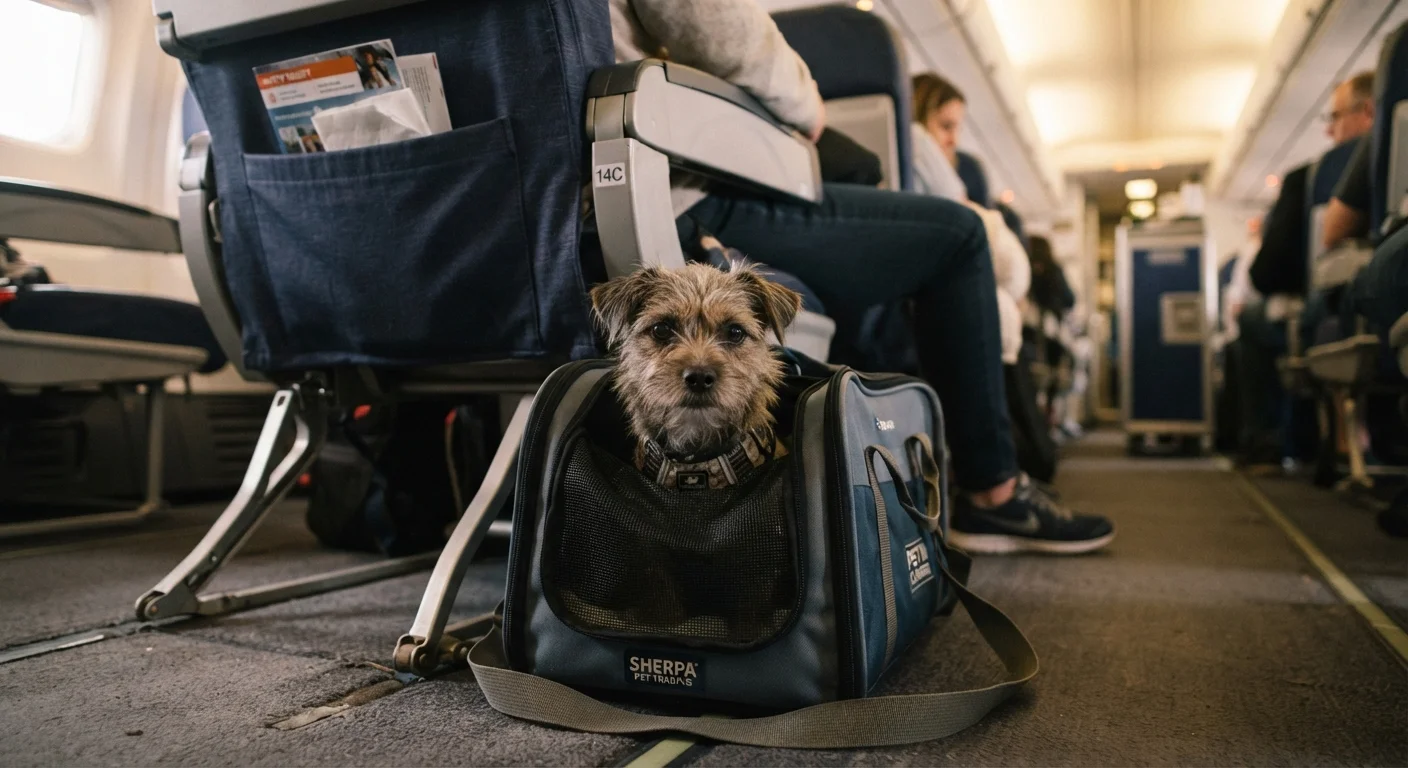
Traveling in the passenger cabin means your pet rides in an approved carrier stored under the seat in front of you for the duration of the flight. This is only available to animals small enough to fit comfortably in that space - typically cats, small dogs, and in some cases small rabbits or birds, depending on the airline.
Owner can monitor pet throughout entire flight
Having your pet within arm's reach means you can spot early signs of distress - panting, trembling, or labored breathing - and alert cabin crew if needed. This oversight simply isn't possible when your pet is in the hold.
Passenger cabin is climate-controlled and stable
The cabin maintains human-comfortable temperatures and pressurization, eliminating the temperature-related risks that are among the most cited concerns with cargo transport.
Lower reported incident rates than cargo
DOT incident reporting data has consistently shown that in-cabin pets account for a smaller proportion of reported injuries or deaths relative to cargo pets, though volumes also differ substantially.
Reduces separation anxiety for owner and pet
Many pets are calmed by their owner's presence, scent, and voice. Proximity during a stressful experience like flying can meaningfully reduce anxious behavior for animals that are owner-bonded.
The proximity advantage is real. You can monitor your pet's breathing, comfort level, and stress signals throughout the flight. The cabin is climate-controlled to human-comfortable temperatures, which eliminates one of the primary risks associated with cargo. That said, the cabin is also noisy, pressurized, and full of unfamiliar smells - some pets find it more stressful than owners expect. Policies differ significantly between carriers, so reviewing what airline cabin pet policies actually mean before booking is essential.
Cargo Travel: Real Risks, Real Mitigations
Checked or cargo pet travel places your animal in a pressurized, temperature-controlled hold - not the unpressurized freight area some owners imagine. For large dogs and other animals that exceed cabin size limits, this is often the only air travel option available.
Only available to small animals - strict size limits apply
Most airlines cap in-cabin pets at combined carrier-and-animal weights of 15-20 pounds, excluding the vast majority of dogs and many cats. These limits are enforced at the gate.
Pet must remain in carrier under the seat throughout
Your animal cannot be taken out of the carrier during flight, even on long hauls. For active or anxious pets, hours of confinement in a small enclosed space can itself be a stressor.
Cabin noise and stimulation can increase stress
Engine sounds, announcements, passenger movement, and unfamiliar smells create a sensory environment that some animals find acutely distressing, regardless of owner proximity.
Documented risk of temperature extremes and handling errors
Cargo pets are vulnerable during tarmac delays, extreme weather, and transfer between flights - periods when climate control may be inconsistent and human oversight is reduced.
Brachycephalic breeds face serious respiratory risk in cargo
Flat-faced dogs and cats have compromised airways that are further stressed by temperature changes and reduced oxygen at altitude; many airlines have banned these breeds from cargo transport entirely for this reason.
Separation increases anxiety for owner and some pets
Not being able to see or respond to your pet for the duration of a flight is stressful for owners, and pets without owner-scent proximity may show higher distress behaviors.
Carrier must meet airline-specific hard-sided crate requirements
Cargo-approved crates must meet IATA (International Air Transport Association) standards, which dictate size, ventilation, and construction - requirements that differ from cabin carrier rules and can catch owners off guard.
The U.S. Department of Transportation requires airlines to report pet incidents including injuries, losses, and deaths occurring during air transport. While the absolute numbers have historically been low relative to the millions of animals transported annually, the incidents that do occur disproportionately involve certain breeds and extreme temperature exposures. Brachycephalic breeds - bulldogs, pugs, Persian cats, and similar flat-faced animals - are at elevated risk due to respiratory anatomy, and many airlines have banned them from cargo entirely. Choosing a direct flight, traveling during moderate-temperature seasons, and selecting an airline with a strong animal handling record are among the steps veterinary and airline industry guidance consistently recommends.
~1 million
Pets transported by air in the U.S. annually
Industry estimates suggest roughly one million animals travel by air each year in the United States, the large majority without incident.
~500+
Pet incidents reported to U.S. DOT per year
The U.S. Department of Transportation publishes annual airline pet incident reports; the figures cover injuries, losses, and deaths across all transport categories.
~50%
Of cargo pet deaths involve brachycephalic breeds
Analysis of DOT incident data by animal welfare researchers has found that flat-faced breeds are disproportionately represented in cargo-related pet fatalities.
What Breed and Health Status Actually Change
Your pet's individual profile matters more than most general advice acknowledges. A young, healthy, medium-energy Labrador may handle a well-managed cargo flight with minimal stress. An elderly dog with a heart condition or a highly anxious cat may struggle even in the cabin. This is why a pre-travel veterinary consultation isn't optional - it's the most actionable step you can take.
Sedation deserves specific mention: major veterinary organizations have generally advised against sedating pets for air travel, because sedation can affect respiratory function at altitude and impair a pet's ability to balance and right itself during turbulence. This is one of several pet travel myths worth examining carefully before you fly. Carrier selection also intersects with both safety and airline compliance - see our guide on soft-sided vs. hard-shell carriers for what actually matters in that choice.
Making the Safest Choice for Your Specific Animal
There's no universal answer here, and any source claiming otherwise is oversimplifying. The decision framework that serves most families well comes down to a few concrete questions: Does your pet physically qualify for cabin travel? Has your veterinarian cleared them for flight? Does your route and airline support the transport type you're considering? Have you researched breed-specific restrictions and temperature windows for your travel dates?
For families still weighing whether air travel is appropriate at all, our article on road trips vs. flying with pets lays out the genuine trade-offs without defaulting to a single answer. The Pet Care Basics hub also has broader guidance on keeping your animal healthy and low-stress through life's logistical moments - travel included.
This article is for general informational purposes only and does not constitute veterinary advice. Always consult a licensed veterinarian before making decisions about your pet's health, travel fitness, or care.