

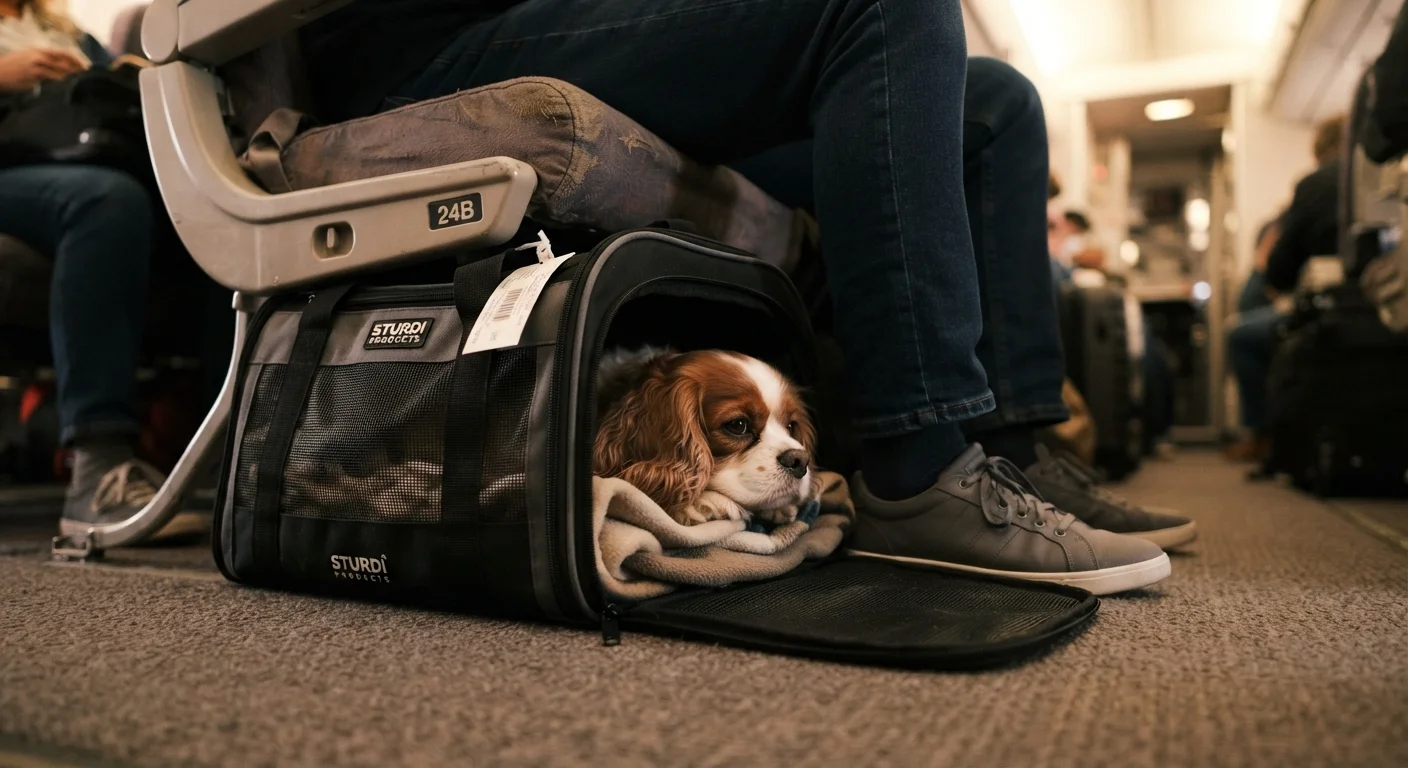
Key Takeaways
- No two airlines share identical pet policies - always read the full rules for your specific carrier.
- Size limits apply to the carrier and the animal combined, not just the pet alone.
- Breed restrictions for snub-nosed dogs and cats are common and strictly enforced at the gate.
- Airlines cap the number of pets per flight and per cabin; reserving early is essential.
- Fees, health certificate requirements, and destination rules can all shift between booking and travel.
Airline Cabin Pet Policy
An airline cabin pet policy is the set of rules a carrier publishes governing whether pets may travel in the passenger cabin - and under what conditions. These rules typically cover which species are allowed, size and weight limits for both the animal and its carrier, how many pets are permitted per flight, and what fees apply. Policies differ significantly from airline to airline and are subject to change.
Cabin pet transport is classified separately from cargo transport by most U.S. carriers and is governed by individual airline contracts of carriage, not a single federal standard - though the DOT does regulate animal incident reporting for airlines.
Why "Pet-Friendly Airline" Doesn't Mean What You Think
Plenty of U.S. airlines advertise cabin pet travel, but that umbrella phrase covers wildly different realities depending on the carrier. One airline may allow pets in every cabin class with a straightforward fee; another may restrict pets to economy, cap the total at four animals per flight, and require a health certificate dated within ten days of departure. These aren't minor footnotes - they're the rules that determine whether your trip happens at all.
This is the core thing to understand: airline cabin pet policies are contracts, not marketing copy. The moment you pay the pet travel fee and your airline confirms the reservation, you've entered into a specific agreement with real conditions. Violating those conditions - even accidentally - can mean your pet is denied boarding.
For a broader look at where cabin travel fits within the full picture of flying with animals, see what pet travel in the U.S. actually involves.
~20 lbs
Typical combined pet-plus-carrier weight limit
This threshold - common across several major U.S. carriers - applies to the animal and carrier together, not the pet alone.
4-6
Average pets permitted per cabin per flight
Most major U.S. airlines cap total in-cabin pets per flight, making early reservation critical on popular routes.
7-10 days
Typical health certificate validity window
Many airlines require a certificate of veterinary inspection issued within this window before the departure date.
Decoding Size, Weight, and Carrier Rules
Most cabin pet policies state a weight limit - commonly around 20 lbs - but what that number refers to isn't always obvious. Some airlines measure only the animal; others measure the pet plus the carrier combined. That distinction matters enormously if your carrier weighs four or five pounds on its own.
Carrier dimensions are equally strict. The bag must slide under the seat in front of you and the pet must be able to stand, turn around, and lie down inside. Here's the catch: "under-seat space" varies by aircraft model. A carrier that fits comfortably on one plane may be too tall on a different jet operated by the same airline. Always look up the specific aircraft dimensions for your route, not just generic airline measurements.
Measure Your Carrier - Then Measure Again
Before your trip, check the exact under-seat dimensions for the specific aircraft type operating your flight, not just the airline's general guidelines. Aircraft vary considerably, and a carrier that works on one plane may not fit on another. Your airline's website often lets you look up equipment by flight number - use it.
Hard-sided carriers are permitted by some airlines but not all. Soft-sided bags are more universally accepted because they compress slightly to fit. Whatever carrier you use, bring documentation of its dimensions - a measuring tape at check-in resolves disputes faster than arguing from memory.
Breed Restrictions: Who Gets Flagged and Why
Breed restrictions are one of the most consequential - and most frequently overlooked - parts of cabin pet policy. Brachycephalic, or snub-nosed, animals are most commonly affected. Breeds like Bulldogs, Pugs, Boston Terriers, Shih Tzus, Persian cats, and Himalayan cats have compressed facial structures that make breathing harder under normal conditions. At altitude, reduced cabin air pressure compounds that risk.
Many airlines restrict these breeds from cabin travel entirely. Others prohibit them only in cargo. A few permit them with caveats. None of these positions are uniform, so you cannot assume one airline's policy applies to another. Common pet travel beliefs don't always match reality - and breed rules are one of the areas where surprises hit hardest at the gate.
The restriction also applies to certain short-nosed rabbit breeds on carriers that allow small rabbits. If you have any non-standard animal, confirm eligibility explicitly with the airline before purchasing anything.
Fees, Per-Flight Caps, and Booking Timing
Pet fees for cabin travel on U.S. domestic flights generally range from roughly $95 to $150 each way, though this varies and can change without much notice. That fee reserves a spot - and spots are genuinely limited. Most carriers allow somewhere between four and six pets total in the main cabin per flight, and some routes sell out those slots well ahead of departure.
Book your pet's space the moment you book your own seat. Don't wait until you've confirmed your plans, packed your bags, or gotten the health certificate - by then, the pet spots may be gone. Note that your pet's carrier counts as your personal item, which typically means you cannot also bring a full-sized carry-on bag under the seat. Plan your packing accordingly.
For a detailed comparison of cabin versus cargo logistics and what each choice actually involves, understand how pets travel on commercial flights before committing to a booking.
“The single biggest mistake pet owners make is assuming that booking confirmation means everything is settled. Every policy element - weight, carrier dimensions, breed eligibility, spot availability - should be treated as something to verify, not assume.”
— Pets & Travel Editorial Team, Editorial guidance based on aggregated airline policy review
Health Certificates and Destination Rules
Health certificate requirements add another layer of planning. A certificate of veterinary inspection - signed by a licensed vet confirming your pet is healthy and up to date on vaccinations - is required by some airlines for domestic cabin travel and by virtually all for international routes. The document typically must be issued within 7 to 10 days of your departure date, which means the vet appointment needs to be timed carefully.
International destinations compound this significantly. Many countries have their own import rules that go far beyond what the airline requires: specific vaccination timelines, microchipping standards, parasite treatments, or waiting periods. These are enforced at the destination border, not the departure gate, so failing to meet them isn't caught until your pet arrives - and the consequences can include quarantine or return.
Always verify requirements with the destination country's official government sources and your airline simultaneously. The two sets of rules must both be satisfied. If you're also evaluating where your pet will stay once you land, understand what pet-friendly lodging actually guarantees before you book accommodation.
This article provides general travel information only. Always verify current policies directly with your airline and relevant government authorities before traveling with a pet, as rules can change.