
Soft-Sided vs. Hard-Shell Pet Carriers: What the Difference Means for Your Journey

Key Takeaways
- Soft-sided carriers are generally required for in-cabin airline travel due to underseat size constraints.
- Hard-shell carriers offer more structural protection and are typically used for cargo or ground travel.
- Ventilation, pet temperament, and trip length should all influence your carrier choice.
- Always verify your specific airline's carrier dimensions and material requirements before purchasing.
Our Verdict
Neither carrier type is universally superior - the right choice depends on your mode of travel, your pet's size and temperament, and the specific policies of the airlines or transport services involved. Soft-sided carriers generally win for in-cabin flights and everyday portability, while hard-shell carriers tend to serve better for cargo travel, car trips, and pets who need firm boundaries.
| Best for | Recommended |
|---|---|
| In-cabin airline passengers | Soft-sided carrier |
| Cargo or checked pet travel | Hard-shell carrier |
| Road trips and car travel | Hard-shell carrier |
| Owners prioritizing portability and everyday use | Soft-sided carrier |
Why the Carrier Type Actually Matters
When you're planning to travel with a pet, the carrier isn't just a container - it's your pet's entire environment for the duration of the journey. The material and structure of that carrier affects how airlines classify it, whether it fits under a seat, how much airflow your pet gets, and how secure your animal feels throughout the trip.
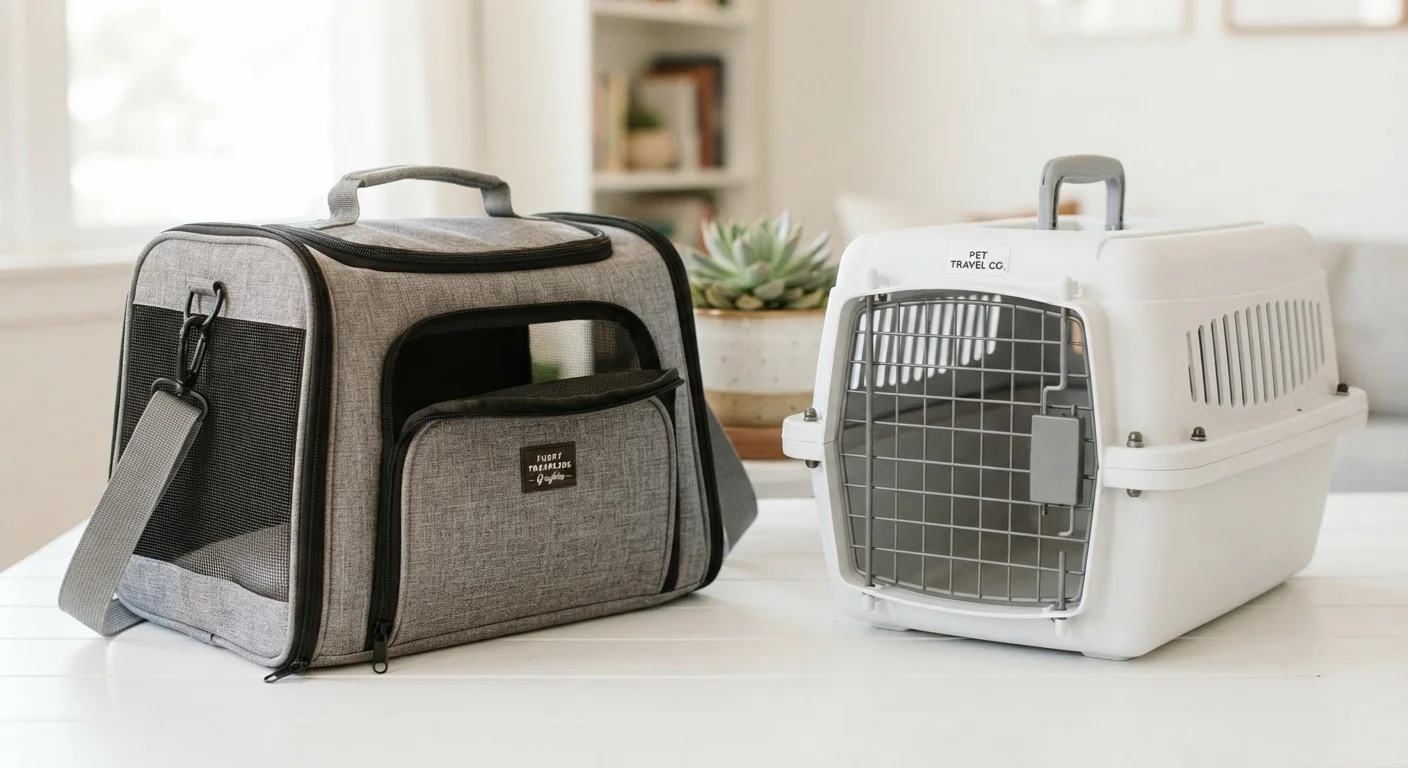
Before you start comparing options, it helps to understand the two main categories: soft-sided carriers, which are made from flexible fabric (typically nylon or polyester) with mesh panels, and hard-shell carriers, which use rigid plastic construction with ventilation slots or grilles. Both types are widely available, but they serve meaningfully different purposes. See our guide to flying vs. driving with your pet to understand how your transport mode should shape this decision from the start.
Soft-Sided Carriers: Flexibility as a Feature
The defining advantage of a soft-sided carrier is its ability to compress slightly, which is exactly what makes it the go-to choice for in-cabin air travel. Most airlines that allow pets in the cabin specify that the carrier must fit under the seat in front of you - and the dimensions of that space vary by aircraft. A soft carrier can flex just enough to conform, while a hard-shell carrier with identical listed dimensions may not.
Beyond fitting under the seat, soft carriers are generally lighter and easier to carry through airports. Many include shoulder straps or top handles, and some convert to backpack style. For pets that travel frequently, the familiar, den-like feel of a soft carrier can also be more calming than a rigid plastic box.
The trade-offs are real, though. Soft carriers offer less protection from crushing or impact - a concern if your bag is jostled in an overhead bin or stacked against hard luggage. They also absorb odors and moisture more readily, which matters on longer trips or with pets prone to anxiety.
Measure Before You Buy
Before purchasing any carrier, measure your pet from nose to tail and from the floor to the top of their head while standing. Your pet should be able to stand, turn around, and lie down comfortably. For in-cabin travel, also measure the underseat space of your specific aircraft - airlines often publish this by plane type, and it varies more than most travelers expect.
Hard-Shell Carriers: Structure When It Counts
Hard-shell carriers are built around rigidity, and that rigidity is protective. If a pet is traveling as checked baggage or cargo - a distinct process from in-cabin travel - airlines typically require IATA-compliant hard-shell kennels (IATA stands for the International Air Transport Association, the body that sets global aviation standards). These kennels must meet specific size, ventilation, and latch requirements to be accepted.
For road trips, hard-shell carriers are also a strong option. They can be secured with a seatbelt, provide consistent structure in the event of sudden stops, and are easier to clean thoroughly after accidents. Pets that tend to scratch or chew their way out of fabric carriers are better contained in rigid plastic.
The downsides: hard-shell carriers are heavier, bulkier to store, and almost never qualify for in-cabin airline travel. They also don't compress, so the size you buy is the size you're always managing. If you're weighing the risks of cargo versus cabin pet transport, the carrier type is tightly bound up in that decision.
| Soft-Sided Carrier | Hard-Shell Carrier | |
|---|---|---|
| In-cabin airline travel | Generally required/preferred | Rarely accepted under seat |
| Cargo/checked pet travel | Not typically accepted | Usually required (IATA-compliant) |
| Road trip use | Functional but less protective | Better for securing and impact protection |
| Weight and portability | Lighter, easier to carry | Heavier, bulkier to transport |
| Ease of cleaning | Absorbs odors; harder to sanitize | Wipes clean easily |
| Pet containment security | May be compromised by chewing/scratching | More resistant to escape attempts |
| Pet comfort feel | Softer, den-like environment | Firm, structured interior |
Key Factors to Weigh Before You Choose
Rather than defaulting to whichever carrier looks appealing, work through these practical questions:
- What's your primary mode of travel? In-cabin flights strongly favor soft-sided. Cargo, road trips, or rail journeys favor hard-shell.
- What does your airline actually require? Policies vary significantly by carrier. Check the specific dimensions, material rules, and approved carrier language on your airline's website - not just general guidance. Our article on what airline cabin pet policies actually mean goes deeper on how to read those rules.
- How does your pet behave when confined? An anxious pet may do better in a soft carrier that feels more enclosed and nest-like. A chewer or escape artist may need hard-shell containment.
- How long is the trip? On longer journeys, ventilation becomes more critical. Evaluate mesh panel coverage on soft carriers and slot placement on hard-shell models carefully.
For a broader look at how carrier choice fits into the full travel planning picture, the Pet Care Basics hub covers foundational guidance worth reviewing before any trip.
This article is for general informational purposes only. Always consult your veterinarian and verify current requirements with your airline or transport provider before traveling with a pet.