

Key Takeaways
- Secondhand shopping can meaningfully lower clothing costs, but savings vary widely by location and platform.
- Finding consistent sizes and styles takes more time than retail shopping - patience is a genuine requirement.
- Thrifting reduces textile waste, though its environmental benefit depends on how and how often you shop.
- Quality varies item to item; inspecting garments carefully before buying is essential.
- Secondhand and retail shopping work best as complements, not either-or replacements.
Lower price points on a wide range of garments
Secondhand items frequently sell for a fraction of their original retail price, which can stretch a clothing budget noticeably - particularly for higher-quality or brand-name pieces.
Access to better-made older garments
Garments produced a decade or more ago were often made with heavier fabrics and more durable construction than comparable items at the same price point today.
Reduces clothing's environmental footprint
Buying existing garments instead of new ones reduces demand for new textile production, which is resource-intensive in terms of water, dye chemicals, and carbon emissions.
Encourages more intentional purchasing habits
The effort involved in thrifting naturally slows down impulse buying and pushes shoppers to evaluate whether a piece genuinely works for their wardrobe.
Opportunity to find distinctive, one-of-a-kind pieces
Secondhand shopping offers access to styles, cuts, and fabrics no longer produced at retail, making it easier to build a wardrobe that feels individual rather than generic.
Inventory is unpredictable and inconsistent
You can't rely on secondhand sources to stock specific items in specific sizes on demand - availability depends entirely on what others have donated or listed, which varies constantly.
Sizing standards have changed over time
Older garments often use sizing conventions that don't align with modern sizing, so the number on the label may not reflect a reliable fit without trying the item on.
Condition varies and requires careful inspection
Pilling, fading, weak seams, or undisclosed damage are real risks when buying secondhand, especially online where you can't examine items in person before purchase.
Online platforms add fees that narrow the savings
Shipping costs, buyer protection fees, and platform commissions on resale sites can add meaningfully to the final price, narrowing the gap with retail for lower-cost items.
Return options are often limited or nonexistent
Most thrift stores and many resale platforms have final-sale or very restrictive return policies, meaning a poor purchase is difficult or impossible to reverse.
Time investment is significantly higher than retail
Finding usable everyday pieces through secondhand channels typically requires more browsing, comparing, and repeat visits than shopping at a traditional retailer with consistent stock.
Our Verdict
Secondhand shopping offers real financial and environmental advantages for everyday wardrobes, but it rewards patience and intention rather than convenience. The experience is genuinely rewarding for flexible shoppers willing to inspect items carefully and adjust their expectations around availability. It works less well as a reliable source for specific, time-sensitive clothing needs.
Best for budget-conscious shoppers, those building a versatile wardrobe gradually, or anyone curious about reducing their clothing footprint without overhauling their lifestyle.
What Secondhand Shopping Actually Looks Like Today
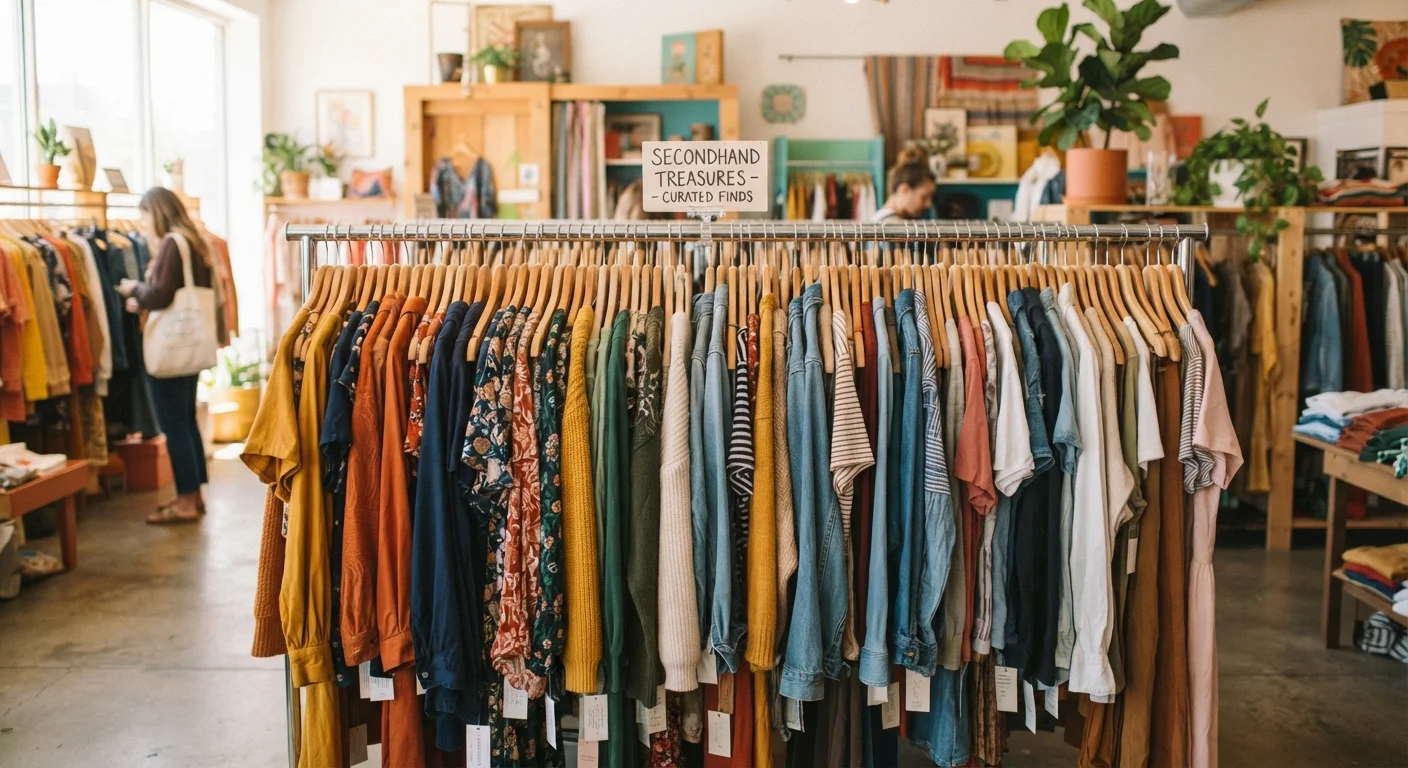
Thrifting isn't just digging through a single musty bin anymore. The secondhand clothing market now spans in-person thrift stores, consignment shops, community swap events, and a growing number of online resale platforms. For everyday American shoppers, the options are more varied - and more accessible - than they've ever been.
That said, the experience still looks quite different from walking into a traditional retailer. Inventory is unpredictable, sizing labels can be unreliable due to older sizing conventions, and the time investment per find is generally higher. Understanding this upfront makes the whole process less frustrating and more enjoyable. If you're thinking about how secondhand fits into a broader wardrobe strategy, our look at the capsule wardrobe concept offers useful context for how to build intentionally.
The Real Advantages of Buying Secondhand
The benefits of thrifting go beyond simply spending less. When it works well, secondhand shopping can give you access to higher-quality garments at a fraction of their original price - items made from more durable fabrics that might otherwise be out of reach. Our guide to understanding clothing fabrics can help you recognize quality materials when you're browsing racks.
Lower price points on a wide range of garments
Secondhand items frequently sell for a fraction of their original retail price, which can stretch a clothing budget noticeably - particularly for higher-quality or brand-name pieces.
Access to better-made older garments
Garments produced a decade or more ago were often made with heavier fabrics and more durable construction than comparable items at the same price point today.
Reduces clothing's environmental footprint
Buying existing garments instead of new ones reduces demand for new textile production, which is resource-intensive in terms of water, dye chemicals, and carbon emissions.
Encourages more intentional purchasing habits
The effort involved in thrifting naturally slows down impulse buying and pushes shoppers to evaluate whether a piece genuinely works for their wardrobe.
Opportunity to find distinctive, one-of-a-kind pieces
Secondhand shopping offers access to styles, cuts, and fabrics no longer produced at retail, making it easier to build a wardrobe that feels individual rather than generic.
Environmental impact is another genuine upside, though it's worth being clear-eyed about it. Buying secondhand extends the life of existing garments and keeps clothing out of landfills - a measurable benefit given how much textile waste the U.S. generates annually. The extent of that benefit, however, depends on your overall consumption habits.
~100B
Garments produced globally each year
Industry analysts estimate roughly 100 billion garments are manufactured annually worldwide, a figure frequently cited in discussions of fashion's environmental scale.
3x
Longer garment life reduces carbon footprint
Research from environmental organizations suggests extending the active life of a garment by even a few years can noticeably reduce its per-use environmental impact.
The Limitations You Should Know Before You Start
No honest assessment of secondhand shopping skips over the real drawbacks. Consistency is the biggest challenge: you can't reliably source a specific item by a specific date, which makes thrifting a poor fit for urgent wardrobe needs. If you've ever struggled with a closet full of clothes that don't come together, adding random thrifted finds without a plan can make that problem worse.
Inventory is unpredictable and inconsistent
You can't rely on secondhand sources to stock specific items in specific sizes on demand - availability depends entirely on what others have donated or listed, which varies constantly.
Sizing standards have changed over time
Older garments often use sizing conventions that don't align with modern sizing, so the number on the label may not reflect a reliable fit without trying the item on.
Condition varies and requires careful inspection
Pilling, fading, weak seams, or undisclosed damage are real risks when buying secondhand, especially online where you can't examine items in person before purchase.
Online platforms add fees that narrow the savings
Shipping costs, buyer protection fees, and platform commissions on resale sites can add meaningfully to the final price, narrowing the gap with retail for lower-cost items.
Return options are often limited or nonexistent
Most thrift stores and many resale platforms have final-sale or very restrictive return policies, meaning a poor purchase is difficult or impossible to reverse.
Time investment is significantly higher than retail
Finding usable everyday pieces through secondhand channels typically requires more browsing, comparing, and repeat visits than shopping at a traditional retailer with consistent stock.
Hidden costs also deserve attention. Some online resale platforms charge shipping fees, authentication fees, or take a seller's commission that affects the final price you pay as a buyer. Our piece on hidden costs that make cheap purchases expensive breaks down how bargain prices can quietly erode. Return policies at thrift stores and resale platforms also tend to be far more restrictive than at traditional retailers - worth reviewing before you commit. See our guide on reading a return policy before it matters for what to look for.
Online Resale vs. In-Person Thrift Stores
The secondhand experience differs considerably depending on the channel. In-person thrift stores let you inspect items directly and try them on, which reduces the risk of condition surprises. Online resale platforms offer greater variety and convenience, but you're relying on seller photos and descriptions - and condition issues are harder to catch before purchasing. Many experienced thrifters use both channels strategically depending on what they're looking for.
Making Secondhand Work for Everyday Wear
The shoppers who get the most out of secondhand tend to treat it as one channel among several, not a complete replacement for retail. For basics - socks, underwear, activewear that sees heavy use - most people find new purchases more practical. But for outerwear, structured pieces, denim, and statement items, secondhand can deliver excellent value.
Going in with a loose wish list rather than a rigid shopping list helps manage expectations. Pairing thrifted staples with a few well-chosen accessories is one way to make pieces feel pulled-together; our guide on accessorizing without overdoing it covers how to do that without overcrowding an outfit. And once you find pieces worth keeping, caring for them properly extends that value considerably - especially for older garments that may have already experienced some wear.
If you're starting a wardrobe largely from scratch, our guide to building a wardrobe on a modest budget walks through how secondhand fits into a practical, step-by-step approach.