

Key Takeaways
- Start with a written clothing budget before purchasing a single item.
- Your lifestyle - not trends - should dictate which pieces you buy first.
- A small number of versatile basics outperforms a large collection of mismatched items.
- Secondhand and off-season shopping can meaningfully stretch a modest clothing budget.
- Building a wardrobe is a gradual process - resist the urge to fill it all at once.
Start here
Set a Realistic Clothing Budget First
Next
Identify Your Actual Lifestyle Needs
Then
The Core Pieces to Prioritize
Apply it
Smart Shopping Strategies on a Tight Budget
Look ahead
Growing Your Wardrobe Over Time
Set a Realistic Clothing Budget First
Before you touch a shopping cart, the smartest first move is figuring out what you can actually spend - and over what timeframe. A wardrobe built from scratch doesn't have to happen in a single weekend. In fact, trying to do it all at once is one of the most common reasons people overspend and end up with items they never wear, as explored in our piece on why a full closet still leaves you stumped.
If budgeting feels unfamiliar, our guides on personal budgeting from zero and building a monthly budget you'll stick to walk through the fundamentals. The key is carving out a specific, realistic clothing line in your monthly spending plan - even a small, consistent amount adds up quickly.
Treat Clothing Like Any Other Budget Line
Assign a specific monthly dollar amount to clothing and track it separately from general spending. Even a modest dedicated amount - say, $30 to $50 per month - builds purchasing power within a few months without disrupting other priorities. This approach also prevents the feast-or-famine shopping pattern that leads to impulse buys.
Identify Your Actual Lifestyle Needs
The biggest wardrobe mistake isn't buying cheap - it's buying for the life you imagine rather than the one you live. Take an honest look at how you spend your time across a typical week. Do you work from home, commute to an office, spend weekends outdoors, or all three?
Map your clothing needs to those actual scenarios. Someone who works from home and runs errands needs a different wardrobe foundation than someone with a customer-facing job and an active social calendar. Write down your three or four most common daily contexts, then build your list around those - not around Pinterest boards or trend roundups.
Capsule wardrobe
A small, intentional collection of versatile clothing items that coordinate well with one another, reducing decision fatigue and unnecessary spending.
Cost per wear
A way of thinking about clothing value by dividing what you paid by how many times you actually wear it - a more useful measure than price alone.
Wardrobe foundation
The small set of core, versatile pieces you build everything else around - typically neutral basics that pair with a wide range of other items.
Off-season shopping
Buying seasonal clothing after its peak season has passed, when retailers typically reduce prices to clear remaining inventory.
Mix-and-match
Choosing clothing items that can be combined in multiple outfit combinations, maximizing the number of looks from a smaller number of pieces.
The Core Pieces to Prioritize
With your lifestyle in mind, you can identify a genuine starting list. Across most everyday American lifestyles, the following categories offer the most outfit flexibility per dollar spent:
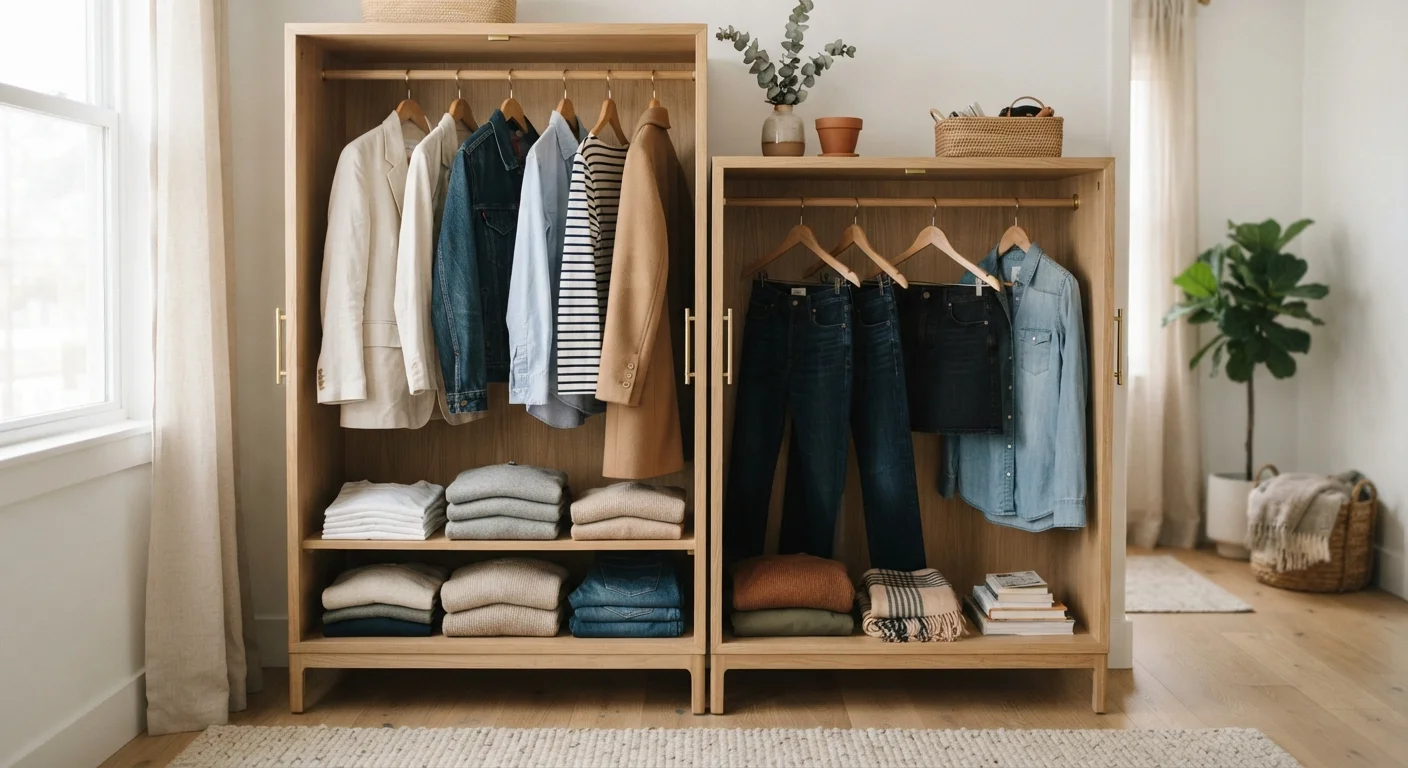
- Bottoms in neutral tones: One or two pairs of well-fitting pants or jeans in navy, gray, black, or khaki pair with nearly anything.
- Layerable tops: Plain crewneck or V-neck tops in two or three colors that work under jackets, cardigans, or on their own.
- One versatile outer layer: A medium-weight jacket or cardigan suitable for your climate handles most in-between weather. See our layering guide for cold-weather strategies.
- A comfortable everyday shoe: Choose a style that works across at least two of your daily contexts - sneakers often fill this role well.
- One dressy option: A single elevated outfit (a blazer, a dress, a clean button-down) covers the occasional formal need without dominating your budget.
The capsule wardrobe concept is worth understanding here - it formalizes this kind of minimal, mix-and-match approach and may suit your situation well.
Smart Shopping Strategies on a Tight Budget
Once you have a clear list, where and how you shop makes a meaningful difference. A few approaches worth considering:
- Shop off-season: Winter coats in March and swimwear in September tend to be marked down substantially, since retailers are clearing inventory.
- Explore secondhand options: Thrift stores, consignment shops, and online resale platforms can yield quality basics at a fraction of their original cost. Our article on secondhand shopping for everyday wear lays out the trade-offs honestly so you know what to expect before you start.
- Prioritize fit over price: A well-fitting inexpensive item will look better and get worn more often than a discounted piece that doesn't flatter you. Minor tailoring on key items - like hemming pants - is often affordable and dramatically improves the result.
Watch Out for 'Deal' Thinking
A low price is only a good deal if the item is something you actually needed and will wear regularly. Buying five inexpensive tops you're lukewarm about costs more than buying two you genuinely love and reach for daily. When building from scratch, every purchase should earn its place - not just earn a low price tag.
Growing Your Wardrobe Over Time
Once your foundation is in place, resist the temptation to accelerate and fill every gap immediately. Give yourself a few weeks of wearing what you have before identifying what's genuinely missing versus what just feels novel. Real gaps - an outfit combination that keeps falling apart, a practical need for your climate - are worth addressing. Boredom isn't.
Accessories are often the most budget-efficient way to add variety without adding bulk. A scarf, a belt, or a simple bag can meaningfully shift the look of the same outfit. Our guide to accessorizing without overdoing it covers the principles behind making this work without cluttering your space or your budget.
When seasons shift, a structured approach helps you reassess what's working. The seasonal wardrobe transition checklist is a practical tool for rotating and auditing your wardrobe without chaos. Over time, this kind of intentional approach turns a modest starting point into something genuinely functional - and that's a foundation worth building carefully.
Secondhand Shopping Guide
A balanced look at what to realistically expect from thrift and resale shopping, including common limitations that affect a budget wardrobe build.
Seasonal Wardrobe Transition Checklist
A structured checklist for auditing and rotating your wardrobe between seasons - especially useful once your foundation is established.
Personal Budgeting From Zero
A plain-language introduction to building a spending plan, including how to carve out discretionary categories like clothing.