

Key Takeaways
- Return windows vary widely - from 14 days to 90 days - and start the moment you purchase, not when you open the box.
- Restocking fees can consume 15-25% of a refund, turning a return into a partial loss.
- Online and in-store purchases often carry different return rules, even at the same retailer.
- Proof of purchase requirements differ - some retailers accept digital receipts, others require original packaging.
- Sale, clearance, and opened items are frequently excluded from standard return policies.
What you will need
Why Return Policies Deserve More Attention Than They Get
Most shoppers glance at a price tag, read a few reviews, and complete the purchase - return policy unread. That's understandable. Nobody buys something expecting to return it. But return policies are part of the true cost and risk of any purchase, and a policy you didn't read can cost you real money when something goes wrong.
Return policies aren't standardized. Unlike product safety regulations or consumer protection minimums, what a retailer offers varies entirely by their own discretion. One store may offer 90 days with free return shipping; another may give you 14 days, charge a restocking fee, and require original packaging. As the hidden costs of a purchase often reveal themselves after the transaction is complete, so do policy restrictions.
This matters especially when you're shopping secondhand or through third-party sellers, where return rights may be far more limited than through a traditional retailer. If you explore secondhand shopping for everyday items, understanding those limits upfront is part of making an informed choice.
Screenshot or Save the Policy at Time of Purchase
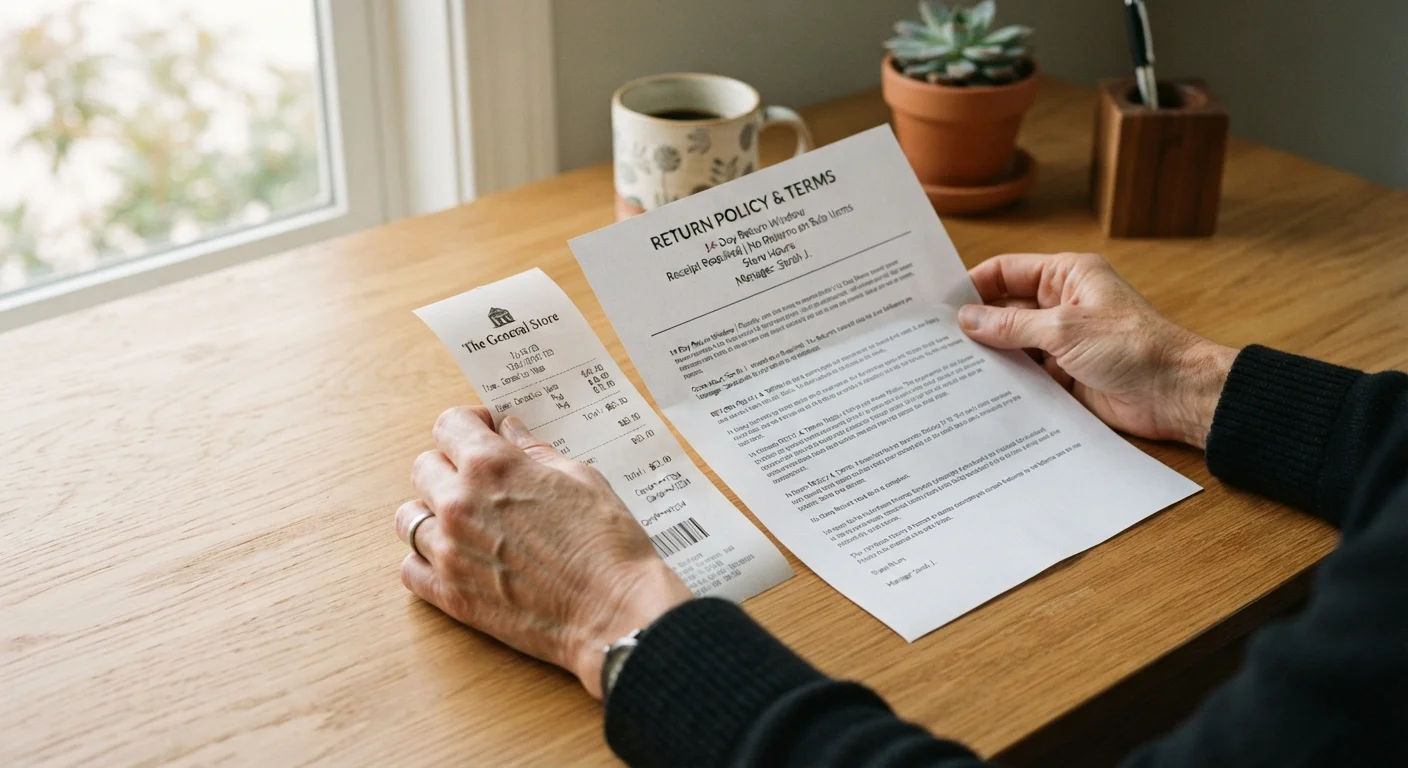
Retailers can update their return policies at any time. The version that applies to your purchase is the one in effect when you bought the item - but that's difficult to prove if you didn't save it. Take a screenshot or forward the order confirmation email that references the policy. This takes under a minute and has real practical value.
What to Look for in Any Return Policy
Before walking through the steps, it helps to know which specific terms carry the most practical weight. Most return policies cover these core elements - and most problems trace back to one of them being misunderstood or overlooked:
- Return window: The number of days you have, and what triggers the count.
- Condition requirements: Unopened, unused, or either - and whether tags and original packaging must be present.
- Restocking fees: A percentage deducted from refunds, common in electronics and large goods.
- Proof of purchase: What form of documentation is accepted and required.
- Exclusions: Categories exempted entirely - clearance items, final sale, opened software, hygiene products.
- Refund method: Whether you get cash back, store credit, or an exchange only.
- Online vs. in-store rules: Whether the same policy applies across channels and how returns must be initiated.
Promotional purchases deserve particular scrutiny. Reading the fine print on promotional deals often reveals that sale pricing comes with narrowed return terms that weren't prominently advertised.
Final Sale Items Are Non-Negotiable
Items marked 'final sale' or 'all sales final' are typically excluded from any return or exchange, regardless of condition. No amount of reasoning at the customer service desk will override this designation. Always treat final-sale pricing as a commitment to keep the item permanently before you buy.
What you will need
Order confirmation email
Serves as proof of purchase and often links to the policy that applied at the time of sale.
Screenshot tool or PDF saver
Preserves the exact return policy wording at the time of purchase in case it changes later.
Credit card with purchase protection
Some cards extend return windows or offer return protection as a cardholder benefit.
Locate the return policy before completing your purchase
Before you check out - online or in-store - find the return policy. Online, look for a link in the site footer labeled "Returns," "Return Policy," or "Shipping & Returns." In-store, it's often printed on the receipt or posted near the register. If you can't find it easily, ask.
Identify the return window length
Note exactly how many days you have to return the item and what triggers the countdown - purchase date, ship date, or delivery date. Windows of 14, 30, 60, and 90 days are all common, and they vary by product category even within the same store. Electronics and opened software, for instance, often carry shorter windows than apparel.
Check for restocking fees and deductions
Some retailers - particularly for electronics, furniture, or large appliances - charge a restocking fee deducted from your refund. These are typically expressed as a percentage of the item price, often in the 10-25% range. A $300 item returned with a 20% restocking fee nets you $240, not $300. Factor this in when deciding whether a return is worth pursuing.
Note the condition and packaging requirements
Many policies require items to be in original, unopened packaging with all accessories and tags intact. Some allow returns of opened items at a reduced refund value. Check whether the policy distinguishes between "unused" and "unopened" - they're not always the same thing. If you discard packaging, document the item's condition with photos immediately after unboxing.
Confirm proof of purchase requirements
Most retailers require some form of proof: a printed receipt, digital receipt, order number, or account login showing the transaction. Some accept any of these interchangeably; others require the original physical receipt. If you're buying in-store with cash and no loyalty account, a lost receipt can mean no return - full stop. Ask at purchase time what's accepted.
Check whether online vs. in-store rules differ
Even at the same retailer, items purchased online and in-store can have different return rules, timelines, and procedures. Online purchases may require a mailed return rather than a drop-off, and return shipping costs may or may not be covered. Confirm both channels before assuming an online purchase can be returned at a local store.
Save documentation of the policy
Once you've reviewed the policy, save it. Screenshot the relevant page, save the PDF, or forward your order confirmation email to yourself with the policy details noted. Retailer policies can change; you want documentation of the rules that applied when you bought the item.
After the Return: What to Expect and Document
Once you've initiated a return, keep a paper trail. Note the date you dropped off a package, save any tracking numbers, and record the name of any customer service representative you speak with. Refunds for mailed returns typically take 5-10 business days after the retailer receives the item - processing time at the warehouse adds to the transit time.
If a refund is disputed or delayed, having documentation of when and how you returned the item - and a saved copy of the policy you were operating under - puts you in a much stronger position. If you paid by credit card, some cards offer return protection or purchase protection as a cardholder benefit worth checking before escalating a dispute with the retailer directly.
Building habits around reading policies before they matter is part of broader financial awareness. For more on managing everyday spending decisions, the Budgeting Basics hub covers practical strategies for planning and tracking purchases over time.
This article provides general consumer information only. Return policy terms vary by retailer, product, and state consumer protection law. Always verify current policy terms directly with the retailer at time of purchase.