

Key Takeaways
- A three-step routine - cleanse, moisturize, SPF - covers the basics for most skin types.
- Consistency matters more than product count; daily repetition drives results.
- Knowing your skin type helps you choose products that work with your skin, not against it.
- Introduce new products one at a time so you can spot what works or causes irritation.
- Morning and evening routines serve different purposes and don't need to be identical.
Start here
Why a Simple Routine Beats No Routine
Next
The Core Three: Cleanse, Moisturize, Protect
Build context
Understanding Your Skin Type
Put it together
Building Your Morning and Evening Routine
When you're ready
When to Add More Steps
Why a Simple Routine Beats No Routine
Skincare shelves - both physical and virtual - can feel genuinely intimidating. Dozens of steps, unfamiliar ingredients, and conflicting advice make it easy to do nothing at all. But here's the encouraging truth: even a minimal, consistent routine outperforms the most elaborate regimen you never stick to.
Skin is a living organ that responds to daily habits. Cleansing removes pollutants and excess oil that can contribute to congestion. Moisturizing supports the skin barrier - the protective layer that keeps hydration in and irritants out. Sunscreen prevents UV-related damage, which dermatologists widely regard as the leading external cause of premature skin aging. These three actions, repeated consistently, form a genuinely solid foundation.
Start Small, Stay Consistent
If you're completely new to skincare, commit to just one week of the three-step routine before evaluating how your skin responds. Consistency over time - not the number of products you use - is what creates meaningful improvement. A simple habit you repeat daily will outperform a complex one you abandon by Thursday.
The Core Three: Cleanse, Moisturize, Protect
Before layering in serums and actives, it helps to understand what each foundational step actually does.
Skin barrier
The outermost layer of skin that acts as a protective shield, keeping moisture in and environmental irritants out. A healthy barrier feels comfortable and resilient.
Broad-spectrum SPF
A sunscreen rating that indicates protection against both UVA rays (linked to aging) and UVB rays (linked to burning). SPF 30 or higher is generally recommended for daily use.
Humectant
An ingredient that attracts water molecules and pulls them into the skin to boost hydration. Hyaluronic acid and glycerin are common examples.
Non-comedogenic
A label term indicating a product is formulated to avoid clogging pores. Often recommended for people who are acne-prone, though individual results can vary.
Patch test
A simple method of applying a small amount of a new product to a discreet area of skin - such as behind the ear or on the inner wrist - and waiting 24 to 48 hours to check for any reaction before using it on your face.
Cleanser
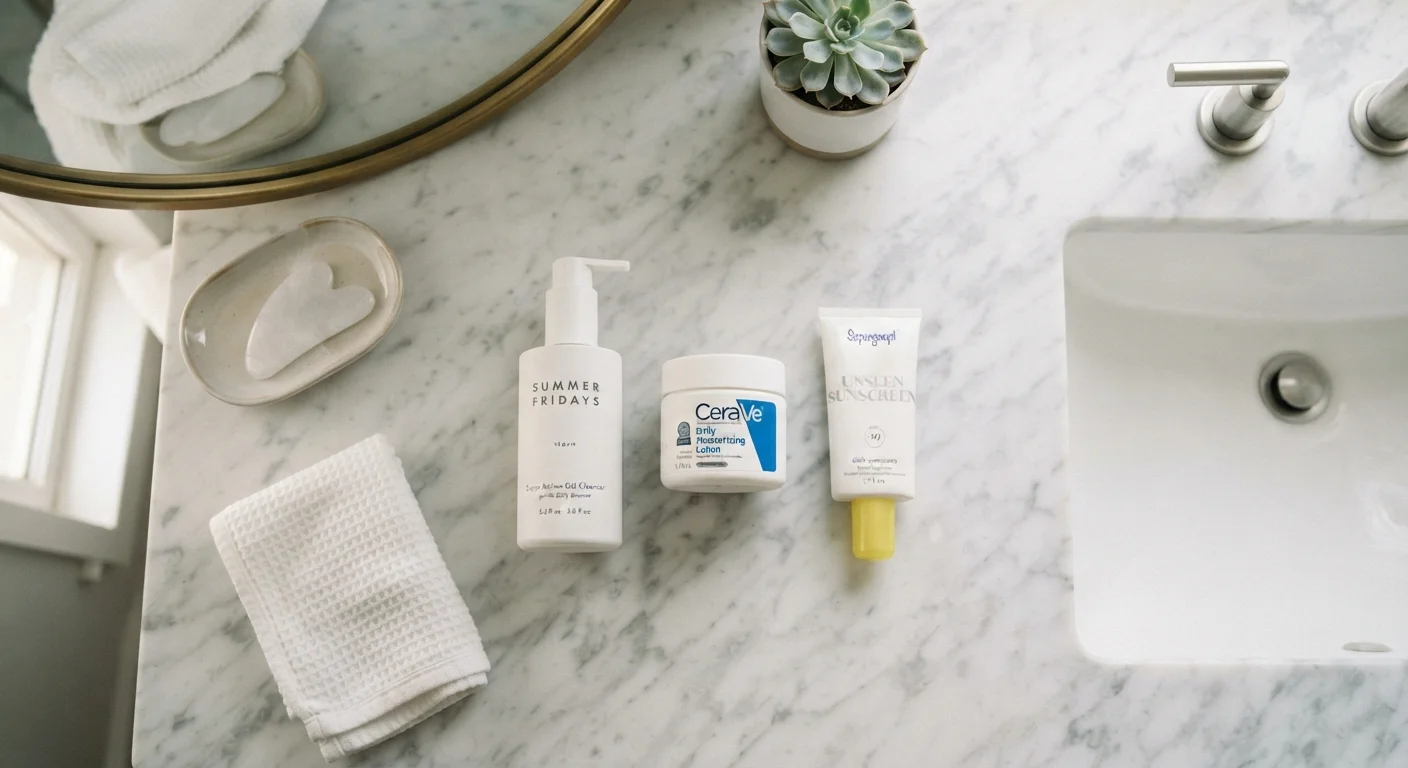
A cleanser removes dirt, oil, sweat, and environmental residue from the skin's surface. For beginners, a gentle, fragrance-free cleanser suited to your skin type is the safest starting point. Avoid anything that leaves your face feeling tight or stripped - that's a sign it's disrupting your skin barrier.
Moisturizer
Moisturizers work in two main ways: humectants (like hyaluronic acid) draw water into the skin, while occlusives and emollients help seal that moisture in. Even oily skin benefits from a lightweight moisturizer - skipping it can prompt the skin to overproduce oil as compensation.
Sunscreen
Broad-spectrum SPF 30 or higher is the non-negotiable morning step. UV exposure accumulates daily - even on cloudy days or through windows - making daily application important regardless of season or skin tone. For a deeper look at how these steps fit into your morning, see the dermatologist-aligned morning routine.
Understanding Your Skin Type
Choosing products that suit your skin type makes a genuine difference in how comfortable your routine feels. The five general categories most commonly referenced are: normal, dry, oily, combination, and sensitive.
- Dry skin often feels tight and may appear flaky; it benefits from richer moisturizers and gentle, non-stripping cleansers.
- Oily skin tends to look shiny and may be prone to breakouts; lightweight, non-comedogenic formulas work well.
- Combination skin has both oily and dry zones - typically an oily T-zone with drier cheeks - and may need slightly different approaches for each area.
- Sensitive skin reacts easily to fragrances, dyes, or certain actives; minimal-ingredient, fragrance-free products are generally safest.
- Normal skin is relatively balanced and can usually tolerate a wider range of formulas.
If you're unsure of your type, a dermatologist or licensed esthetician can offer a professional assessment tailored to your individual skin.
Skin Type Can Change Over Time
Your skin type isn't permanently fixed. Hormonal shifts, seasonal changes, aging, and even diet can all influence how your skin behaves. It's worth reassessing your skin's needs periodically rather than assuming the same products will always be the right fit. If your routine suddenly feels off, your skin may simply have shifted.
Building Your Morning and Evening Routine
Morning and evening routines serve different purposes, and knowing the distinction helps you stay intentional without overcomplicating things.
Morning (AM) Routine
- Cleanse - use a gentle cleanser or just rinse with water if your skin feels clean from the night before.
- Moisturize - apply while skin is slightly damp to help lock in hydration.
- Sunscreen - apply as the final step before makeup or going outdoors.
Evening (PM) Routine
- Cleanse - this step is especially important at night to clear away SPF, makeup, and daily buildup.
- Treatment (optional) - once you're comfortable with the basics, this is where targeted products like retinoids or serums can be added.
- Moisturize - a slightly richer formula than your daytime one is fine, since there's no SPF to layer over it.
For more on what your evening routine actually needs, the nighttime skincare guide walks through the genuinely useful steps without overloading your shelf.
When to Add More Steps
Once your three-step foundation feels natural - usually after a few consistent weeks - you might consider adding targeted products. Serums containing ingredients like hyaluronic acid, niacinamide, or vitamin C each address specific skin concerns and can slot in between cleansing and moisturizing. For a plain-language explainer on what those ingredients actually do, the breakdown of popular skincare actives is a useful next read.
When you do expand your routine, introduce one new product at a time and give it two to four weeks before judging results. This way, if irritation occurs, you'll know exactly what caused it. Understanding how products layer together also matters - the guide to skincare layering explains why application order affects how well each product performs.
Introduce Actives Slowly
Ingredients like retinoids, exfoliating acids (AHAs and BHAs), and high-concentration vitamin C are effective but can cause irritation - especially for beginners or sensitive skin types. Never introduce more than one active ingredient at a time, and always start with a lower frequency (a few times per week rather than daily). If you experience significant redness, peeling, or discomfort, scale back and consult a dermatologist.
This article is for general informational purposes only and does not constitute medical or dermatological advice. If you have a skin condition, persistent irritation, or concerns about a specific ingredient, consult a licensed dermatologist or healthcare professional.