

Key Takeaways
- A morning routine needs only four core steps: cleanser, serum, moisturizer, and SPF.
- Order matters - layer from thinnest to thickest texture to maximize absorption.
- Sunscreen is the single most evidence-supported step for protecting skin long-term.
- Actives like vitamin C and niacinamide can enhance your AM routine but aren't essential from day one.
- Gentle, consistent habits outperform aggressive or complicated multi-step approaches.
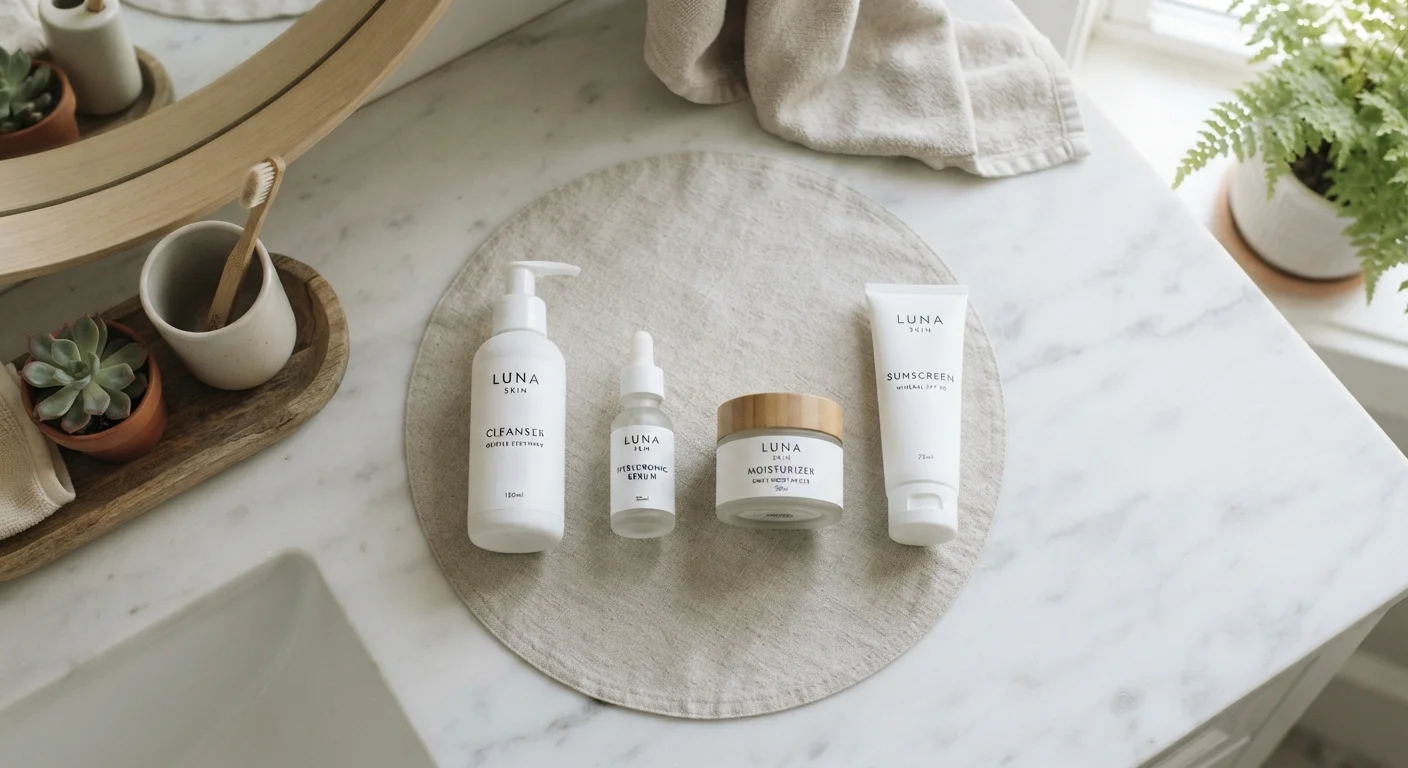
What you will need
Why a Morning Routine Is Different from Your PM Approach
Your skin does the heavy repair work overnight - that's when cell turnover peaks and recovery-focused ingredients do their best work. By morning, the priority shifts: you're prepping a clean canvas, supporting the skin barrier, and - crucially - defending against the day ahead. That means your AM routine is inherently more protective in focus than your PM routine, which leans restorative.
The practical upshot? You don't need to repeat everything you did at night. Strong exfoliating acids and retinoids belong in the evening; mornings call for gentler, shield-building steps. If you're still working out what a basic framework looks like, our no-overwhelm starting point guide is a great place to begin before adding anything extra. And when you're ready to compare morning versus evening logic side by side, what actually needs to happen before bed rounds out the picture.
Gentle face cleanser
Removes overnight sebum and any residue without stripping the skin's moisture barrier.
Antioxidant or hydrating serum
Delivers concentrated active ingredients - such as vitamin C or hyaluronic acid - before heavier layers are applied.
Lightweight daily moisturizer
Seals in hydration and creates a smooth base for sunscreen.
Broad-spectrum SPF 30+ sunscreen
Shields skin from UVA and UVB radiation, the primary environmental cause of premature aging and skin damage.
Soft face towel or microfiber cloth
Used to gently pat skin dry after cleansing without causing friction or irritation.
The Four-Step Framework
The sequence below reflects the order most dermatologists recommend - thinnest to thickest, with SPF always last. Optional steps slot in where noted, but the core four are enough for a complete, effective routine.
What you will need
Cleanse - gently and briefly
Splash your face with lukewarm water, apply a small amount of your cleanser, and massage in soft circular motions for about 30-60 seconds. Rinse thoroughly, then pat (don't rub) skin dry with a clean towel. In the morning, your skin hasn't been exposed to pollution or heavy product buildup, so a mild, non-foaming cleanser is usually all you need.
Apply a serum (if using one)
While your skin is still slightly damp, press 2-3 drops of serum onto your face and neck using your fingertips. Serums are water-thin, which is why they go on before moisturizer - thinner textures penetrate more efficiently beneath heavier ones. Popular AM choices include vitamin C (for antioxidant protection) and niacinamide (for pore appearance and uneven tone). See our plain-language guide to these actives for a deeper look at what each ingredient actually does.
Moisturize
Apply a pea-to-dime-sized amount of moisturizer across your face and neck, working it in with upward strokes. Even oily or combination skin types benefit from a moisturizer - skipping it can prompt the skin to overcompensate with excess oil production. Choose a gel-cream if you're oily, and a richer cream if your skin leans dry.
Finish with sunscreen - every single day
Apply a generous layer of broad-spectrum SPF 30 or higher as your final step, covering your face, neck, and ears. Most dermatologists recommend about a quarter teaspoon for the face alone. Wait a minute or two before applying makeup. UV exposure occurs even on cloudy days and through windows, so this step isn't optional - it's the most evidence-backed thing you can do for your skin's long-term health.
Consistency Beats Complexity
A four-step routine you actually do every morning will outperform an eight-step routine you abandon by Wednesday. Start with the essentials, give your skin four to six weeks to adjust, and add anything new one product at a time so you can track what's working.
Curious whether your cleanse could be doing more? See our look at double cleansing - the case for and against to decide if a two-step approach is worth adding to your mornings.