

Key Takeaways
- Apply products from thinnest to thickest texture as a reliable general rule.
- Serums with active ingredients should go on before moisturizer to reach the skin effectively.
- Sunscreen is always the last step in a morning routine - applying it before moisturizer reduces its protective ability.
- Mixing certain actives in the wrong order can cause irritation or cancel out benefits.
- A simple routine applied in the right order outperforms a complex one applied randomly.
Skincare Layering
Skincare layering refers to the practice of applying multiple skincare products in a deliberate sequence so each one can absorb properly and work as intended. The general rule is to go from the lightest, most water-based textures to the heaviest, most occlusive ones. Getting the order right allows active ingredients to reach the skin where they can actually do their job.
Occlusive ingredients - like petrolatum or heavy facial oils - can physically block thinner, water-based formulas from penetrating the skin barrier if applied first, which is why sequence matters chemically, not just aesthetically.
The Simple Logic Behind the Order
Think of skincare layering the way you'd think about getting dressed in layers for cold weather - each layer serves a purpose, and putting a heavy coat on before a base layer defeats the point. Skincare works the same way. Lighter, water-based products need direct contact with clean skin to absorb and function. Heavier formulas - think rich moisturizers and facial oils - create a seal that locks everything underneath in place.
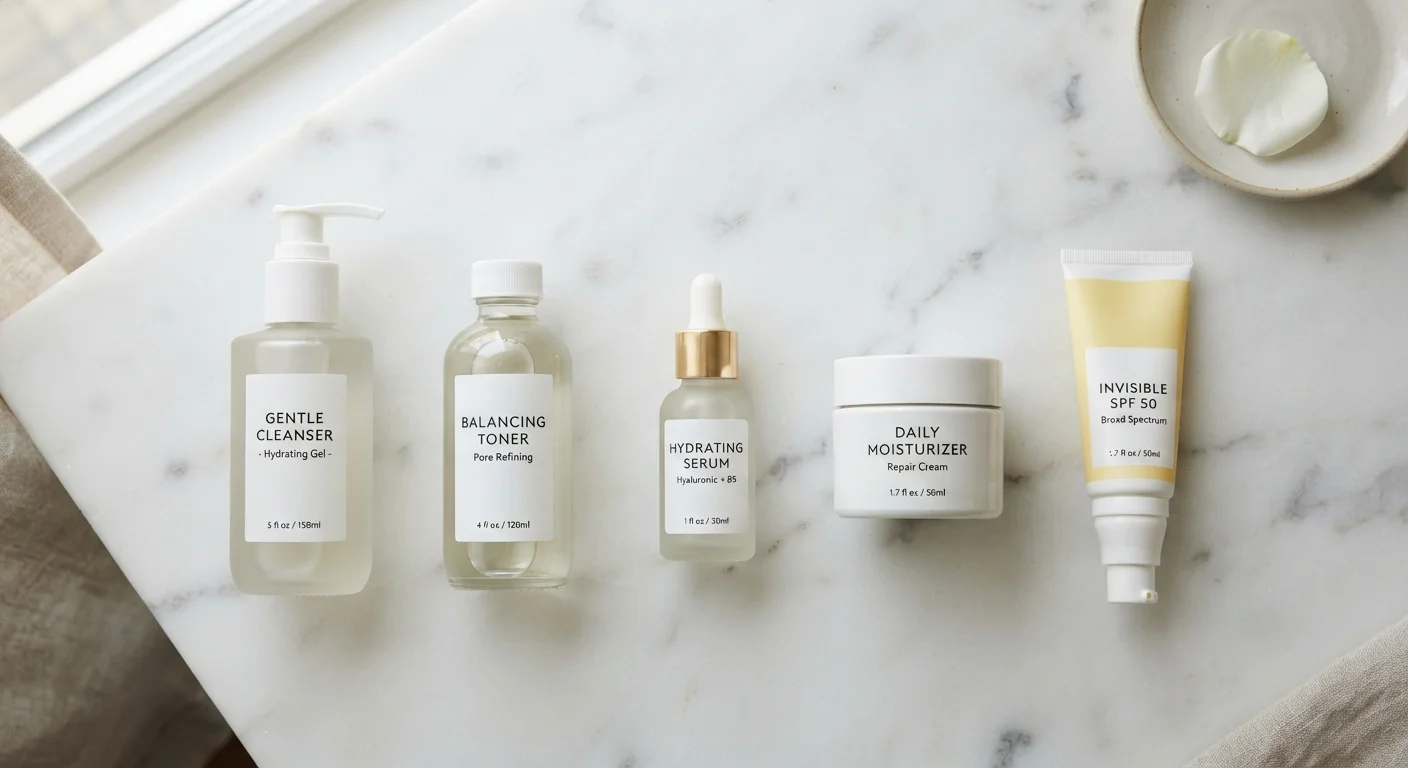
The foundational sequence for most routines looks like this: cleanser → toner or essence → serum → eye cream → moisturizer → SPF (morning only). If you're building from scratch, our no-overwhelm starting point for skincare walks through what each of those steps actually does.
You don't need a ten-step routine for this to matter. Even with just three products, applying them in the right sequence makes a measurable difference in how well they work.
When in Doubt, Feel the Texture
If you're ever unsure where a new product fits in your routine, rub a small amount between your fingers. The lighter and more watery it feels, the earlier it goes. Thick, creamy, or oily textures belong toward the end of your sequence. This simple tactile check works for most everyday products.
Where Serums Fit - and Why It Matters
Serums are the workhorses of most modern routines - they carry concentrated active ingredients like vitamin C, hyaluronic acid, or niacinamide. Because they're formulated to penetrate rather than sit on the surface, they need to go on before moisturizer, not after.
When a serum is applied over a moisturizer, the heavier formula acts as a physical barrier. The active ingredients can't get through efficiently, and you've essentially just applied an expensive product to the top of a cream layer. Applying to clean or lightly toned skin gives those actives the best possible route to where they're needed.
If you're using more than one serum, layer them lightest-to-heaviest as well. A watery vitamin C serum goes before a slightly thicker hyaluronic acid formula, for example. For a deeper look at how these popular ingredients work individually, see our breakdown of hyaluronic acid, niacinamide, and vitamin C.
~30-60s
Recommended wait time between skincare layers
Most dermatologists suggest allowing each product about 30 to 60 seconds to absorb before applying the next step.
2+
Steps where order errors most commonly occur
Serum-after-moisturizer and SPF-before-moisturizer are among the most frequently cited layering mistakes in dermatology-adjacent skincare education.
The SPF Rule Everyone Gets Wrong
Sunscreen is non-negotiable in a morning routine - but its placement is where a surprising number of people go wrong. SPF goes last, after moisturizer. The reason is practical: sunscreen needs to form an uninterrupted film across the skin to deliver the level of protection listed on the label. Apply anything over it and you physically disrupt that layer.
This includes foundation. SPF in a foundation or tinted moisturizer is not a substitute for a dedicated sunscreen step - you'd need to apply far more than is realistic to reach the advertised protection level. Our face sunscreen myths article addresses this and other common misconceptions in detail.
For a step-by-step walkthrough of the full morning sequence, the dermatologist-aligned morning routine lays it out clearly from cleanser through SPF.
Evening Routines Follow the Same Logic
The thin-to-thick layering rule applies at night too, with one key difference: you skip SPF and may add richer treatment products like retinol or overnight masks. Active treatments generally go on before your night cream or sleeping mask, not after. For the full picture, see our nighttime skincare guide.
Avoiding Layering Mistakes That Backfire
Order isn't just about absorption - it can affect skin tolerance too. Layering certain active ingredients back-to-back without the right buffer can cause irritation, redness, or reduce how well each ingredient performs. Retinol layered directly under a high-concentration acid, for instance, is a combination that skin often pushes back on.
Some combinations are best used on alternating nights rather than in the same routine. Our guide to ingredients you should not mix covers the most common problem pairings based on what the evidence actually shows.
The reassuring part: once you understand the thin-to-thick rule and know which actives need some separation, layering stops feeling like a chemistry exam and starts feeling intuitive. A thoughtful routine - even a short one - applied in the right order is genuinely more effective than a shelf full of products used haphazardly.