

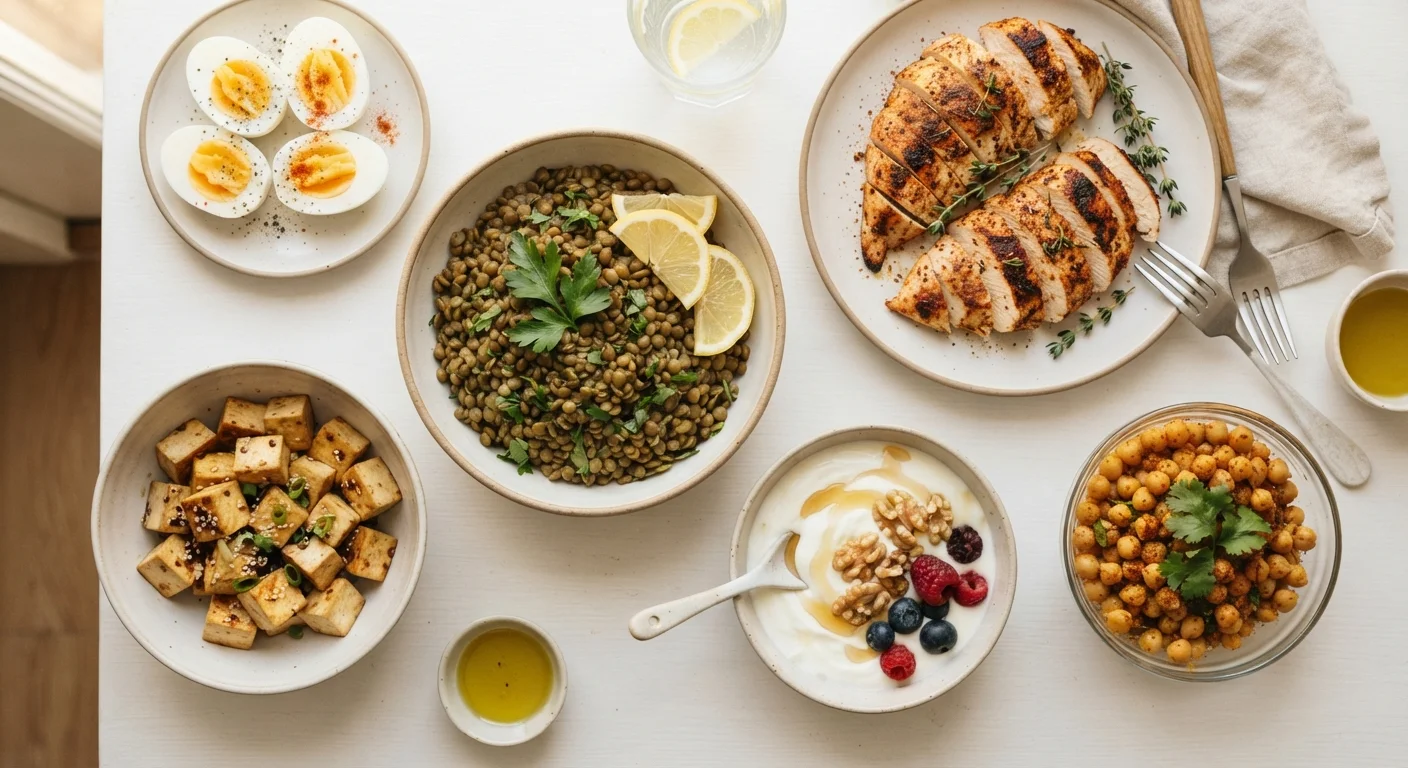
Key Takeaways
- Animal proteins are generally 'complete,' containing all nine essential amino acids in sufficient quantities.
- Most plant proteins can meet amino acid needs when eaten across a varied diet throughout the day.
- Bioavailability - how well your body absorbs and uses protein - differs meaningfully between sources.
- No single protein source is universally superior; overall dietary pattern matters more than any one food.
- Consulting a registered dietitian helps tailor protein choices to individual health goals and restrictions.
Our Verdict
Both animal and plant proteins can support adequate nutrition when chosen thoughtfully. The evidence suggests that dietary variety, overall food quality, and consistent intake across the day matter more than strict source loyalty. Most people benefit from drawing on multiple protein types rather than treating this as an either-or decision.
| Best for | Recommended |
|---|---|
| Those prioritising complete amino acid profiles with minimal meal planning | Animal-based proteins (eggs, poultry, fish, dairy) |
| Those following plant-based or flexitarian eating patterns | Complementary plant proteins (legumes, soy, grains, nuts) |
| Those seeking middle-ground flexibility and broad nutrient coverage | Mixed dietary approach combining both animal and plant sources |
Why Protein Quality Isn't One-Dimensional
Protein is essential for muscle repair, immune function, enzyme production, and dozens of other biological processes. But when nutritionists talk about protein quality, they're usually referring to two overlapping concepts: amino acid completeness and bioavailability.
Amino acids are the building blocks of protein. Of the 20 that matter nutritionally, nine are classified as essential - your body cannot manufacture them, so they must come from food. A protein source containing all nine in adequate proportions is called a complete protein. Bioavailability describes how efficiently the body can actually digest, absorb, and use the protein after eating it.
Animal proteins - including eggs, meat, poultry, fish, and dairy - score highly on both measures. They are complete proteins, and their amino acids are generally absorbed at rates of 90-99%. Plant proteins are more variable: soy and quinoa are notable exceptions that provide complete amino acid profiles, while most others (beans, lentils, peas, nuts, grains) are limited in one or more essential amino acids and have digestibility rates that can range from roughly 70-90%.
This doesn't make plant proteins inferior - it means context and combination matter. For a deeper look at how these principles fit into broader eating strategies, see how different diet patterns approach protein.
Comparing Key Protein Sources
The table below summarises how major protein sources compare across the criteria most relevant to everyday dietary decisions.
| Eggs | Chicken/Fish | Dairy (Greek Yogurt) | Lentils/Beans | Soy (Tofu/Tempeh) | Quinoa | |
|---|---|---|---|---|---|---|
| Complete protein | Yes | Yes | Yes | No (limited methionine) | Yes | Yes |
| Digestibility | Very high (~97%) | Very high (~95%) | High (~95%) | Moderate (~75-85%) | High (~91%) | Moderate (~85%) |
| Protein per serving | ~6g per egg | ~25-30g per 3.5 oz | ~17g per 6 oz | ~15-18g per cooked cup | ~10-20g per half-cup | ~8g per cooked cup |
| Fiber content | None | None | None | High | Low-moderate | Moderate |
| Cost (general) | Low | Moderate-high | Low-moderate | Very low | Low-moderate | Low-moderate |
| Key nutrients beyond protein | Choline, B12, D | B vitamins, selenium | Calcium, probiotics | Iron, folate, fiber | Isoflavones, calcium | Manganese, magnesium |
| Suitable for plant-based diets | No (vegetarian only) | No | No (vegetarian only) | Yes | Yes | Yes |
A few points deserve emphasis. Eggs are often cited in nutrition research as a near-ideal reference protein due to their amino acid profile and high digestibility. Fatty fish like salmon adds omega-3 fatty acids alongside protein, providing additional cardiovascular considerations. Lentils and chickpeas deliver fiber and micronutrients that animal proteins lack, but contribute meaningful protein per serving when portions are sized accordingly.
Spreading Protein Across Meals Helps
Research suggests the body can only synthesize muscle protein efficiently from a limited amount of protein at once - roughly 20-40 grams per meal for most adults, though this varies. Rather than loading protein at a single meal, distributing intake across breakfast, lunch, and dinner tends to support better utilization. This applies equally to animal and plant protein sources.
Plant Proteins: Gaps, Combinations, and Common Misconceptions
The long-standing advice to eat complementary plant proteins at the same meal - rice and beans being the classic example - has been largely revised. Current understanding holds that eating a variety of plant proteins across the day is sufficient for the body to pool amino acids effectively. Strict same-meal pairing is not required for most healthy adults.
That said, certain gaps are worth understanding. Most legumes are low in methionine, while most grains are low in lysine. Eating both across the day addresses this naturally. Soy-based foods (tofu, tempeh, edamame) are the clearest plant exceptions - they provide all essential amino acids in useful amounts and are among the most studied plant proteins in clinical literature.
One factor sometimes overlooked is antinutrients - compounds like phytates and tannins found in legumes and grains that can reduce mineral absorption and, to a lesser extent, protein digestibility. Soaking, cooking, sprouting, and fermenting can reduce these compounds substantially. Processed plant protein products (protein powders, meat alternatives) vary widely in processing level; research on ultra-processed foods is still evolving and worth reviewing before leaning heavily on these options.
Practical Guidance for Meeting Protein Needs Across Any Diet
General population guidance from major nutrition bodies suggests most adults need roughly 0.8 grams of protein per kilogram of body weight daily as a baseline, with higher intakes potentially beneficial for older adults, pregnant individuals, and those with high activity levels. Specific targets should always be discussed with a healthcare or nutrition professional.
For omnivores, including a variety of protein sources across meals - eggs at breakfast, legumes at lunch, lean meat or fish at dinner - distributes amino acid intake and limits over-reliance on any single source. For those following plant-based eating patterns, soy foods, lentils, chickpeas, tempeh, and whole grains provide the strongest foundation. Supplementing with vitamin B12, and potentially iron and zinc, is worth discussing with a doctor if animal foods are excluded entirely.
Budget is a real consideration. Canned legumes, dried lentils, eggs, and plain Greek yogurt are among the most cost-effective protein sources available. For practical strategies on fitting quality nutrition into everyday spending, see eating well on a budget. And for help building meals that incorporate diverse protein sources without rigid rules, building a balanced plate offers a useful framework.
This article is for general informational and educational purposes only and does not constitute medical or nutritional advice. Consult a qualified healthcare professional or registered dietitian before making changes to your diet, especially if you have a health condition or specific nutritional needs.