
Eating Well on a Budget: Nutritional Principles That Don't Require Premium Groceries

Key Takeaways
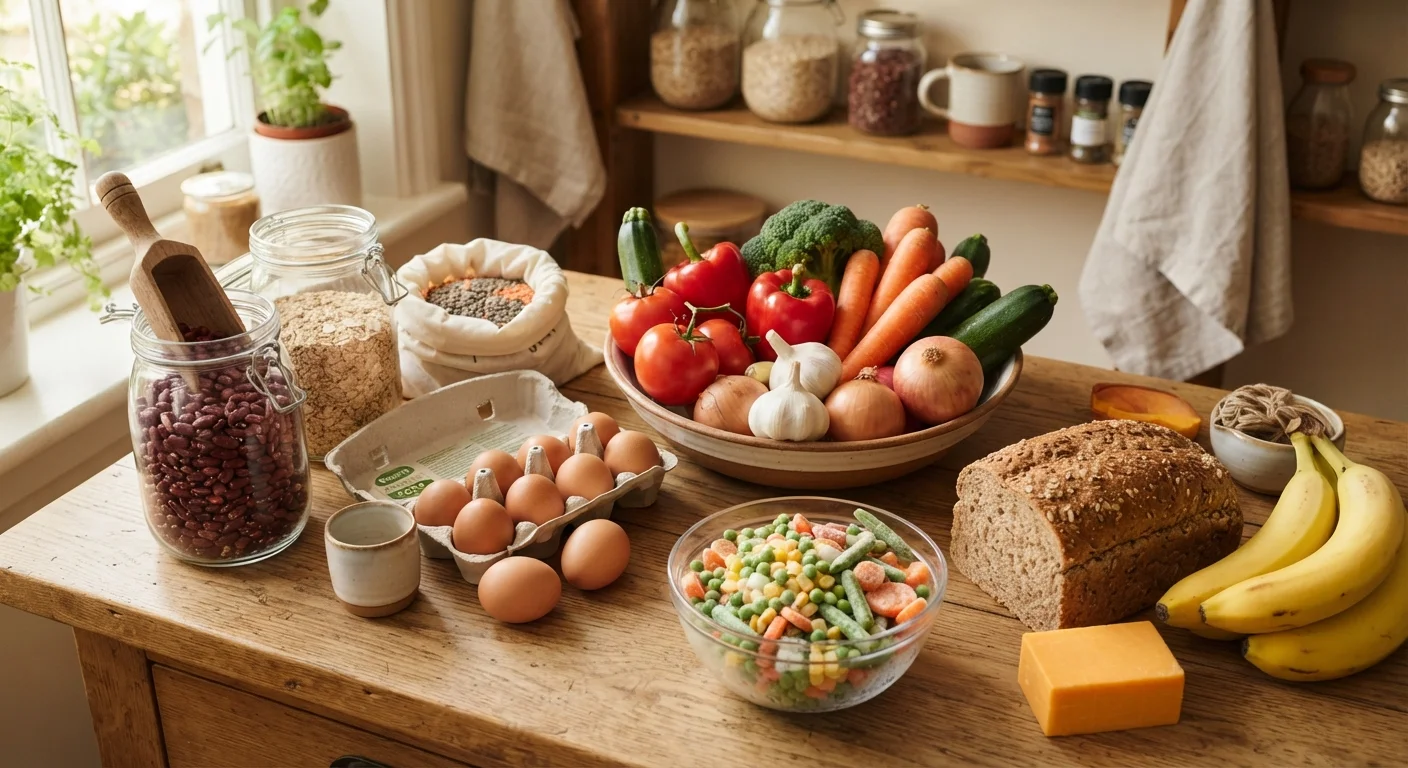
- Beans, lentils, oats, eggs, and frozen vegetables are among the most nutrient-dense foods available at low cost.
- Dietary pattern - not individual superfoods - is the strongest predictor of long-term nutritional health.
- Frozen and canned produce can match or exceed fresh options in key vitamins and minerals.
- Prioritizing fiber, protein, and variety within a modest budget is achievable with simple planning habits.
- Evidence does not support the idea that premium-priced foods are nutritionally superior for most people.
The Nutrition-Cost Myth Worth Questioning
A persistent belief in American consumer culture holds that eating well is inherently expensive - that health lives in the specialty-foods aisle, behind price tags most households can't sustain. Nutrition research paints a more encouraging picture. The foods consistently associated with better health outcomes in large-scale dietary studies - legumes, whole grains, eggs, leafy greens, root vegetables - are also among the most affordable items in any grocery store.
This matters because food budgets are real constraints, and the framing that "healthy eating costs more" can discourage people from even trying. The evidence-based principle underlying this article is straightforward: overall dietary pattern, not the presence or absence of any single premium ingredient, is what shapes nutritional health over time. Understanding that principle can reorient how you shop, cook, and think about food entirely.
For a broader look at how to approach grocery shopping strategically, see our guide to smarter shopping across every category.
Best Practices for Nutritious, Budget-Friendly Eating
The following evidence-grounded practices address both nutritional quality and everyday affordability. None requires specialty products or restrictive rules.
Build meals around legumes as a primary protein and fiber source.
Dried or canned beans and lentils consistently rank among the most nutrient-dense foods per dollar available, delivering protein, fiber, iron, and folate. Research links regular legume consumption to improved cardiovascular markers and blood sugar regulation. They are also shelf-stable, reducing waste.
Choose whole grains over refined alternatives wherever practical.
Whole grains like oats, brown rice, and whole-wheat bread retain the bran and germ layers removed in refining, meaning more fiber, B vitamins, and minerals per serving. These foods are inexpensive, widely available, and associated with reduced risk of several chronic conditions in large observational studies.
Include eggs regularly as a versatile, complete-protein food.
Eggs provide all essential amino acids, choline (important for brain and liver function), and several vitamins including D and B12. Current dietary guidance from major health organizations no longer restricts egg intake for healthy individuals as it once did, making them one of the most defensible budget proteins available.
Prioritize variety across plant foods rather than any single 'superfood.'
Dietary diversity - particularly among vegetables, fruits, and legumes - is consistently associated with better gut microbiome health and broader micronutrient coverage than reliance on any individual high-profile ingredient. Many trendy 'superfoods' offer no nutritional advantage over cheaper staples when consumed as part of a varied diet.
Reduce reliance on ultra-processed convenience foods, not on all processed foods.
The research distinction that matters most is between 'ultra-processed' foods (formulated products high in additives, refined sugars, and sodium) and minimally processed staples like canned beans or frozen vegetables. The former are associated with worse health outcomes; the latter are a practical nutritional asset. Conflating all processing as negative leads to unnecessary spending and food waste.
Pairing these habits with consistent weekly meal planning can amplify their impact, reducing both food waste and unplanned spending.
Rethinking "Fresh" and the Case for Frozen and Canned
Fresh produce carries a cultural prestige that isn't always warranted nutritionally. Freezing vegetables shortly after harvest preserves most vitamins - in some cases better than produce that has spent days in transit and on shelves. Canned legumes, tomatoes, and fish are similarly well-preserved, cost-effective, and minimally processed when selected without excessive added sodium or sugar.
~90%
Vitamin C retained in frozen vegetables
Research published in food science literature has found that properly frozen vegetables retain the large majority of their vitamin C content, often comparable to or better than fresh produce stored for several days.
< $1
Cost per serving of dried beans or lentils
According to USDA food cost data, dried legumes consistently rank among the lowest-cost sources of plant protein and fiber available in U.S. grocery stores.
The practical implication: building a pantry around frozen vegetables, canned beans, and canned fish like sardines or tuna provides reliable nutrition at predictable cost - a foundation far more sustainable than chasing seasonal fresh availability. For a deeper look at fiber - a nutrient that canned and frozen plant foods deliver abundantly - see our article on dietary fiber and why most Americans fall short.
Reading Canned Food Labels Effectively
When selecting canned vegetables or beans, look for products with no added salt or a low-sodium designation. Rinsing canned beans under water can reduce sodium content by roughly 40%, according to food preparation research. For canned fish, options packed in water generally have a simpler ingredient list than those packed in flavored oils or sauces.
Getting Enough Protein Without Premium Price Tags
Protein quality discussions often default to expensive animal cuts, but the nutritional evidence is more nuanced. Eggs remain one of the highest-quality, lowest-cost protein sources available, providing all essential amino acids. Legumes - lentils, chickpeas, black beans - offer substantial protein alongside fiber and micronutrients. Canned tuna and sardines, Greek-style yogurt, and tofu extend options affordably.
The goal isn't to optimize a single metric but to distribute protein across meals in varied, practical ways. For a research-grounded breakdown of how different protein sources compare, see our article on protein sources across diets.
It's also worth remembering that combining plant proteins - such as rice and beans - across a day's meals, rather than needing them in a single sitting, is sufficient for meeting amino acid needs for most healthy adults. Individuals with specific medical conditions or elevated needs should consult a registered dietitian for personalized guidance.
This article is for general informational and educational purposes only and is not a substitute for professional medical or dietary advice. Always consult a qualified healthcare provider before making significant changes to your diet.