

Key Takeaways
- Most Americans consume roughly half the daily fiber intake recommended by nutrition guidelines.
- Fiber supports gut health, helps regulate blood sugar, and is associated with lower cardiovascular risk.
- Soluble and insoluble fiber play distinct but complementary roles in the body.
- Whole grains, legumes, fruits, and vegetables are the most reliable dietary sources of fiber.
- Gradually increasing fiber intake - alongside adequate hydration - helps minimize digestive discomfort.
Dietary Fiber
Dietary fiber is the indigestible portion of plant foods - including fruits, vegetables, whole grains, legumes, and nuts - that passes largely intact through the digestive system. Unlike other carbohydrates, fiber is not broken down and absorbed for energy. Instead, it plays a range of structural and regulatory roles in the body, supporting digestion, blood sugar control, and cardiovascular health.
Fiber is broadly classified into two types: soluble fiber, which dissolves in water to form a gel-like substance, and insoluble fiber, which does not dissolve and adds bulk to stool. Most plant foods contain both types in varying proportions.
The Fiber Gap: Why It Matters
Dietary fiber is one of the most consistently under-consumed nutrients in the American diet. Survey data from the National Health and Nutrition Examination Survey (NHANES) estimates that average daily fiber intake in the U.S. is around 15-16 grams - roughly half of what general guidelines recommend for adults. Nutrition researchers sometimes call this the "fiber gap."
This shortfall has real implications. Fiber influences a broad range of physiological processes, from how quickly food moves through the gut to how the body handles glucose after a meal. Despite this, it often gets overlooked in conversations dominated by protein, healthy fats, or specific micronutrients.
~15g
Average daily fiber intake in the U.S.
NHANES data consistently estimates average American fiber consumption at around 15-16 grams per day, well below general recommendations.
25-38g
Recommended daily fiber intake for adults
The National Academies' Dietary Reference Intakes recommend approximately 25g/day for adult women and 38g/day for adult men.
~95%
Americans falling short of fiber targets
Research published in nutrition journals estimates that the vast majority of U.S. adults do not meet recommended daily fiber intake.
Understanding what fiber actually does - and where to find it - is a practical starting point for improving the nutritional quality of your overall diet. If you want to get better at reading packaged foods for fiber content, see how to decode nutrition labels.
What Fiber Does in the Body
Fiber's effects extend well beyond digestive regularity, though that remains one of its most recognized benefits. Here's a closer look at how the two main types function:
Soluble Fiber
When soluble fiber dissolves in water, it forms a viscous gel in the digestive tract. This slows the absorption of glucose, which helps moderate post-meal blood sugar spikes - a benefit particularly relevant for blood sugar management. Soluble fiber also binds to bile acids in the gut; the liver then draws cholesterol from the bloodstream to make more bile, which is one mechanism by which adequate soluble fiber is associated with lower LDL (low-density lipoprotein) cholesterol levels. Oats, barley, apples, citrus fruits, and legumes are reliable soluble fiber sources.
Insoluble Fiber
Insoluble fiber doesn't dissolve - it absorbs water and adds bulk to stool, supporting more regular and comfortable bowel movements. It speeds transit time through the colon, which is thought to reduce the time potential irritants spend in contact with intestinal walls. Whole wheat, bran, nuts, and many vegetables are rich in insoluble fiber.
“Dietary fiber is probably the most underappreciated nutrient in the American diet. We have decades of consistent evidence linking higher fiber intake to lower risks of heart disease, type 2 diabetes, and colorectal cancer - yet most people are eating far less than recommended.”
— Dr. David Katz, Preventive medicine specialist and founding director of the Yale-Griffin Prevention Research Center
Gut Microbiome Support
Emerging research highlights another role: certain fibers act as prebiotics, selectively feeding beneficial bacteria in the large intestine. These bacteria ferment fiber and produce short-chain fatty acids, which support the integrity of the gut lining and appear to influence immune function and inflammation. This area of research continues to develop, and scientists note that the relationship between fiber, gut bacteria, and broader health outcomes is complex and not yet fully characterized.
Practical Sources of Dietary Fiber
Fiber is found exclusively in plant foods. Animal products - including meat, fish, dairy, and eggs - contain no dietary fiber. The most fiber-dense whole food categories include:
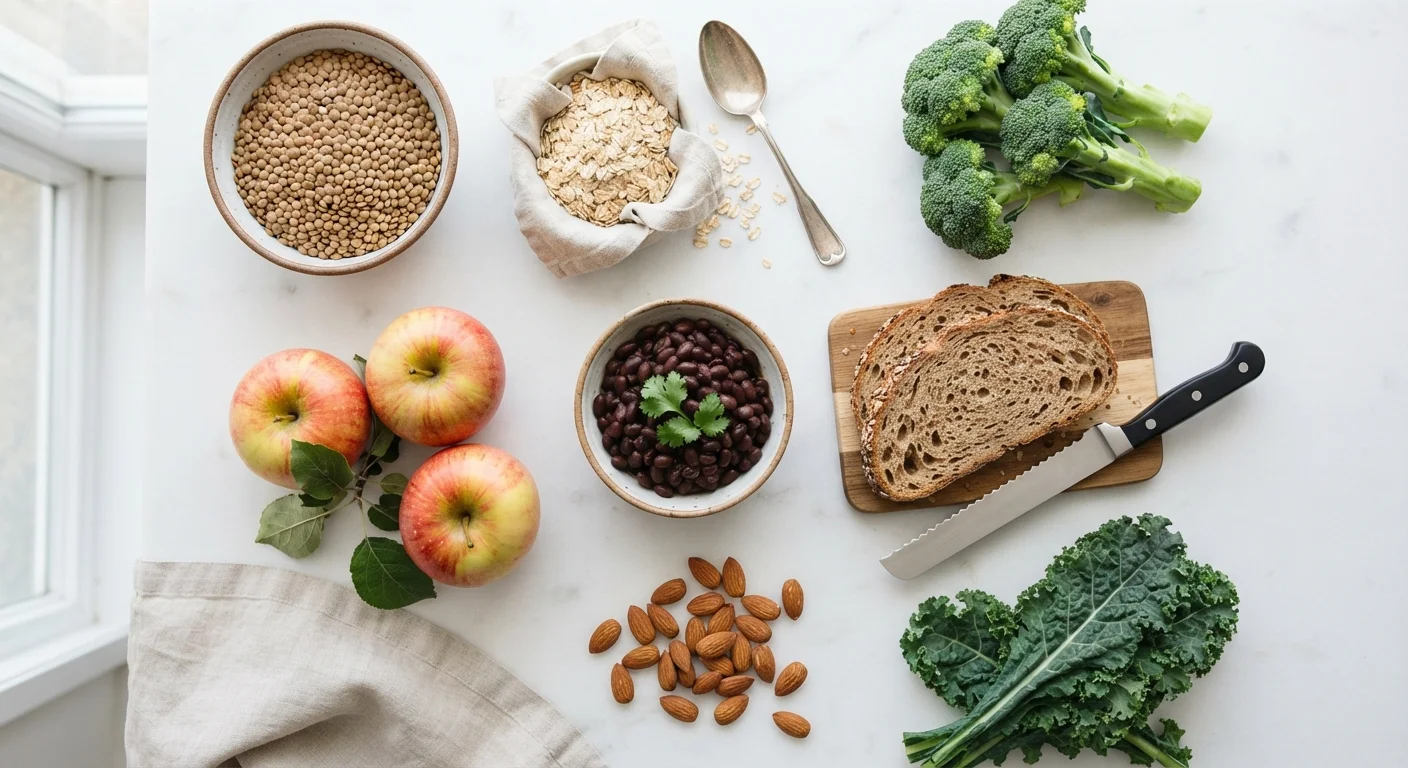
- Legumes: Lentils, black beans, chickpeas, and split peas typically deliver 12-16 grams of fiber per cooked cup - making them among the most concentrated sources available.
- Whole grains: Oats, barley, farro, quinoa, and whole wheat bread provide both soluble and insoluble fiber. Refined grains lose much of their fiber during processing.
- Vegetables: Broccoli, Brussels sprouts, artichokes, carrots, and leafy greens contribute fiber along with vitamins and minerals.
- Fruits: Pears, apples (with skin), raspberries, and bananas are solid choices. Whole fruit is preferable to juice, which strips most of the fiber.
- Nuts and seeds: Almonds, chia seeds, and flaxseeds provide meaningful fiber per serving alongside healthy fats.
Build Fiber In Gradually
Aim to add one high-fiber food to your existing meals each week rather than overhauling your diet all at once. Pair any fiber increase with adequate water intake - at least 8 cups daily is a commonly cited general guideline. This approach reduces the risk of digestive discomfort and is more likely to result in lasting habits.
Many fiber-rich foods are also among the most economical options at the grocery store. Dried lentils and canned beans, for instance, are nutritional powerhouses that fit most budgets - a point explored further in eating well on a budget.
It's also worth noting that if you follow a dietary pattern that eliminates entire food categories - such as avoiding all grains or legumes - you may face a greater challenge meeting fiber targets. Eliminating whole food groups can unintentionally create nutritional gaps, including in fiber.
How to Increase Fiber Intake Comfortably
The most common mistake people make when boosting fiber is increasing intake too quickly. A sudden large jump - say, doubling intake in a few days - often leads to bloating, gas, and cramping. The gut microbiome needs time to adjust.
A gradual approach works better for most people: add one additional fiber-containing food per day over several weeks, and increase water intake alongside it. Fiber needs water to move through the digestive tract effectively; low fluid intake combined with high fiber can actually worsen constipation.
Fiber Needs Can Vary
General recommendations are population-level averages and may not reflect the right target for every individual. People with certain digestive conditions - such as irritable bowel syndrome (IBS), Crohn's disease, or diverticular disease - may need tailored guidance, as some high-fiber foods can trigger symptoms in specific contexts. Always discuss significant dietary changes with a healthcare provider if you have an existing health condition.
Simple, sustainable swaps tend to be more effective than dramatic overhauls. Choosing whole grain bread over white, adding a handful of beans to a soup or salad, or swapping a processed snack for an apple are incremental changes that accumulate over time without requiring a complete dietary restructure. For a broader view of common nutritional misconceptions that can complicate these efforts, see nutrition myths that science has moved past.
This article is for general informational and educational purposes only and is not a substitute for professional medical or dietary advice. Consult a qualified healthcare provider or registered dietitian before making significant changes to your diet, especially if you have a digestive condition or other health concerns.