

Key Takeaways
- Covering all major food groups each day reduces nutritional gaps without requiring rigid meal rules.
- Planning before shopping consistently reduces food waste and unplanned spending.
- Batch-cooking staples like grains and legumes cuts daily preparation time significantly.
- Variety across the week matters more than perfection at any single meal.
- Reviewing last week's plan helps you adapt to what actually worked in practice.
Summary
22 items · 30-60 minutes per week
Why a Weekly Meal Plan Works
Nutrition advice can feel overwhelming - superfoods one week, elimination diets the next. The evidence, however, consistently points to one unglamorous habit that outperforms most dietary trends: planning what you eat before hunger makes the decision for you.
Research in behavioral nutrition suggests that people who plan meals in advance tend to eat a wider variety of foods, consume more vegetables and fruit, and are less likely to rely on high-sodium convenience options on busy evenings. Planning also provides a natural bridge between nutrition goals and grocery spending - a connection explored further in our guide to eating well on a budget.
This checklist is designed to take you through the full weekly planning cycle: reviewing what you have, building nutritionally balanced meals, writing a practical shopping list, and prepping efficiently. Work through it once and you will likely find the second week takes half the time.
Weekly Meal Planner Template
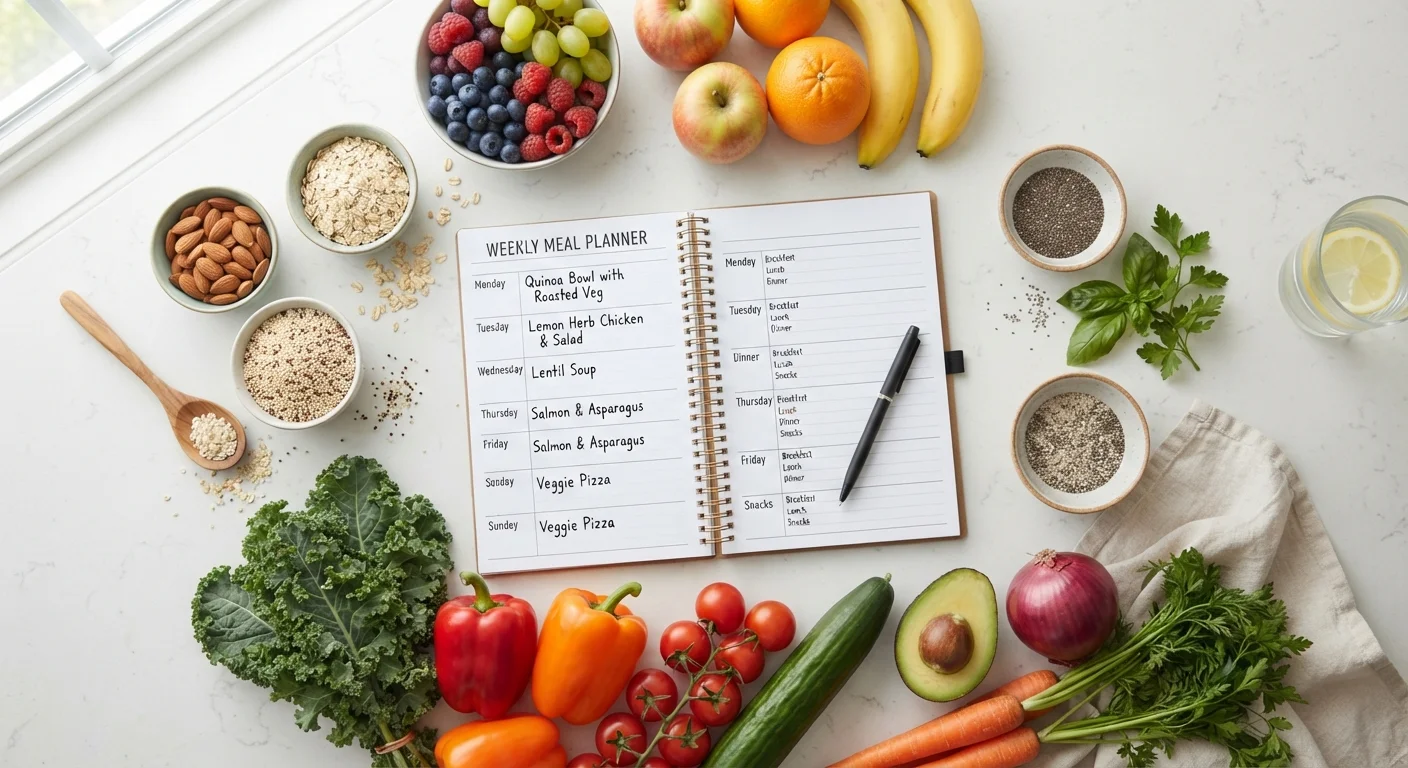
A simple grid - paper or digital - for mapping meals to each day of the week.
Grocery List App or Notepad
Captures your shopping list and allows easy editing and grouping by store section.
Airtight Food Storage Containers
Essential for safely storing batch-cooked grains, proteins, and prepped vegetables in the refrigerator or freezer.
Kitchen Scale
Useful for roughly portioning batch-cooked foods without guesswork, particularly proteins and grains.
Nutrition Reference (e.g. USDA MyPlate)
A free, publicly available guide to recommended food group servings that can inform your meal balance decisions.
How to Use This Checklist
Set aside 30 to 60 minutes once a week - Sunday morning or any consistent time works well. You do not need to plan every meal down to exact portions; the goal is to sketch enough structure that you default to nourishing choices rather than scrambling at 6 p.m. Pay close attention to the must items, which address nutritional coverage and food safety. Should items strengthen the plan, and nice-to-have items help you build efficiency over time.
Pair this checklist with a solid shopping list strategy - our article on building a shopping list that sticks explains how to organize your list by store section to reduce backtracking and impulse purchases.
For a deeper look at the vitamins and minerals your meals should cover, the micronutrients quick reference guide is a useful companion resource.
Review and Inventory
Nutritional Coverage
Meal Building and Planning
Shopping List Preparation
Prep and Food Safety
Don't Overlook Food Safety in Batch Cooking
Prepared food left in the refrigerator beyond four days carries an increased risk of bacterial growth, even when it looks and smells fine. Label all prepped containers with the date they were made, and freeze anything you do not expect to use within that window. When in doubt, throw it out - food waste is far less costly than foodborne illness.
Making Your Plan Stick Week After Week
The first plan you write rarely survives contact with a busy Tuesday. That is normal. The goal is a flexible structure, not a rigid schedule. Build in at least one designated leftover night and one simple fallback meal - such as eggs with whatever vegetables are on hand - so that a late meeting does not derail the entire week.
Eating with more intentionality is a skill that builds gradually. If you find yourself eating faster than hunger signals can register, the principles in our guide to getting started with mindful eating can complement your planning practice by helping you tune into satisfaction cues.
Finally, treat your meal plan the same way financial planners treat a monthly budget: review, adjust, and reset. Readers who already use a monthly budget reset checklist for finances will recognize this iterative approach - the same logic applies to your nutritional habits.
This article is for general informational and educational purposes only and does not constitute medical or dietary advice. Consult a registered dietitian or qualified healthcare professional for guidance tailored to your individual health needs, medical history, or specific dietary requirements.