
Popular Diet Patterns Decoded: Mediterranean, Low-Carb, Plant-Based, and More

| Most researched dietary pattern | Mediterranean diet (Based on volume of peer-reviewed clinical and observational studies) |
| Carbohydrate limit in ketogenic diets | Typically under 50g per day (General clinical definition; exact thresholds vary by protocol) |
| Nutrient of concern in vegan diets | Vitamin B12 (must be supplemented or obtained from fortified foods) (Academy of Nutrition and Dietetics position statement) |
| Common intermittent fasting window | 16 hours fasting / 8 hours eating (Widely studied protocol in clinical literature) |
| Shared feature across evidence-based patterns | Emphasis on minimally processed whole foods (Consistent finding across major dietary guideline reviews) |
What a 'Diet Pattern' Actually Means
The word "diet" gets used loosely - sometimes to mean a short-term weight-loss program, sometimes to describe an entire eating philosophy. In nutrition research, a dietary pattern refers to the habitual combination of foods a person eats over time, not a single rule or nutrient target. That distinction matters, because research increasingly shows that overall patterns predict health outcomes more reliably than any single food or nutrient in isolation.
The most studied patterns share a few common features: an emphasis on minimally processed whole foods, adequate fiber from plant sources, and moderate total energy intake. Where they diverge is in the foods they restrict or prioritize. Understanding those differences - and the evidence behind each - helps you make decisions grounded in science rather than marketing.
| Most researched dietary pattern | Mediterranean diet (Based on volume of peer-reviewed clinical and observational studies) |
| Carbohydrate limit in ketogenic diets | Typically under 50g per day (General clinical definition; exact thresholds vary by protocol) |
| Nutrient of concern in vegan diets | Vitamin B12 (must be supplemented or obtained from fortified foods) (Academy of Nutrition and Dietetics position statement) |
| Common intermittent fasting window | 16 hours fasting / 8 hours eating (Widely studied protocol in clinical literature) |
| Shared feature across evidence-based patterns | Emphasis on minimally processed whole foods (Consistent finding across major dietary guideline reviews) |
This article is general health information and education, not personal medical or dietary advice. Always consult a qualified healthcare professional before making significant changes to your eating habits.
The Four Major Patterns, Decoded
Mediterranean Diet
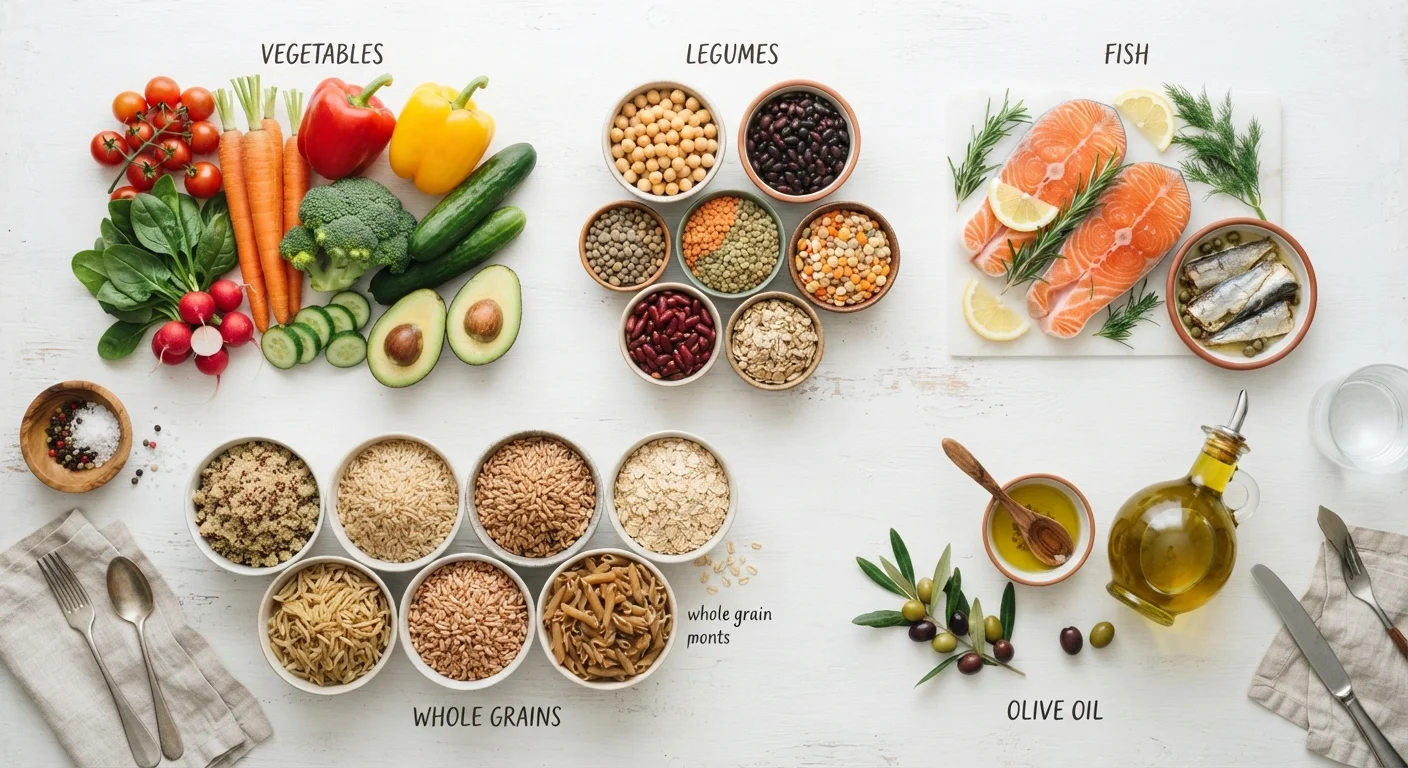
Modeled on traditional eating habits of countries bordering the Mediterranean Sea, this pattern centers on vegetables, fruits, whole grains, legumes, nuts, olive oil, and fish - with limited red meat and added sugars. It is one of the most extensively researched dietary approaches. Observational studies and several randomized trials, including the PREDIMED study published in the New England Journal of Medicine, have associated it with reduced risk of cardiovascular disease and related conditions. Critically, it is not a rigid meal plan - it is a flexible framework that accommodates diverse cuisines.
Low-Carbohydrate Diets (Including Ketogenic)
These patterns substantially reduce carbohydrate intake, shifting calories toward fat and protein. The ketogenic diet takes this furthest, restricting carbohydrates enough to induce ketosis - a metabolic state where the body primarily burns fat for fuel. Short-term evidence supports benefits for blood sugar management and weight reduction in some people. Long-term data are more limited, and very restrictive versions can be difficult to sustain. Certain populations - including people with specific metabolic or kidney conditions - should consult a physician before adopting these approaches. For broader context on restriction-related pitfalls, see why cutting entire food groups often backfires.
Plant-Based Diets
Plant-based eating exists on a spectrum - from diets that simply emphasize plants while including some animal products, to fully vegan patterns that exclude all animal-derived foods. Research links higher plant food intake with lower risks of heart disease, type 2 diabetes, and certain cancers. A well-planned plant-based diet can meet all nutritional needs, but nutrients like vitamin B12, iron, omega-3 fatty acids, and calcium deserve attention. Protein sources across diets explores how plant proteins compare with animal sources in terms of amino acid completeness and bioavailability.
Intermittent Fasting (Time-Restricted Eating)
Technically a pattern of when to eat rather than what to eat, intermittent fasting cycles between periods of eating and fasting. Common approaches include a 16-hour fast with an 8-hour eating window, or two reduced-calorie days per week. Research suggests modest benefits for weight and metabolic markers in some individuals, though evidence on long-term outcomes remains mixed. It is not appropriate for everyone, including those who are pregnant, have a history of disordered eating, or manage certain chronic conditions - consulting a healthcare provider is important before starting.
No Diet Pattern Works in Isolation
Sleep quality, physical activity, stress levels, and social context all influence how any eating pattern affects your health. Nutrition research consistently shows that lifestyle factors interact - improving sleep or increasing movement can amplify the benefits of dietary changes. Think of a dietary pattern as one important piece of a broader picture, not a standalone solution.
What No Single Pattern Can Do
No dietary pattern is a universal prescription. Individual responses to eating patterns vary based on genetics, activity level, gut microbiome composition, medications, and personal food preferences. What the evidence consistently supports is a set of broad principles: more vegetables, legumes, whole grains, and minimally processed foods; less ultra-processed food, added sugar, and refined starches.
Rather than searching for the "perfect" diet, most nutrition researchers emphasize flexibility and long-term sustainability. A pattern you can maintain comfortably over years is likely to serve you better than a highly restrictive one you abandon after months. For a practical, non-rigid approach to daily eating, building a balanced plate without a strict diet plan offers useful starting points.
Dietary Pattern
The combination and frequency of foods a person habitually consumes over time. Research increasingly focuses on patterns rather than individual nutrients to predict health outcomes.
Ketosis
A metabolic state in which the body predominantly uses fat - converted into molecules called ketone bodies - for energy, typically triggered by very low carbohydrate intake.
Macronutrients
The three main nutrient categories that provide energy: carbohydrates, proteins, and fats. Different dietary patterns shift the ratio of these in various ways.
Bioavailability
The proportion of a nutrient that the body can actually absorb and use. Bioavailability varies by food source, preparation method, and individual digestive factors.
Ultra-Processed Foods
Industrially manufactured products that contain ingredients rarely used in home cooking - such as emulsifiers, flavor enhancers, and modified starches. High intake is consistently linked to poorer health outcomes in large observational studies.
Time-Restricted Eating
A form of intermittent fasting that limits food consumption to a defined window of hours each day, rather than changing what foods are eaten.
To separate persistent misconceptions from current evidence, nutrition myths that science has largely moved past is worth reading alongside this overview.
This article is for general informational purposes only and does not constitute medical or nutritional advice. Consult a registered dietitian or qualified healthcare professional for guidance suited to your individual health needs.