

| Typical smartphone sensor size | 1/2.5-inch to 1-inch |
| Full-frame sensor dimensions | Approximately 36mm × 24mm |
| Wide aperture range (portrait use) | f/1.2 - f/2.8 |
| Narrow aperture range (landscapes) | f/8 - f/16 |
| Standard ISO range (most cameras) | ISO 100 - ISO 51,200 |
| RAW file size vs. JPEG | Typically 3-6x larger |
Why Camera Specs Feel Like a Foreign Language
Shopping for a camera - whether a standalone model or a smartphone upgrade - means wading through a wall of numbers and acronyms: 108MP, f/1.8, 1/2.3-inch sensor. Manufacturers present these specs prominently, yet rarely explain what they mean for the photos you'll actually take.
This glossary cuts through the noise. Each term below is defined in plain language, with a focus on what it means in practice - not just in theory. For a similar reference covering your home network gear and smart devices, see our home tech setup glossary. And if you want the same treatment for smartphone-specific specs, our cell phone glossary covers terms like 5G bands, refresh rate, and eSIM.
Megapixel (MP)
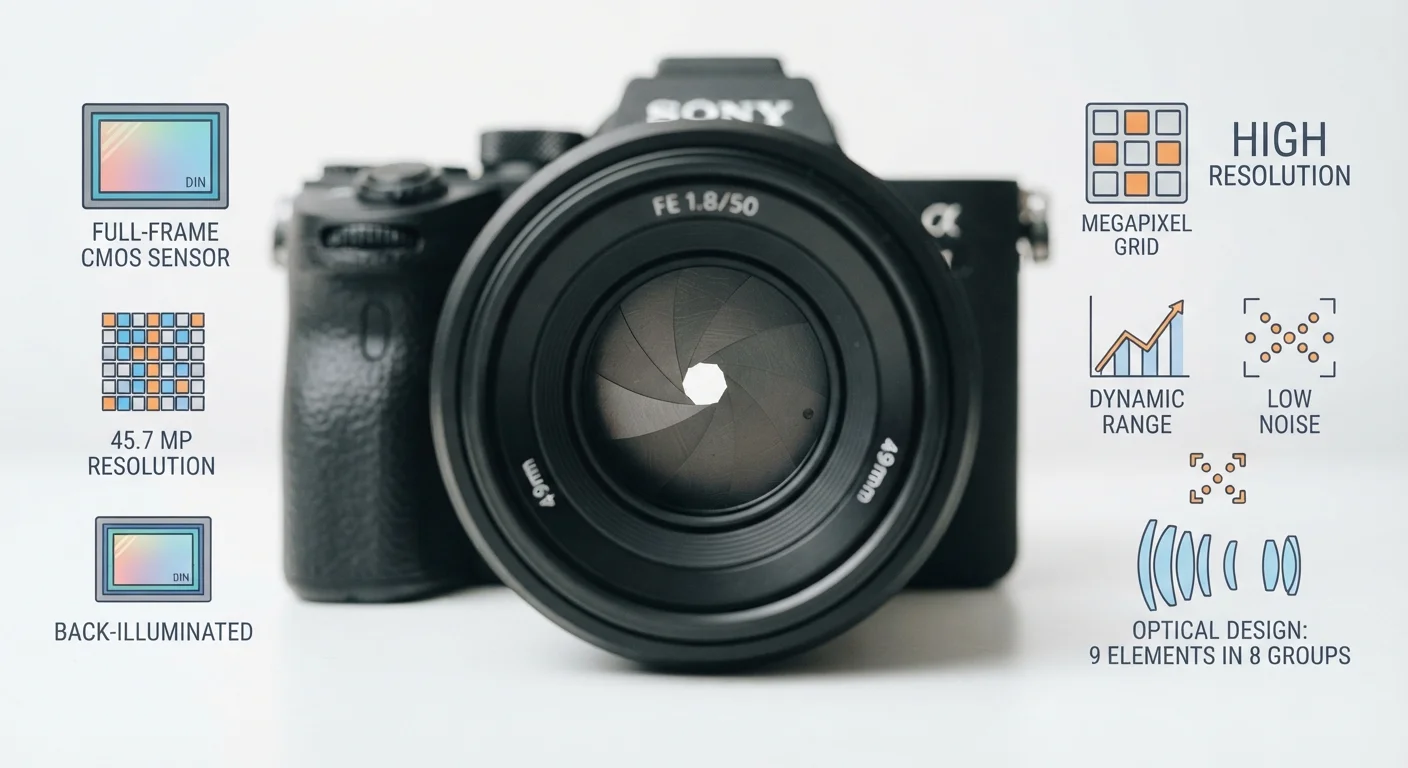
One megapixel equals one million individual pixels in a photo. A 12 MP camera produces images made up of 12 million tiny dots of color. More megapixels allow for larger prints or heavier cropping, but they don't automatically mean better image quality.
Aperture
The opening inside a camera lens that controls how much light reaches the sensor. Expressed as an f-number (e.g., f/1.8, f/8). A lower f-number means a wider opening and more light; a higher f-number means a narrower opening and less light. Aperture also affects how blurry the background appears.
Sensor Size
The physical dimensions of the image sensor inside the camera. Common sizes range from tiny (1/4-inch, found in basic smartphones) to large (full-frame, found in professional DSLRs). A larger sensor generally captures more light and produces cleaner images, especially in low-light conditions.
ISO
A measure of how sensitive the camera's sensor is to light. Higher ISO values (e.g., ISO 3200) allow shooting in darker environments but introduce digital noise - a grainy or speckled appearance. Lower ISO values produce cleaner images in bright conditions.
Depth of Field
The range of distance in a scene that appears acceptably sharp in a photo. A shallow depth of field (common with wide apertures) keeps the subject in focus while blurring the background. A deep depth of field keeps most of the scene sharp.
Optical Image Stabilization (OIS)
A hardware mechanism, typically inside the lens or sensor assembly, that physically compensates for hand shake during shooting. OIS reduces blur in handheld photos and videos, especially in low light or with zoom lenses. It is distinct from digital stabilization, which crops and adjusts the image in software after the fact.
Dynamic Range
The difference between the darkest and brightest tones a camera can capture in a single image without losing detail. A camera with wide dynamic range can show texture in deep shadows and bright highlights simultaneously. Cameras with limited dynamic range tend to produce blown-out skies or crushed dark areas.
Focal Length
A measurement (in millimeters) that describes how much a lens magnifies a scene and how wide its field of view is. Shorter focal lengths (e.g., 16mm) capture a wide angle of view; longer focal lengths (e.g., 200mm) magnify distant subjects. On a smartphone, multiple cameras with different focal lengths provide wide, standard, and telephoto options.
Crop Factor
A multiplier that accounts for the difference in sensor size compared to a full-frame (35mm) standard. A sensor with a 1.5x crop factor makes lenses behave as if they have a longer focal length. This is relevant when comparing lenses across camera systems.
RAW File Format
An image file that stores the unprocessed data captured by the sensor, before any in-camera adjustments are applied. RAW files give photographers maximum flexibility to adjust exposure, color, and detail in editing software. They are much larger than JPEG files and require post-processing.
Shutter Speed
How long the camera's shutter stays open to let in light, measured in fractions of a second (e.g., 1/500s, 1/30s). Faster shutter speeds freeze motion; slower speeds can introduce motion blur if the camera or subject moves during the exposure.
Autofocus (AF) System
The camera's mechanism for automatically detecting and locking focus on a subject. Phase-detection AF (common in modern cameras and smartphones) is generally fast and accurate. Contrast-detection AF, common in older point-and-shoot cameras, can be slower. Some cameras offer subject or eye-tracking AF.
The Core Specs Explained
With the definitions above as your foundation, here's how these terms interact in the real world:
| Typical smartphone sensor size | 1/2.5-inch to 1-inch |
| Full-frame sensor dimensions | Approximately 36mm × 24mm |
| Wide aperture range (portrait use) | f/1.2 - f/2.8 |
| Narrow aperture range (landscapes) | f/8 - f/16 |
| Standard ISO range (most cameras) | ISO 100 - ISO 51,200 |
| RAW file size vs. JPEG | Typically 3-6x larger |
Megapixels: Useful, But Overhyped
A higher megapixel count lets you print large or crop aggressively without losing detail. But beyond roughly 12-16 MP, most everyday shooters won't notice a difference in day-to-day photos. Where megapixels matter less is low-light performance - a 12 MP camera with a large sensor will typically outperform a 50 MP camera with a tiny sensor in dim conditions.
Aperture and Light
A wide aperture (low f-number like f/1.8) gathers more light, making it easier to shoot indoors or at night without blur. It also narrows the depth of field, meaning your subject stays sharp while the background goes soft - the look behind professional portraits. A narrow aperture (high f-number like f/11) keeps more of the scene in focus, which is why landscape photographers often prefer it.
Sensor Size and Image Quality
Sensor size is one of the most consequential specs a camera has. Larger sensors capture more light per pixel, which translates to less digital noise in low-light shots and a wider dynamic range - meaning more detail preserved in both bright and dark areas of the same image. This is why dedicated cameras with APS-C or full-frame sensors often produce noticeably cleaner images than smartphone cameras, even when the phone has a higher megapixel count.
Computational Photography Changes the Equation
Modern smartphones use software processing - often called computational photography - to compensate for small sensor sizes. Features like Night Mode, HDR, and AI-based sharpening can dramatically improve results beyond what the hardware specs alone suggest. This means raw specs are a useful guide, but real-world sample images remain the best indicator of how a camera actually performs.
Putting It All Together
No single spec tells the whole story. A camera is a system, and these terms describe different parts of how that system gathers and processes light. When evaluating any camera, consider how the specs work together rather than fixating on one number.
For example: a smartphone with a large sensor, a wide aperture lens, and optical image stabilization will likely outperform a compact camera with a smaller sensor and a slower lens - even if the compact claims more megapixels on the box.
~12-16 MP
Resolution sufficient for most print and screen uses
Image quality experts generally agree that 12-16 megapixels meets the needs of most everyday photographers, including large prints up to 16×20 inches.
1-inch
Sensor size where low-light performance notably improves
Cameras with 1-inch or larger sensors show a measurable improvement in noise performance over smaller sensors, particularly at ISO 800 and above.
f/1.8
Common wide aperture on modern smartphone main cameras
Many contemporary flagship smartphones feature a main camera lens with an aperture of approximately f/1.8, enabling better low-light capture and background blur effects.
Understanding these terms also helps you read sample images critically. Look at photos taken in real conditions - indoors, at dusk, with movement - rather than studio shots. The specs explain what to look for; the actual photos tell you how well the camera delivers.
Glossaries like this one are useful starting points, but the best way to internalize these concepts is to experiment with a camera you already own. Adjust the aperture, change the ISO, and observe what actually changes in your images. That hands-on understanding will serve you far better than any spec sheet.