

Key Takeaways
- Social engineering targets human psychology, not software vulnerabilities.
- Urgency, authority, and fear are the most common psychological levers attackers use.
- Even cautious, tech-savvy people can be deceived under the right conditions.
- Pausing before acting on any unexpected request is one of the most effective defenses.
- Verifying requests through a separate, trusted channel can stop most attacks cold.
Social Engineering
Social engineering is a type of manipulation where an attacker tricks a person - rather than a computer system - into revealing sensitive information or taking a harmful action. Instead of hacking software, these attacks exploit human instincts like trust, fear, urgency, and helpfulness. Common forms include fake emails, phone calls from imposters, and text message scams.
In cybersecurity, social engineering is often classified separately from technical exploits because no software vulnerability is required - the human being is the attack surface.
It's Not About Hacking Your Computer - It's About Hacking You
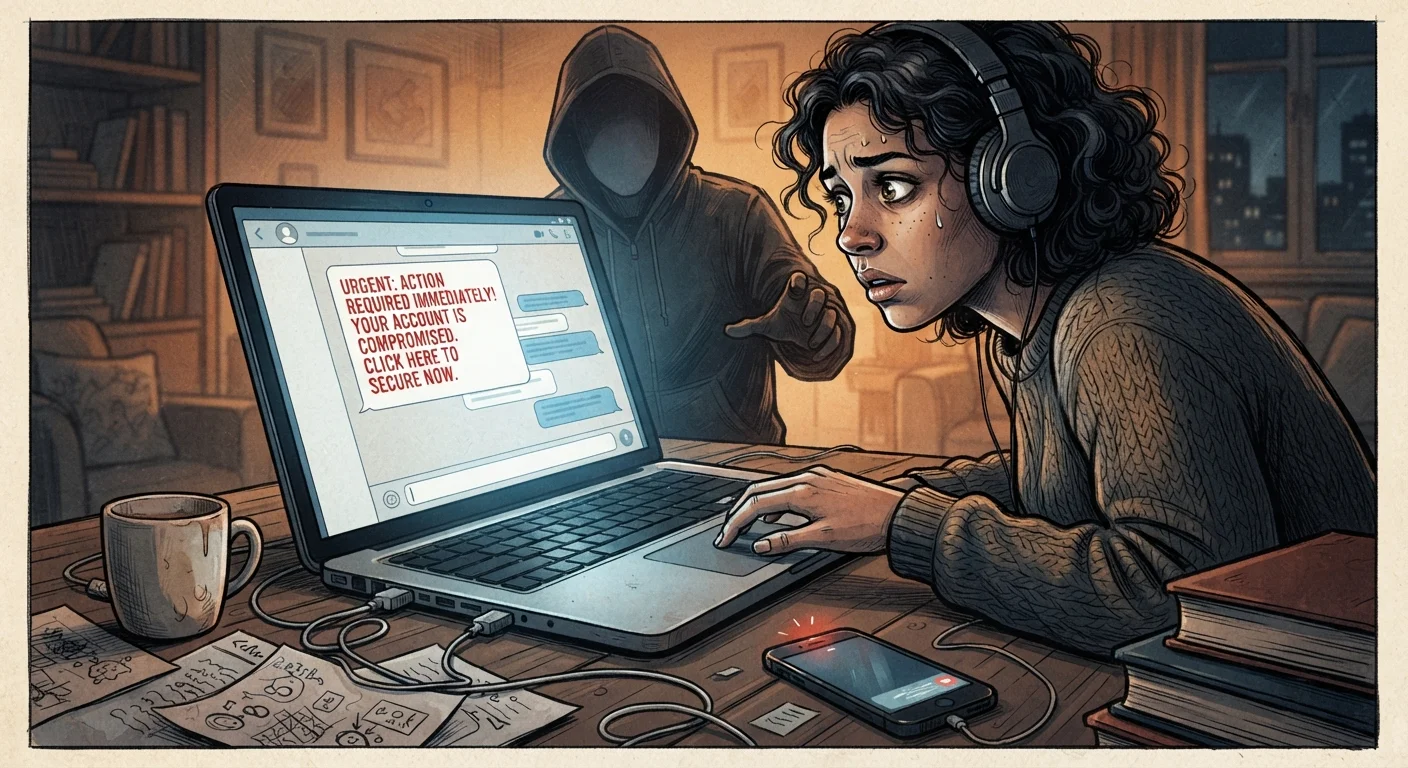
Most people imagine cyberattacks as scenes from a movie: hooded figures writing code to break through firewalls. The reality is far less cinematic - and far more personal. The majority of successful digital attacks today don't exploit software at all. They exploit people.
Social engineering works by convincing you to do something a hacker needs you to do: click a link, share a password, approve a transfer, or open a file. The attacker doesn't need to break into a system if they can simply persuade you to hand over the key.
This approach is effective precisely because it sidesteps all the technical defenses - antivirus software, firewalls, and encryption - that organizations spend heavily to maintain. No security tool can fully patch a human being.
“The human element continues to be a significant factor in breaches. People are not the problem - they're being targeted because exploiting behavior is often easier than exploiting technology.”
— Alex Pinto, Lead author, Verizon Data Breach Investigations Report
The Psychological Levers Attackers Pull
Social engineering attacks aren't random. They're built around well-understood principles of human psychology. Understanding which buttons attackers press is the first step toward not letting them work on you.
- Authority: Messages that appear to come from the IRS, your bank, IT support, or even your boss create an automatic instinct to comply. We're conditioned to respond to authority figures.
- Urgency: "Your account will be suspended in 24 hours" - urgency short-circuits careful thinking. When we believe time is running out, we act before we verify.
- Fear: Threats of consequences - legal trouble, account loss, missed deliveries - override skepticism and push people toward hasty decisions.
- Helpfulness: Many attacks target people's natural desire to be cooperative. A caller claiming to be a struggling colleague, or a tech support agent who sounds genuinely overwhelmed, can trigger generosity over caution.
- Familiarity: Attackers often research targets on social media to reference real names, workplaces, or recent events - making the deception feel authentic.
For a deeper look at how these tactics play out in specific message formats, see our overview of phishing, smishing, and vishing.
When In Doubt, Don't Act - Verify
If any message, call, or email creates a sense of urgency or asks you to act immediately, stop. Legitimate organizations give you time to verify their identity through an independent channel. Make it a personal rule: the more urgent a request feels, the more carefully you check it out before responding.
Why Intelligence Isn't a Reliable Shield
It's tempting to assume that educated, tech-aware people are immune. They're not - and believing otherwise actually increases vulnerability by reducing vigilance.
Social engineering attacks are most effective when they catch someone stressed, distracted, or time-pressured. A surgeon receiving a spoofed email at the end of a long shift, or a small business owner anxious about a payment, is operating with reduced cognitive bandwidth. Under those conditions, the brain leans on shortcuts and emotional responses rather than careful analysis.
Attackers also invest significant effort in pretexting - building a believable backstory. They may know your employer, your manager's name, your recent purchase history, or even details pulled from data breaches. The more personalized the attack, the harder it is to detect.
74%
Of data breaches involve a human element
According to Verizon's Data Breach Investigations Report, the vast majority of breaches involve social engineering, errors, or misuse - not purely technical exploits.
3.1B
Phishing emails sent daily worldwide
Estimates from cybersecurity researchers suggest billions of phishing messages are sent each day, making it the most common form of social engineering attack.
~60 seconds
Median time before a phishing link is clicked
Research from cybersecurity firm Cofense found that many recipients click malicious links within the first minute of receiving a phishing email, before critical thinking kicks in.
The uncomfortable truth is that the question isn't whether you could fall for social engineering - it's whether the right attack has been aimed at you yet. Awareness of your own vulnerabilities, not confidence in your intelligence, is what actually helps.
Practical Habits That Break the Attack Chain
Social engineering relies on a chain of small, fast decisions. Introducing friction - slowing down even slightly - is often enough to break it.
Pause before you act. If a message or call creates urgency or fear, treat that feeling as a warning sign, not a reason to rush. Legitimate organizations rarely demand immediate action under threat.
Verify through a separate channel. If someone calls claiming to be from your bank, hang up and call the number on the back of your card. If an email from IT asks for your credentials, contact your IT department directly. Never use contact information provided in the suspicious message itself.
Be selective about what you share publicly. Attackers harvest personal details from social media profiles, professional directories, and public records. Limiting what's visible reduces the raw material they have to work with. Our article on habits that make accounts easy to hack covers this in detail.
Use strong, unique credentials. If an attacker does trick you into revealing a password, having unique passwords per account limits the damage to a single service rather than your entire digital life. Pair this with two-factor authentication wherever possible.
These habits don't require technical expertise - just a moment of deliberate skepticism applied consistently.