

Key Takeaways
- Indoor cats typically live significantly longer lives than outdoor cats due to fewer environmental hazards.
- Outdoor access provides enrichment and exercise but exposes cats to real, measurable risks.
- Enriched indoor environments can meaningfully offset the stimulation gap for indoor-only cats.
- Your location, cat's temperament, and health status all influence which lifestyle fits best.
- Supervised outdoor time and enclosed catios offer a practical middle ground for many owners.
Significantly longer average lifespan
Indoor cats live an estimated 12-18 years on average, compared to roughly 2-5 years for free-roaming outdoor cats according to many veterinary sources, primarily because they avoid the hazards that cause early death.
Lower risk of infectious disease
Without contact with other free-roaming cats, indoor cats have dramatically reduced exposure to FeLV, FIV, and common respiratory infections that spread through biting, grooming, and shared territory.
Fewer parasites and toxic exposures
Indoor cats rarely encounter fleas, ticks, or intestinal parasites at the rates outdoor cats do, and they're far less likely to encounter antifreeze, rodenticides, or toxic plants.
Easier to monitor health and behavior changes
When a cat is home-based, owners notice appetite changes, litter box irregularities, and behavioral shifts earlier - often leading to faster veterinary intervention.
No contribution to wildlife predation
Free-roaming cats are estimated to kill billions of birds and small mammals annually in the U.S.; keeping cats indoors eliminates this ecological impact entirely.
Higher risk of traumatic injury and death
Traffic, predator attacks, and territorial fights with other cats are the dominant causes of injury and premature death in outdoor cats, particularly in densely populated areas.
Greater exposure to infectious disease
Contact with other free-roaming cats creates real transmission risk for FeLV, FIV, and respiratory illnesses - conditions that can be managed but rarely cured.
Indoor cats may develop enrichment-related problems
Without adequate stimulation, indoor cats are more prone to obesity, stress behaviors like over-grooming, and inter-cat conflict in multi-cat households.
Outdoor cats are harder to monitor for health changes
A cat that spends significant time away from home may mask illness or injury for days before an owner notices, delaying potentially critical veterinary care.
Outdoor roaming affects neighboring properties and wildlife
Free-roaming cats may cause tension with neighbors and contribute to local wildlife predation - factors that carry social and sometimes legal consequences depending on local ordinances.
Our Verdict
Neither lifestyle is universally right or wrong - each involves genuine trade-offs between safety and enrichment. Indoor living offers measurably longer, healthier lives on average, while outdoor access provides natural stimulation that some cats genuinely thrive on. The best answer depends on where you live, your cat's personality, and how much you're willing to invest in compensating for whichever risks your choice introduces.
Indoor living is ideal for cats in urban or suburban areas with high traffic and predator pressure; outdoor or supervised outdoor access may suit confident, healthy cats in lower-risk rural settings with attentive owners.
The Stakes of This Decision
Few choices in cat ownership carry as much long-term consequence as where your cat spends its life. The indoor-versus-outdoor debate isn't just about preference - it touches on lifespan, physical health, psychological wellbeing, and your own peace of mind. Veterinary and animal welfare organizations have weighed in extensively, but the honest answer isn't a simple one.
Understanding what each lifestyle actually means - not just in theory but in lived, documented experience - is the most useful place to start. Whether you're bringing home a new kitten or reconsidering your current cat's routine, the trade-offs below reflect real considerations, not worst-case fear-mongering or breezy reassurance.
Significantly longer average lifespan
Indoor cats live an estimated 12-18 years on average, compared to roughly 2-5 years for free-roaming outdoor cats according to many veterinary sources, primarily because they avoid the hazards that cause early death.
Lower risk of infectious disease
Without contact with other free-roaming cats, indoor cats have dramatically reduced exposure to FeLV, FIV, and common respiratory infections that spread through biting, grooming, and shared territory.
Fewer parasites and toxic exposures
Indoor cats rarely encounter fleas, ticks, or intestinal parasites at the rates outdoor cats do, and they're far less likely to encounter antifreeze, rodenticides, or toxic plants.
Easier to monitor health and behavior changes
When a cat is home-based, owners notice appetite changes, litter box irregularities, and behavioral shifts earlier - often leading to faster veterinary intervention.
No contribution to wildlife predation
Free-roaming cats are estimated to kill billions of birds and small mammals annually in the U.S.; keeping cats indoors eliminates this ecological impact entirely.
The Real Risks of Outdoor Life
Outdoor cats face a wide range of hazards that are well-documented across veterinary literature. Traffic is the leading cause of traumatic injury and death in free-roaming cats, particularly in suburban and urban environments. Encounters with wildlife - coyotes, dogs, raccoons, and even other cats - result in wounds that frequently become infected and require veterinary care.
Higher risk of traumatic injury and death
Traffic, predator attacks, and territorial fights with other cats are the dominant causes of injury and premature death in outdoor cats, particularly in densely populated areas.
Greater exposure to infectious disease
Contact with other free-roaming cats creates real transmission risk for FeLV, FIV, and respiratory illnesses - conditions that can be managed but rarely cured.
Indoor cats may develop enrichment-related problems
Without adequate stimulation, indoor cats are more prone to obesity, stress behaviors like over-grooming, and inter-cat conflict in multi-cat households.
Outdoor cats are harder to monitor for health changes
A cat that spends significant time away from home may mask illness or injury for days before an owner notices, delaying potentially critical veterinary care.
Outdoor roaming affects neighboring properties and wildlife
Free-roaming cats may cause tension with neighbors and contribute to local wildlife predation - factors that carry social and sometimes legal consequences depending on local ordinances.
Disease exposure is another significant factor. Outdoor cats are far more likely to contract feline leukemia virus (FeLV), feline immunodeficiency virus (FIV), and upper respiratory infections through contact with other cats. Parasites including fleas, ticks, and intestinal worms are also dramatically more prevalent in cats with outdoor access. Poison exposure - from rodenticides, antifreeze, and toxic plants - adds another layer of risk that's largely absent for indoor cats.
2-5 yrs
Average lifespan of free-roaming outdoor cats
Veterinary and animal welfare sources commonly cite this range for cats without restricted outdoor access, compared to 12-18 years for indoor cats.
1.3-4B
Birds killed annually by free-roaming cats in the U.S.
A widely cited estimate from a study published in Nature Communications suggests free-roaming cats are among the leading human-linked causes of bird mortality in North America.
What Indoor Life Can and Can't Provide
Indoor cats are statistically safer, but "safer" doesn't automatically mean "better off" in every dimension. The most honest critique of exclusive indoor living is the enrichment gap. Cats are natural hunters with complex sensory and behavioral needs. Without adequate stimulation, indoor cats can develop stress-related behaviors: over-grooming, inter-cat aggression, destructive scratching, and obesity-linked health problems.
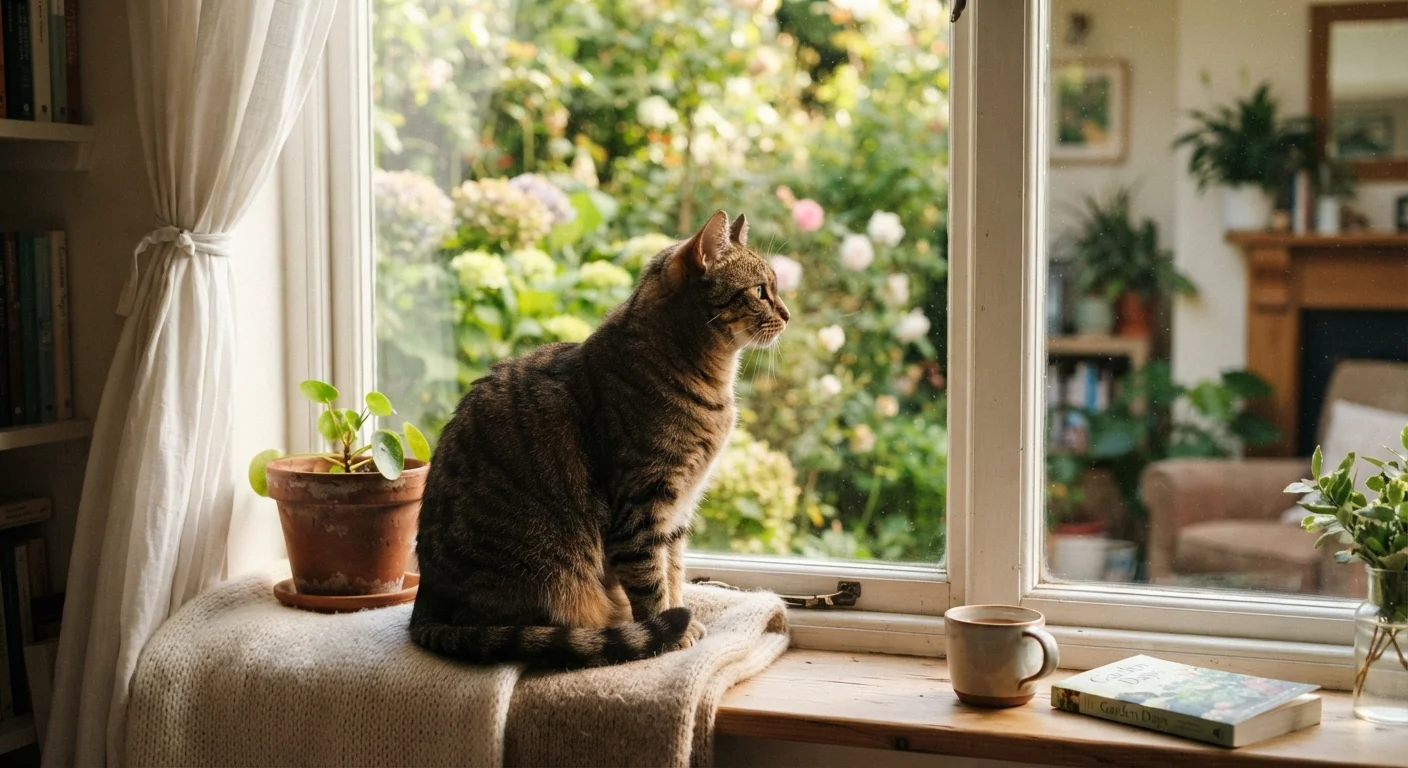
The good news is that this gap is genuinely closeable. Puzzle feeders, climbing structures, window perches, rotating toy varieties, and regular interactive play sessions can address much of what outdoor access provides instinctively. Indoor cats also benefit from consistent veterinary care that's easier to maintain when you're not also managing wound treatment, parasite loads, and unexpected trauma.
Enrichment Takes Consistent Effort
A bare apartment with limited interaction doesn't become a healthy indoor environment just by keeping the door closed. Effective indoor enrichment requires regular interactive play, environmental variety, and vertical space for climbing and perching. Owners who commit to this see markedly better behavioral and physical health outcomes in their indoor cats. Think of it as an ongoing practice, not a one-time setup.
If you're thinking through broader questions about how your living situation shapes your pet's life - including whether your housing setup supports indoor enrichment adequately - the same kind of careful trade-off analysis applies to other major decisions, like the one explored in renting vs. buying a home.
The Middle Ground: Supervised and Enclosed Outdoor Access
For owners who want to give their cats some outdoor experience without full free-roaming exposure, several practical options exist. Enclosed catios - screened outdoor enclosures attached to a home or freestanding in a yard - have grown significantly in popularity and allow cats to experience fresh air, natural light, and outdoor sights and sounds without exposure to traffic, predators, or roaming cats.
Leash training is another option that works well for some cats, particularly those introduced to a harness early in life. It requires patience and a cat that tolerates the setup, but it provides genuine outdoor enrichment under direct supervision. Supervised backyard time in a securely fenced space is a lower-infrastructure version of the same concept.
These middle-ground approaches won't suit every cat or every household - a nervous cat may find outdoor time stressful rather than stimulating - but they're worth considering before settling into an all-or-nothing framework. If you're planning to travel with your cat and weighing safety decisions there too, the same thoughtful approach applies; see how those decisions stack up in our look at in-cabin vs. cargo pet transport.
This article is for general informational purposes only and is not a substitute for professional veterinary advice. Consult a licensed veterinarian for guidance specific to your cat's health and circumstances.