

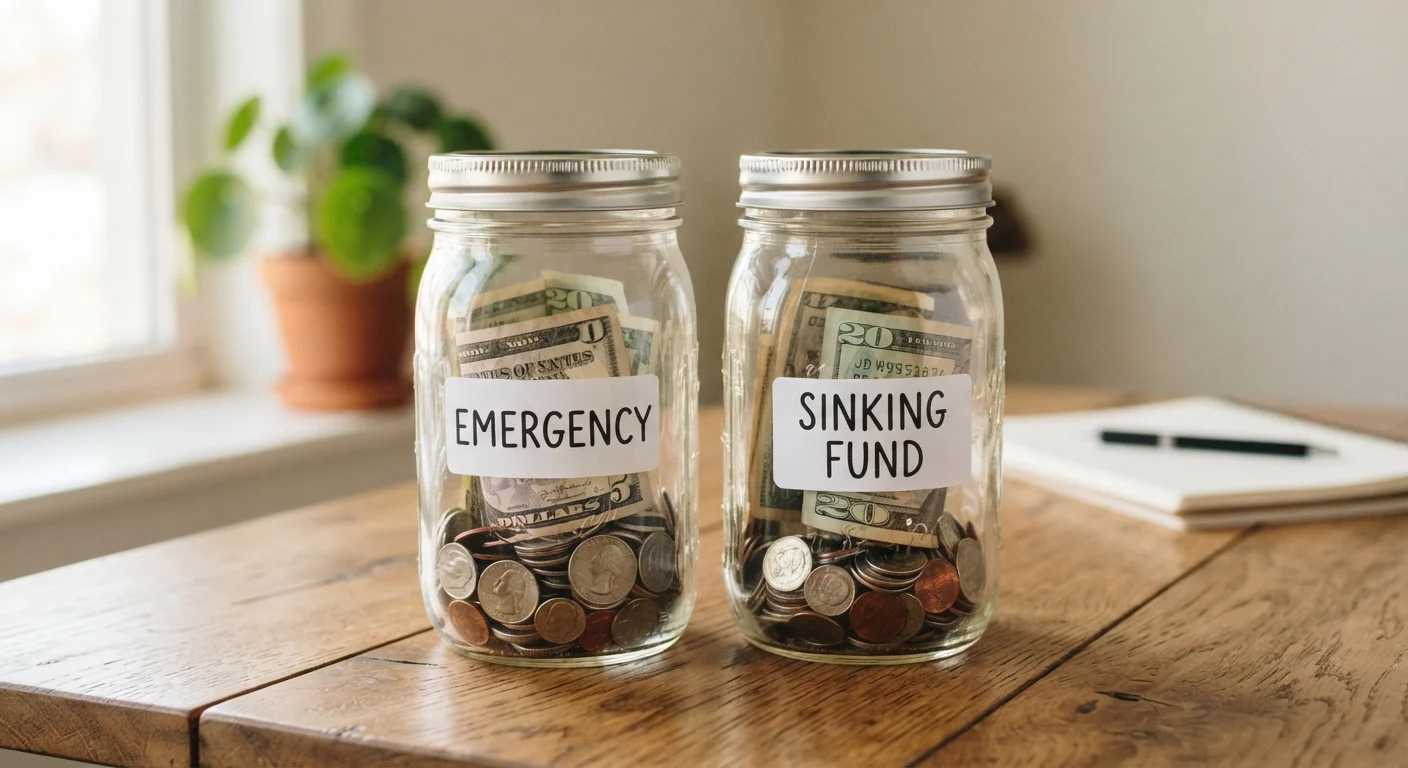
Key Takeaways
- Emergency funds cover unplanned, unavoidable expenses; sinking funds cover planned, predictable ones.
- A fully funded emergency fund typically holds three to six months of living expenses.
- Sinking funds use a fixed monthly contribution calculated by dividing the target amount by the months remaining.
- Both accounts work best when kept separate from your everyday checking account.
- Building a small emergency fund first is often the recommended starting point before opening multiple sinking funds.
Option A
Emergency Fund
Your financial safety net for the unexpected.
Best for: Anyone who wants protection against sudden, unpredictable expenses like job loss, medical emergencies, or urgent home repairs.
Option B
Sinking Fund
A purpose-built savings bucket for planned future costs.
Best for: People saving toward a specific, predictable expense - such as a car registration, holiday gifts, or an annual insurance premium.
If you have no financial cushion and live paycheck to paycheck
Emergency Fund
An emergency fund provides the baseline protection that prevents a single setback from becoming a financial crisis. Start here before addressing planned expenses.
If you already have an emergency fund and want to stop raiding it for predictable costs
Sinking Fund
Once your safety net is in place, sinking funds let you budget proactively for known upcoming expenses without disrupting your emergency reserves.
If your income is irregular or your job security is uncertain
Emergency Fund
Variable income raises the stakes for unexpected gaps. A larger, well-funded emergency reserve should take priority over discretionary savings goals.
If you frequently feel blindsided by bills you should have anticipated
Sinking Fund
Sinking funds turn recurring annual or seasonal costs into manageable monthly line items, eliminating the budget shock of expenses you can see coming.
What Each Fund Actually Does
Both accounts hold money you set aside on purpose - but they respond to completely different financial events. An emergency fund is a reserve for costs you cannot predict: a sudden layoff, an unexpected car breakdown, or an unplanned medical bill. Its job is to absorb financial shocks so you don't have to reach for a credit card or personal loan under stress. If you're building your first emergency fund from scratch, the general guideline is to accumulate three to six months of essential living expenses, though the right amount depends on your income stability and household obligations.
A sinking fund, by contrast, is designed for expenses you know are coming. Think annual car registration, a planned vacation, holiday gifts, or a home appliance you expect to replace within a few years. You name the goal, estimate the cost, set a deadline, and divide the total by the number of months you have. That monthly figure becomes a fixed budget line. Sinking funds prevent budget surprises by converting lump-sum future costs into steady, predictable contributions.
| Criterion | Emergency Fund | Sinking Fund |
|---|---|---|
| Purpose | Cover unexpected, unplanned expenses | Cover known, predictable future costs |
| Target amount | 3-6 months of essential living expenses | Exact cost of the planned expense |
| Contribution method | Build until target; replenish after use | Goal ÷ months remaining = fixed monthly deposit |
| When you withdraw | Only during genuine financial emergencies | When the planned expense arrives |
| Number of accounts | Typically one fund | One per savings goal (often several at once) |
| Refill after spending | Yes - restore to full target | Optional - reset or close depending on goal |
How to Fund Each One - and in What Order
The sequencing question trips up a lot of savers. The widely accepted approach in personal finance is to build a modest emergency fund first - often a starter amount of $1,000 - before opening multiple sinking funds. That initial cushion prevents you from raiding your sinking fund accounts when a surprise expense hits.
Once your emergency fund reaches its target, you can layer in sinking funds for each predictable future expense you carry. Many households run several simultaneously: one for car maintenance, one for annual insurance premiums, one for holiday spending. Each can live in its own labeled savings account or sub-account, which makes it easier to track progress and avoid commingling funds. For guidance on which account types suit different stages of your saving journey, see where your savings should live at each stage of life.
57%
Americans unable to cover a $1,000 emergency with savings
A 2024 Bankrate survey found that more than half of U.S. adults could not pay for an unexpected $1,000 expense from their savings account.
3-6 months
Recommended emergency fund size
Financial planning guidance widely cited by consumer organizations suggests holding three to six months of essential expenses, with higher amounts for variable-income earners.
Because contributions to both fund types often compete for the same monthly cash, it helps to treat them as non-negotiable line items in your budget - not leftovers after discretionary spending. Automating transfers on payday reduces the temptation to skip a month and keeps both funds growing on schedule. See the budgeting basics hub for frameworks that make automation easier to set up.
The Key Differences That Change Your Strategy
The most important distinction isn't where the money lives - it's why you might withdraw it. Tapping an emergency fund is appropriate only when an expense is both unexpected and unavoidable. Using it for a planned purchase, even a large one, defeats its purpose and leaves you exposed the next time a real crisis hits.
Sinking funds, by design, are meant to be spent. Reaching a sinking fund's target and drawing it down to pay a predictable bill is a sign the system is working correctly. You then reset the fund - or close it if the goal is complete - and redirect the monthly contribution elsewhere. For readers juggling multiple goals at once, balancing short-term and long-term savings goals offers a practical framework for prioritization. Both fund types also fit into the broader arc of saving across major financial milestones - a topic covered in depth in savings goals across life's major milestones.
One Account or Many? Keeping Funds Separate Matters
Keeping your emergency fund and each sinking fund in separate accounts - or labeled sub-accounts - removes the guesswork about what money is spoken for. Many online banks and credit unions offer free savings sub-accounts you can name and track individually. This structure makes it far less likely you'll accidentally spend sinking fund money on an emergency, or vice versa.
This article is for general informational purposes only and does not constitute personalized financial advice. Consider consulting a qualified financial professional for guidance specific to your situation.