

Key Takeaways
- Loyalty programs reward repeat spending, but the value you receive depends heavily on the program's redemption rate.
- Most programs collect your purchase data as part of the exchange - perks are not purely a gift from the retailer.
- Tiered programs lock higher rewards behind spending thresholds that may push you to buy more than you planned.
- Cashback, points, and member pricing operate differently and have distinct conditions on when and how you can use them.
- A loyalty program only saves you money if you would have made those purchases anyway at competitive prices.
Store Loyalty Program
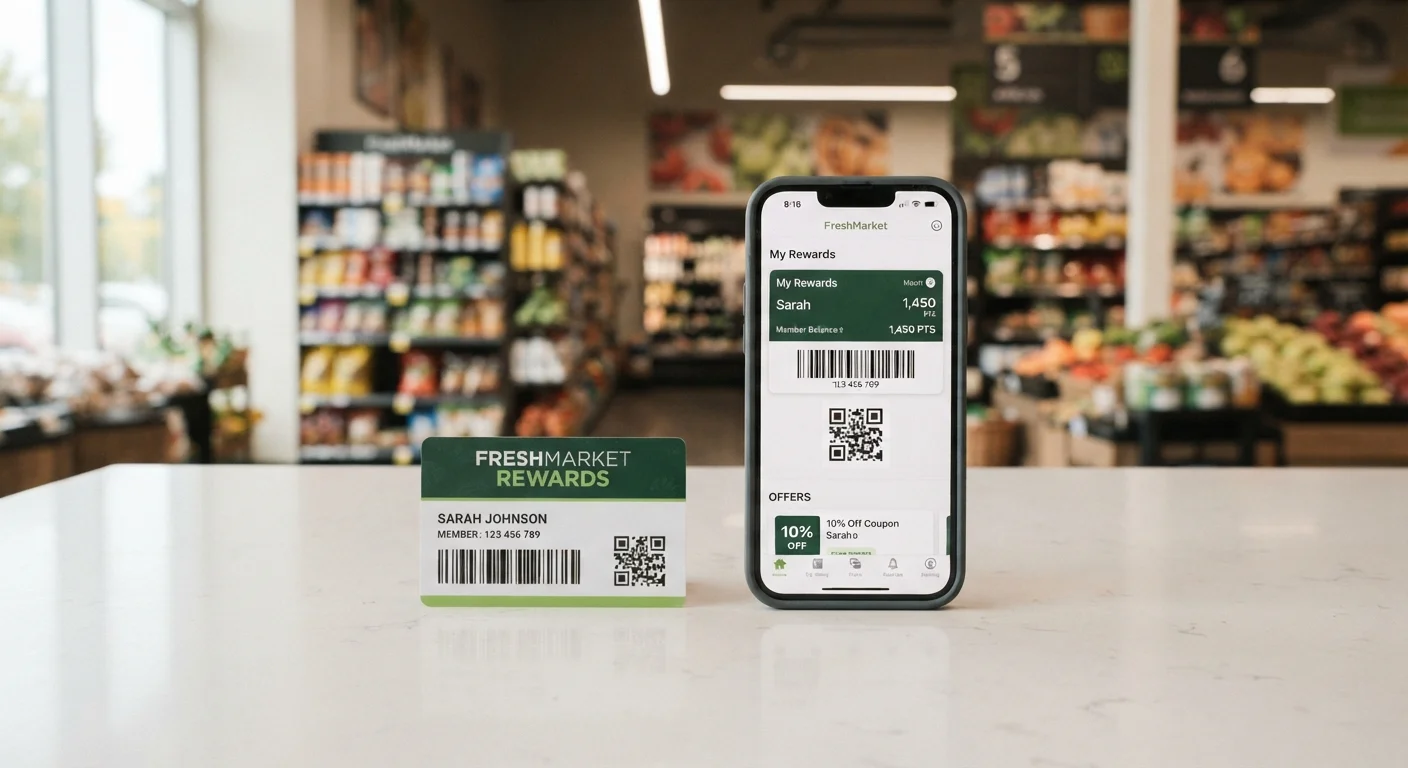
A store loyalty program is a structured rewards system offered by retailers that gives members points, discounts, or other benefits in exchange for repeat purchases. Members typically earn rewards based on how much they spend, which can later be redeemed for savings or exclusive pricing. Enrollment is usually free, though some programs offer a paid tier with enhanced benefits.
Retailers use loyalty program data to build detailed purchase-history profiles that inform personalized pricing, targeted promotions, and inventory decisions - making data collection a core business function of these programs alongside customer retention.
What a Loyalty Program Is Exchanging
Every loyalty program is a trade. You give the retailer consistent purchasing behavior and detailed data about your shopping habits; the retailer gives you points, discounts, or early access. Neither side of that equation is hidden, but most shoppers focus on the perks side without fully accounting for the data side.
Retailers use loyalty membership data to understand which products sell at full price versus only during promotions, how price-sensitive individual shoppers are, and which households drive disproportionate revenue. That intelligence has real commercial value - which is why enrollment is typically free. Understanding this framing helps you evaluate any loyalty program more clearly: you're a participant in a mutual business arrangement, not simply a recipient of retailer generosity.
For a broader look at how retailers design environments and pricing to influence behavior, see price anchoring and loss leader tactics used alongside loyalty incentives.
Loyalty Programs and Your Data
When you enroll in a loyalty program, the retailer's privacy policy governs how your purchase data is stored, used, and potentially shared. It's worth reviewing what data is collected and whether you can opt out of targeted marketing while retaining program benefits. Most programs explain this in their terms of service, though the language is often dense.
The Four Core Mechanics
Most retail loyalty programs are built from a combination of four structures:
- Points accumulation: You earn a set number of points per dollar spent. Points accumulate until you reach a redemption threshold and can be applied toward future purchases. The key variable is the conversion rate - how many cents of value each point represents.
- Tiered status: Programs with tiers (Silver, Gold, Platinum, or similar naming) unlock progressively better rewards as your annual spend increases. Higher tiers typically offer faster point earning, free shipping, or priority service. The tradeoff is that maintaining status requires consistent spending, sometimes nudging members to consolidate purchases at one retailer even when it's not the most economical choice.
- Member pricing: Some retailers - particularly grocery chains - advertise a 'member price' or 'card price' that is lower than the shelf price for non-members. This structure makes the membership feel immediately valuable, but it also means the posted non-member price is rarely what anyone actually pays.
- Cashback rewards: Rather than points, some programs return a flat percentage of spending as store credit or cash. This is generally more transparent than points because the value is stated directly. Cashback, rebates, and store credit each carry different conditions worth understanding before assuming they're equivalent.
72%
U.S. consumers enrolled in at least one loyalty program
According to research compiled by Bond Brand Loyalty, the majority of American consumers participate in at least one retail rewards program.
~50%
Loyalty program memberships that go unused
Industry research has consistently found that roughly half of all loyalty memberships are inactive, meaning members accumulate few or no points and redeem nothing.
1-2%
Typical effective return rate on points programs
When factoring in standard earn rates, redemption minimums, and exclusions, most points-based loyalty programs return between one and two cents per dollar spent in practical value.
What Tiers and Thresholds Actually Incentivize
Tiered programs are engineered around a concept called status anxiety - the discomfort of being close to the next reward level but not quite there. A shopper who has spent $480 toward a $500 Gold tier threshold has a strong psychological pull to make up the gap, even if those last $20 of purchases wouldn't otherwise have been made.
This is worth watching in your own behavior. If you find yourself making purchases primarily to maintain a tier or avoid losing points, the program may be shaping your spending rather than rewarding it. A useful self-check: would you make this purchase at this price if there were no points involved? If the answer is no, the 'reward' is costing you money.
Track Points Like a Simple Budget Line
Treat loyalty rewards like a minor budget category - note your balance quarterly and check expiration dates. If you consistently let points expire or never reach redemption thresholds, the program isn't delivering value for your shopping pattern, and simplifying your loyalty memberships may reduce decision fatigue without any real cost to you.
Reading the Fine Print That Determines Real Value
The stated reward rate of a loyalty program and the actual value you receive can differ significantly based on a few common program rules:
- Redemption minimums
- Many programs require you to accumulate a minimum balance before you can redeem anything. If that minimum is high relative to your purchase frequency, points may sit unused for extended periods.
- Expiration policies
- Points that expire after 12 months of account inactivity - or on a fixed calendar date - can evaporate before you use them. Programs with rolling expiration dates are particularly easy to lose track of.
- Category exclusions
- Certain product categories - alcohol, gift cards, pharmacy items, or sale merchandise - are often excluded from point earning. If those categories represent a significant share of your typical basket, the effective earn rate is lower than advertised.
- Paid tier benefits
- When a program offers a premium paid membership, calculate whether the incremental benefits justify the fee based on your actual spend level, not the program's promotional scenarios. For more on stacking discounts and evaluating savings mechanics, layering loyalty rewards with other discount strategies can sometimes improve your return - but only when the math works in your favor.