

Key Takeaways
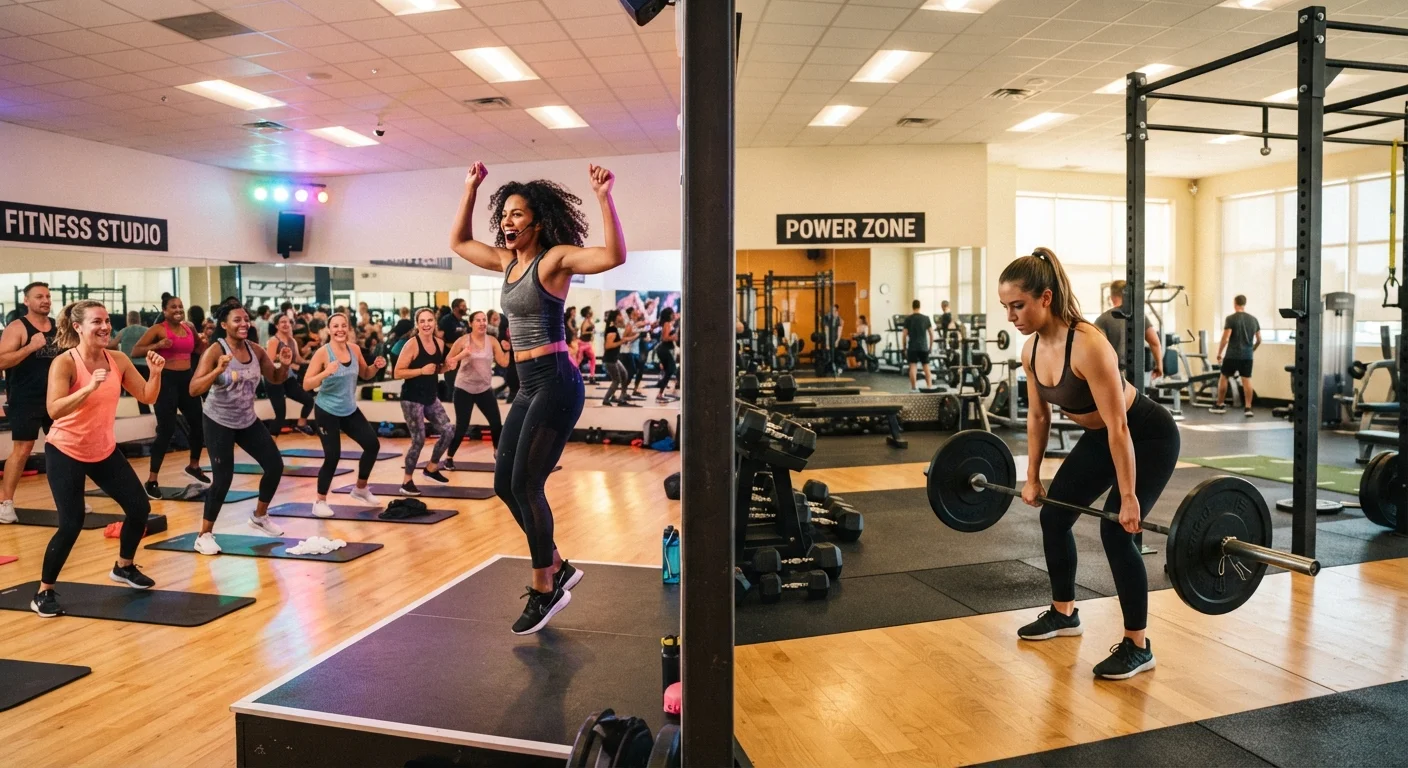
- Group fitness classes provide built-in structure, instructor guidance, and social accountability.
- Solo workouts offer maximum scheduling flexibility and the freedom to tailor every session to your goals.
- Neither approach is universally superior - the best routine is the one you'll consistently follow.
- Many people benefit from combining both formats depending on the week and their energy levels.
- Cost, personality, and fitness experience level all influence which format suits you better.
Built-in accountability and social motivation
Committing to a class time - and knowing others expect to see you - reduces the likelihood of skipping. Studies on exercise adherence suggest social obligation is one of the most reliable behavioral motivators.
Expert instruction reduces injury risk for beginners
Certified group instructors cue form corrections in real time, helping newer exercisers develop safe movement patterns they might not learn alone.
Structured programming removes decision fatigue
When a class is planned for you, there's no mental overhead about what to do next - a significant advantage for people who struggle to design their own sessions.
Solo training adapts completely to your schedule
No class times to work around means you can train at 6 a.m., on a lunch break, or late at night - a practical necessity for people with irregular routines.
Full control over exercise selection and intensity
Solo sessions let you prioritize your specific weaknesses, avoid movements that aggravate old injuries, and progress at a pace that matches your actual fitness level.
Often lower cost than regular class memberships
A pair of running shoes, a mat, or access to a public park can support a rich solo fitness routine at a fraction of the cost of boutique studio memberships.
Group classes may not match individual fitness levels
A standardized class format can be too intense for beginners or insufficiently challenging for advanced exercisers, leaving both groups underserved without thoughtful modification.
Fixed schedules reduce flexibility
Missing a class time - due to work, family, or travel - often means missing the session entirely, which can disrupt consistency more than a rescheduled solo workout would.
Solo training risks motivational drift over time
Without external accountability, many self-directed exercisers find their consistency gradually erodes, particularly during stressful periods when motivation is lowest.
No instructor feedback increases poor-form risk
Incorrect technique practiced repeatedly in solo sessions can entrench movement habits that raise injury risk, especially in exercises like squats, deadlifts, or overhead pressing.
Group class costs can be significant
Boutique fitness studios frequently charge premium prices per class or via monthly memberships, making regular attendance financially inaccessible for some budgets.
Our Verdict
Group fitness classes work best for people who need external motivation, enjoy community energy, and benefit from expert-led instruction. Solo training excels for those with unpredictable schedules, specific performance goals, or a preference for self-directed movement. In practice, many exercisers find a hybrid approach - using classes for accountability and solo sessions for flexibility - offers the most sustainable long-term routine.
Group classes are ideal for beginners seeking structure and social motivation; solo workouts suit self-directed exercisers who prioritize flexibility and personalization.
Why the Format of Your Workout Actually Matters
When it comes to building a sustainable fitness routine, how you exercise can matter as much as what you do. Research consistently shows that adherence - simply showing up over time - is the single greatest predictor of fitness outcomes. That makes the social and structural environment of your workouts far more important than it might first appear.
Group fitness classes and solo training each create very different psychological and physical conditions. Understanding those differences helps you choose a format that fits your real life, not just your best intentions. If you're sorting through common assumptions about exercise first, our look at fitness myths that keep people away from exercise is a useful starting point.
Built-in accountability and social motivation
Committing to a class time - and knowing others expect to see you - reduces the likelihood of skipping. Studies on exercise adherence suggest social obligation is one of the most reliable behavioral motivators.
Expert instruction reduces injury risk for beginners
Certified group instructors cue form corrections in real time, helping newer exercisers develop safe movement patterns they might not learn alone.
Structured programming removes decision fatigue
When a class is planned for you, there's no mental overhead about what to do next - a significant advantage for people who struggle to design their own sessions.
Solo training adapts completely to your schedule
No class times to work around means you can train at 6 a.m., on a lunch break, or late at night - a practical necessity for people with irregular routines.
Full control over exercise selection and intensity
Solo sessions let you prioritize your specific weaknesses, avoid movements that aggravate old injuries, and progress at a pace that matches your actual fitness level.
Often lower cost than regular class memberships
A pair of running shoes, a mat, or access to a public park can support a rich solo fitness routine at a fraction of the cost of boutique studio memberships.
The Case Against Each Approach
No fitness format is without trade-offs. Group classes can feel rigid - you're locked to a schedule, a pace, and a style set by the instructor. For exercisers managing injuries, specific training goals, or physical limitations, a one-size-fits-all class structure may not be appropriate or safe without modification. Cost is another factor: regular class memberships or drop-in fees can add up significantly compared to free or low-cost solo options.
Solo workouts carry their own pitfalls. Without external structure, motivation can be harder to sustain, and many people unconsciously gravitate toward exercises they already enjoy rather than those that fill gaps in their fitness. Poor form developed without feedback can also increase injury risk over time. If a fully independent, equipment-free approach appeals to you, building a home workout habit without any equipment offers practical structure for staying consistent on your own.
Group classes may not match individual fitness levels
A standardized class format can be too intense for beginners or insufficiently challenging for advanced exercisers, leaving both groups underserved without thoughtful modification.
Fixed schedules reduce flexibility
Missing a class time - due to work, family, or travel - often means missing the session entirely, which can disrupt consistency more than a rescheduled solo workout would.
Solo training risks motivational drift over time
Without external accountability, many self-directed exercisers find their consistency gradually erodes, particularly during stressful periods when motivation is lowest.
No instructor feedback increases poor-form risk
Incorrect technique practiced repeatedly in solo sessions can entrench movement habits that raise injury risk, especially in exercises like squats, deadlifts, or overhead pressing.
Group class costs can be significant
Boutique fitness studios frequently charge premium prices per class or via monthly memberships, making regular attendance financially inaccessible for some budgets.
Finding the Right Balance for Your Life
The most effective fitness routine is the one you'll actually sustain. For many people, that means a hybrid model: attending a group class once or twice a week for the accountability and energy boost, while filling remaining days with self-directed sessions tailored to personal goals.
Your experience level matters too. Beginners often benefit most from the guided instruction and corrective feedback a class environment provides. More experienced exercisers - particularly those chasing specific strength or endurance targets - may find solo training gives them the control they need. For a closer look at how training modality choices affect fitness outcomes, see our comparison of cardio vs. strength training trade-offs and bodyweight training vs. free weights.
Mobility Training Works in Both Settings
Whether you prefer group classes or solo sessions, mobility work is easy to integrate into either format and is often overlooked by both beginners and experienced exercisers. Improving how your joints move under load supports longevity and reduces injury risk across all types of training. Our introduction to mobility training explains how to start, regardless of your current fitness background.
This article is for general informational purposes only and does not constitute medical or personal fitness advice. Consult a qualified healthcare provider or certified fitness professional before beginning or significantly changing any exercise program, especially if you have an existing health condition or injury.