

Key Takeaways
- Consistency over intensity is the foundation of a lasting home workout habit.
- Bodyweight exercises can build real strength and cardiovascular fitness without any equipment.
- Scheduling workouts like appointments makes them significantly easier to maintain.
- Progressive overload - gradually increasing difficulty - is essential for continued improvement.
- Rest days are not optional; recovery is when fitness gains actually occur.
What you will need
Why Home Workouts Work - If You Approach Them Right
The most common reason home workout attempts fail has nothing to do with effort or equipment. It comes down to structure. Without the external accountability of a gym class or a trainer, the mental load of deciding what to do, when to do it, and how hard to push falls entirely on the individual. That friction accumulates quickly and quietly until the routine disappears.
The good news is that bodyweight training is genuinely effective for building strength, improving cardiovascular fitness, and supporting long-term health - a conclusion supported by exercise science, not marketing. The barrier is habit architecture, not exercise modality. For comparison, weighing group classes against solo training can help clarify which environment suits your personality and lifestyle.
What you will need
The steps that follow address the structural decisions that determine whether a home workout habit actually takes hold - not just for a few weeks, but over time.
Step-by-Step: Building the Habit
Check With a Professional First
If you have a chronic health condition, recent injury, or haven't exercised in a long time, consult a qualified healthcare provider before starting a new fitness routine. This article provides general educational information, not personalized medical or exercise advice. When in doubt, get cleared by a professional.
Define a realistic time commitment
Before choosing exercises, decide how many days per week you can realistically train - and for how long. Research on habit formation suggests that starting with a target you can actually hit, even if modest, produces better long-term adherence than an ambitious schedule you abandon. Two to three sessions per week, each lasting 15 to 30 minutes, is a strong starting point for most people new to home training.
Design a simple, repeatable session structure
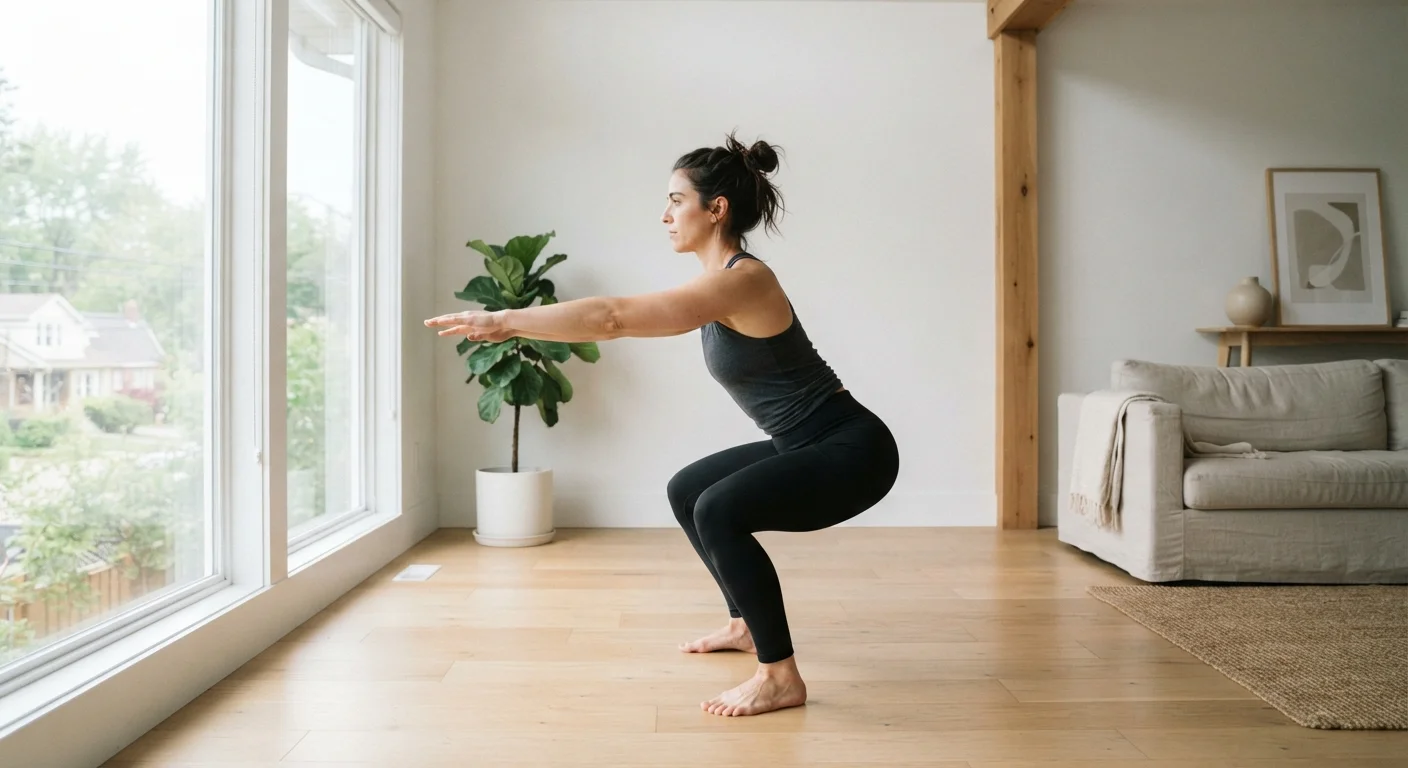
A reliable structure removes daily decision-making and makes it easier to start. A basic session should include three phases: a warm-up (5 minutes), a main working block (10-20 minutes), and a cool-down with light stretching (5 minutes). For the main block, begin with foundational movements - squats, push-ups, lunges, and planks - that train multiple muscle groups simultaneously and require no equipment. For a comparison of how bodyweight training stacks up against other approaches, see the bodyweight vs. free weights breakdown.
Apply progressive overload to keep improving
Progressive overload - systematically increasing the demand placed on your body over time - is the mechanism behind all fitness improvement. Without it, the same workout becomes maintenance rather than progress. You can apply it without equipment by increasing repetitions, slowing the tempo of each rep, reducing rest time between sets, or progressing to harder variations (e.g., moving from a standard squat to a single-leg squat). Aim to make one small adjustment every one to two weeks rather than overhauling the entire workout.
Schedule rest and recovery intentionally
Rest days are not a sign of lack of commitment - they are when the body actually adapts and grows stronger. Muscle repair, nervous system recovery, and hormonal rebalancing all happen during downtime, not during the workout itself. Plan at least one to two full rest days per week, and consider lighter active recovery options - walking, gentle stretching, or mobility work - on days between harder sessions. For a deeper look at why recovery matters, see why rest days are essential.
Track progress to stay engaged
Tracking creates objective evidence of improvement - which is one of the most reliable sources of ongoing motivation. A simple notebook or notes app works well. Log the exercises performed, the number of sets and reps, and any subjective notes about how the session felt. Reviewing three to four weeks of entries provides a concrete record of progress that is far more motivating than relying on memory or appearance alone.
Pair Your Workout With a Cue
Habit research consistently shows that attaching a new behavior to an existing one helps it stick. Try doing your workout immediately after your morning coffee, before your shower, or right after you close your laptop for the day. The consistent trigger matters as much as the workout itself.
Don't Skip the Warm-Up
Beginning intense movement with cold muscles raises the risk of strains and joint discomfort. Even five minutes of light movement - marching in place, arm circles, hip rotations - meaningfully prepares your body. Treat warm-up time as non-negotiable, not optional.
Once you have completed a few consistent weeks, consider how your nutrition supports your training. A flexible, practical approach to eating - without rigid restrictions - pairs well with a steady movement practice. Our guide to building a balanced plate without a strict diet offers a realistic framework. And if your motivation dips at any point - which is completely normal - strategies for when motivation disappears can help you stay on track without guilt or pressure.
This article is for general informational and educational purposes only and does not constitute medical or exercise advice. Consult a qualified healthcare professional before beginning any new physical activity program, especially if you have existing health conditions or concerns.