

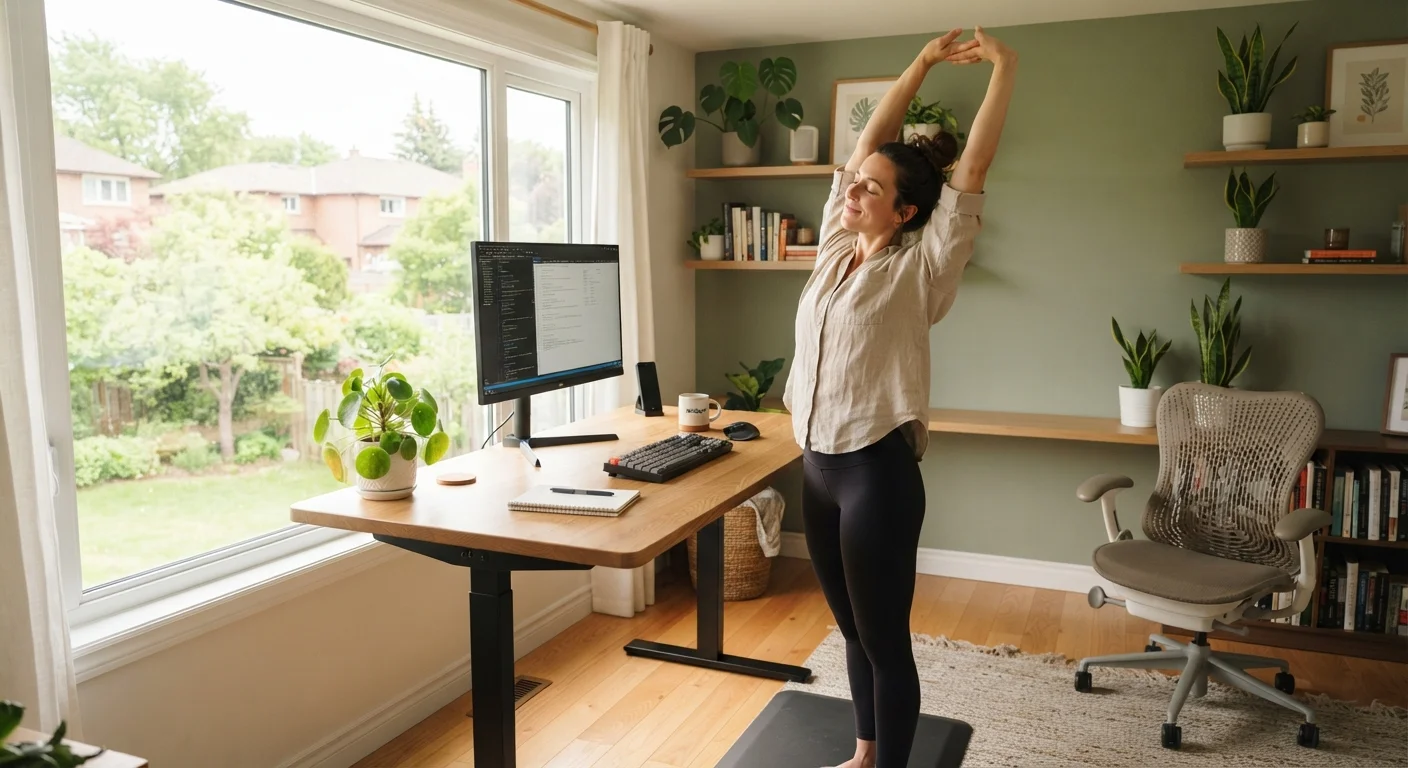
Key Takeaways
- Sitting for long, unbroken periods is associated with reduced circulation, muscle tightness, and lower energy.
- Breaking up sitting with short movement intervals - even two to three minutes - can help counteract these effects.
- Simple habit anchors like calendar reminders or standing during calls make consistency much easier.
- Mobility work targeting the hips, thoracic spine, and neck addresses the areas most stressed by desk posture.
- No gym or special equipment is required - most effective strategies work entirely at or near your desk.
Why Prolonged Sitting Is Worth Taking Seriously
Research consistently links long, unbroken bouts of sitting to a range of health concerns - reduced blood flow in the legs, tighter hip flexors, compressed spinal discs, and a general dip in afternoon energy and focus. For most desk workers, the issue isn't necessarily the total number of hours spent sitting; it's the uninterrupted nature of those hours.
The good news is that you don't need to overhaul your schedule or join a gym to make meaningful improvements. The evidence increasingly supports small, frequent movement breaks throughout the day as a practical and accessible countermeasure. If you're also thinking about how your physical workspace is set up, see our home office setup guide for ergonomic and equipment considerations that complement movement habits.
This article provides general health information for educational purposes only and is not a substitute for advice from a qualified healthcare professional. If you have a medical condition or specific symptoms, please consult your doctor before making changes to your activity levels.
Proven Movement Practices for Desk Workers
The following practices are grounded in current exercise science and designed to fit within a realistic workday - no equipment required, no gym membership needed.
Set a movement reminder every 45-60 minutes during your workday.
Sitting still for more than an hour at a stretch is when circulation and postural strain tend to compound. A recurring alarm or calendar block creates an external cue that removes reliance on memory or willpower. Consistency over time is what produces lasting benefit.
Perform a 90-second hip flexor stretch at least twice during the workday.
The hip flexors shorten when the hips are held in a flexed position for hours, which can contribute to lower-back discomfort and reduced mobility over time. A brief kneeling or standing stretch helps restore length to these muscles without disrupting workflow.
Use phone calls and virtual meetings as standing or walking opportunities.
Calls are natural transition points in the workday that don't require a screen, making them easy to reclaim as movement time. Standing during calls reduces total daily sitting time with zero impact on productivity.
Incorporate thoracic extension stretches to counteract forward-head posture.
Desk workers commonly develop a forward head position and rounded upper back as the day progresses. Gentle backward extension of the thoracic spine (the mid-back) helps counteract this pattern and reduce tension in the neck and shoulders.
Walk for at least ten cumulative minutes during your lunch break.
A midday walk interrupts the longest unbroken sitting stretch of many workers' days, supports cardiovascular circulation, and - according to multiple studies - is associated with improved afternoon mood and cognitive performance.
For a deeper dive into why even brief activity bursts deliver real physiological benefit, our article on movement snacks and their science explains the research in accessible terms.
Start Today: Quick Wins for Immediate Impact
Building a new routine is always easier when the early steps feel manageable. The actions below can be implemented on your very next workday - no preparation, planning, or equipment required.
6-8 hrs
Average daily sitting time for U.S. desk workers
Research published in the American Journal of Epidemiology estimates that many full-time office employees sit for six to eight or more hours on workdays.
2-3 min
Break length shown to improve circulation markers
Studies from the University of Leicester suggest that light-intensity movement breaks as short as two to three minutes can measurably improve blood glucose and circulation compared with uninterrupted sitting.
If you want to build on these habits over time, mobility training for everyday life offers a structured next step for improving joint range of motion and functional strength - ideal for anyone who spends long hours at a desk.
Make Your Environment Do the Work
The most reliable movement habits are those that don't depend on remembering to act. Positioning a standing surface near your desk, keeping a resistance band in your top drawer, or scheduling a walk as a calendar event all reduce friction. When the cue is built into your environment, the behavior follows more naturally than when it relies on motivation alone.