

Key Takeaways
- Brief, repeated movement breaks can improve cardiovascular health, blood sugar regulation, and energy levels.
- Research suggests accumulated activity across the day can rival the benefits of a single structured workout for many health markers.
- Movement snacks are especially useful for people with desk jobs or schedules that make longer exercise sessions difficult.
- Even two to five minutes of activity at a time counts - the consistency matters more than the duration of any single session.
- Movement snacks complement, rather than replace, recommended weekly physical activity guidelines.
Movement Snacks
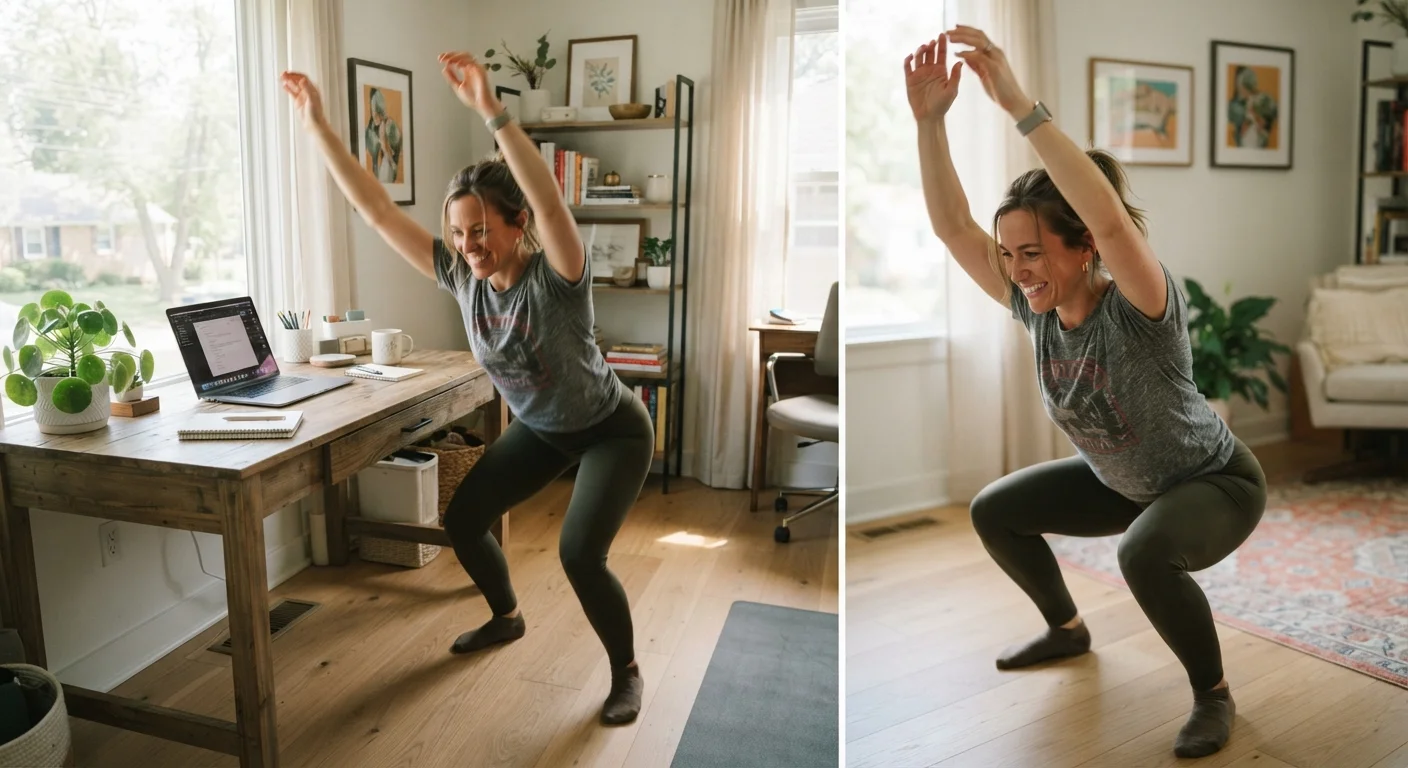
Movement snacks are brief, informal bouts of physical activity - typically lasting anywhere from one to ten minutes - distributed throughout your day rather than concentrated in a single workout. Think a set of squats between meetings, a brisk walk around the block at lunch, or calf raises while waiting for coffee to brew. The idea is that these small doses of movement, taken consistently, can contribute meaningfully to your overall health.
In exercise science, movement snacks are sometimes classified under the broader concept of "incidental physical activity" or "exercise snacks" - short, structured bouts shown in emerging research to improve cardiometabolic markers and counteract the effects of prolonged sedentary behavior.
The Science Behind Accumulated Movement
For decades, public health messaging focused almost exclusively on the 30-minutes-a-day model - one dedicated block of moderate exercise to meet daily activity targets. But a growing body of research suggests that how you distribute movement across your waking hours matters, too.
A study published in Nature Medicine found that just three short bouts of vigorous incidental activity per day - each lasting around one to two minutes - were associated with significantly lower risk of cardiovascular disease and cancer mortality. Separate research on blood sugar regulation has shown that brief walking breaks after meals help blunt post-meal glucose spikes more effectively than a single longer walk at a different time of day.
The underlying mechanism is relatively straightforward: muscles are metabolically active tissue. When you move them, even briefly, they draw on circulating glucose and stimulate blood flow, which helps counteract the metabolic slowdown that accompanies prolonged sitting.
7+ hrs
Average daily sitting time for U.S. adults
According to research published by the American Journal of Epidemiology and corroborated by national activity surveys, American adults sit for more than seven hours on a typical day.
~3 min
Minimum activity bout linked to health benefits
Research published in Nature Medicine found that bouts of vigorous incidental activity as short as one to three minutes were associated with significantly reduced cardiovascular and cancer mortality risk.
58%
Adults who don't meet aerobic activity guidelines
The CDC estimates that the majority of U.S. adults do not meet recommended weekly aerobic physical activity guidelines, highlighting the need for accessible, flexible approaches like movement snacks.
Why Prolonged Sitting Is the Problem Movement Snacks Address
The average American adult spends more than seven hours a day sitting - at a desk, in a car, or on a couch. Sustained sedentary time is independently associated with increased risk of metabolic syndrome, poor circulation, and reduced musculoskeletal function, even among people who exercise regularly.
This is the key nuance: a 45-minute morning run does not fully undo eight hours of sitting afterward. The body responds to the conditions it spends the most time in. Movement snacks work by interrupting those long sedentary stretches at regular intervals, keeping muscles engaged and circulation active throughout the day.
Desk workers face a particular challenge, since the structure of office work makes it easy to go hours without any meaningful movement. Setting a recurring reminder to move every 45 to 60 minutes is one evidence-informed approach to breaking this pattern without disrupting productivity.
Try the 45-Minute Rule
Set a repeating timer or calendar reminder to alert you every 45 to 60 minutes during sedentary periods. When it goes off, stand up and move for two to five minutes before returning to what you were doing. Even this minimal interruption to prolonged sitting can support circulation, energy, and focus across the day.
What Counts as a Movement Snack
Movement snacks don't require equipment, a gym membership, or athletic clothing. What matters is that the activity raises your heart rate or engages your muscles meaningfully. Common examples include:
- Bodyweight exercises - squats, lunges, push-ups, or jumping jacks done in short sets near your desk or in a hallway
- Brisk walking - even a two-minute loop around your building or up a flight of stairs counts
- Active household tasks - carrying laundry, vacuuming energetically, or gardening all qualify when done with intention
- Stretching and mobility work - particularly hip flexor stretches, thoracic rotations, and shoulder rolls that directly counteract desk posture
Mobility-focused movement snacks are especially worth considering. Mobility training addresses how joints move under load - and brief daily practice can compound into meaningful improvements in range of motion and comfort over weeks and months.
Making Movement Snacks a Sustainable Habit
The practical appeal of movement snacks is their low barrier to entry. You don't need to schedule a gym session, change clothes, or carve out a large block of time. But like any habit, they require some intentional design to stick.
Behavioral research on habit formation consistently shows that attaching a new behavior to an existing routine - a technique called "habit stacking" - increases the likelihood it will persist. Pairing a movement snack with a habitual trigger (brewing coffee, ending a video call, eating lunch) removes the need for willpower each time.
The same logic that makes small, consistent daily behaviors powerful for mental health applies to physical activity: regularity and low friction matter more than intensity. Starting with two or three intentional movement breaks per day and gradually building from there is a realistic and sustainable approach for most people.
This article is for general informational and educational purposes only and is not a substitute for professional medical advice. Consult a qualified healthcare provider before making significant changes to your physical activity routine, especially if you have an existing health condition.