

Key Takeaways
- Six core fluids keep your car running safely: engine oil, coolant, brake fluid, transmission fluid, power steering fluid, and windshield washer fluid.
- Most fluid checks require no tools - just a parked car, a clean rag, and a few minutes.
- Low or contaminated fluid is often an early warning sign of a larger mechanical issue.
- Your owner's manual specifies the correct fluid type and check intervals for your specific vehicle.
- Dashboard warning lights for fluids should never be dismissed - act promptly to avoid costly damage.
Start here
Why Car Fluids Matter
Core knowledge
The Six Essential Fluids and What They Do
Hands-on skills
How to Check Each Fluid
Stay alert
Warning Signs You Shouldn't Ignore
Build the habit
How Often Should You Check?
Why Car Fluids Matter
Your car is essentially a collection of systems that generate enormous heat, friction, and pressure - and fluids are what keep those forces in check. They lubricate moving parts, transfer heat away from critical components, transmit force, and protect metal surfaces from corrosion. When fluid levels drop or fluids degrade, performance suffers and damage accumulates - often silently, long before a warning light appears.
The good news: checking your car's fluids is one of the most accessible forms of vehicle maintenance available to any driver. No mechanical expertise is required. Understanding what each fluid does - and how to read its level and condition - puts you in a much stronger position to catch problems early and make informed decisions at the shop. If a dashboard symbol does light up, our guide to dashboard warning lights can help you interpret what it means.
The Six Essential Fluids and What They Do
Dipstick
A long metal rod inserted into a fluid reservoir that lets you measure fluid level and check its condition without special tools.
Hydraulic fluid
A liquid used to transmit mechanical force through a sealed system - brake fluid and power steering fluid are common examples in vehicles.
Coolant reservoir
A translucent plastic tank connected to the radiator that holds extra coolant and shows the fluid level without requiring you to open the radiator cap.
Viscosity
A measure of how thick or thin a fluid is. Engine oils are rated by viscosity - thicker oils flow more slowly, thinner oils flow more freely, especially in cold temperatures.
Transmission fluid
A specialized oil that lubricates and cools the gears and internal components of a vehicle's transmission, enabling smooth gear shifting.
Firewall
The metal barrier separating the engine compartment from the passenger cabin. Several fluid reservoirs - including the brake fluid container - are typically mounted near it.
Understanding the role of each fluid helps you appreciate why checking them regularly matters.
- Engine Oil: Lubricates hundreds of moving metal parts inside the engine, reducing friction and heat. It also suspends contaminants and carries them to the filter. Oil degrades over time and loses its effectiveness - which is why change intervals matter. For a deeper look at oil grades and life indicators, see our article on oil change intervals.
- Coolant (Antifreeze): Circulates between the engine and radiator to regulate operating temperature. It also prevents freezing in winter and corrosion year-round.
- Brake Fluid: A hydraulic fluid that transmits the force of your foot on the brake pedal to the brake components at each wheel. It operates under extreme pressure and must remain uncontaminated to function reliably.
- Transmission Fluid: Lubricates and cools the transmission's gears and clutch packs, enabling smooth gear changes. Automatic and manual transmissions typically require different fluid types.
- Power Steering Fluid: Powers hydraulic steering systems, making it easier to turn the wheel. Many newer vehicles use electric power steering and don't have this reservoir at all.
- Windshield Washer Fluid: Cleans your windshield for safe visibility. It contains detergent and, in most formulas, antifreeze agents - plain water is not an adequate substitute in freezing climates.
How to Check Each Fluid
Always check fluids with the vehicle parked on a level surface. For most checks, the engine should be off and cooled down for at least 10-15 minutes.
Engine Oil
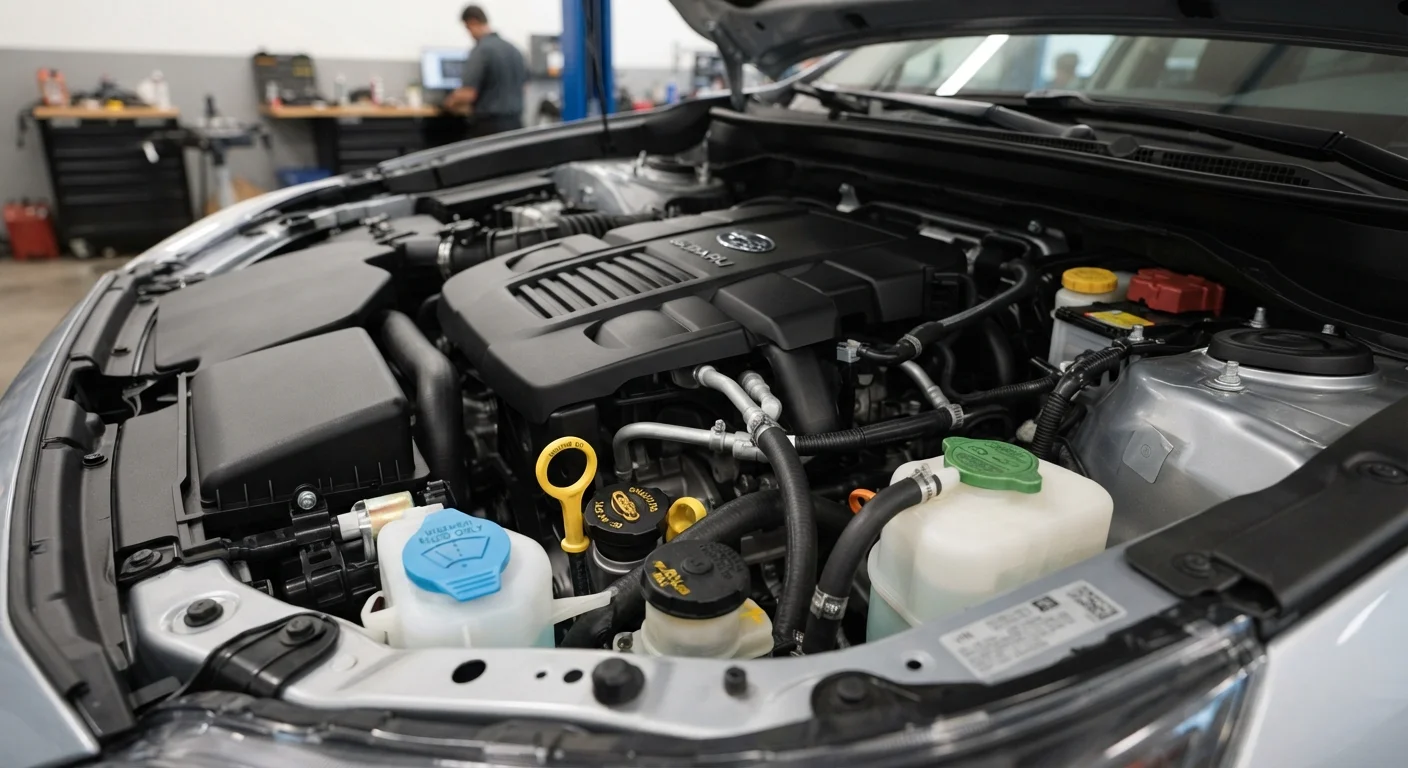
Locate the oil dipstick (usually a brightly colored handle near the engine center), pull it out, wipe it clean, reinsert it fully, then pull it out again. The oil level should fall between the two marks at the bottom of the dipstick. Also note the oil's color - healthy oil ranges from amber to dark brown. Black, gritty, or milky oil warrants a mechanic's attention.
Coolant
Check the plastic coolant reservoir (not the radiator cap directly - never open the radiator cap on a hot engine). The reservoir has MIN and MAX lines visible from the outside. The coolant should appear bright green, orange, or pink depending on type - not brown or rusty.
Brake Fluid
The brake fluid reservoir is typically a small translucent container near the firewall on the driver's side. Check the level against the MIN/MAX markings. The fluid should be clear to slightly yellow. Dark or murky fluid suggests it's time for a flush.
Keep a Clean Rag in Your Glove Box
A lint-free cloth or paper towel is all you need to wipe dipsticks before reading them. Checking a dipstick without wiping it first gives you an inaccurate reading - always wipe, reinsert, and then read. Keeping one in your car makes it easy to do a quick check whenever you stop for fuel.
Transmission Fluid
Many automatic transmissions have a dipstick similar to the oil dipstick - check your owner's manual for its location, as some vehicles require checking with the engine warm and running. Manual transmissions typically need a mechanic to check. Healthy transmission fluid is red or pink and slightly translucent.
Power Steering Fluid
If your vehicle has hydraulic power steering, find the reservoir (often labeled with a steering wheel icon). Most have a dipstick attached to the cap or external MIN/MAX lines. The fluid should be clear to slightly yellow or pink - not brown or foamy.
Windshield Washer Fluid
This is the simplest check. The reservoir is usually a blue-capped container. Simply fill it to the marked line with washer fluid appropriate for your climate.
Warning Signs You Shouldn't Ignore
Fluid problems often present visible or physical symptoms before a warning light appears. Watch for:
- Puddles or spots under the car: Different fluids leave different colors. Oil is typically dark brown or black; coolant may be green, orange, or pink and often smells sweet; brake fluid is clear to light yellow; transmission fluid is red.
- Burning smell: Oil or transmission fluid dripping onto hot engine components produces a distinctive burning odor.
- Difficulty steering or a whining noise when turning: Both can indicate low power steering fluid.
- Soft or spongy brake pedal: This is a serious safety concern that may indicate low brake fluid or air in the brake lines. Have the vehicle inspected by a qualified mechanic immediately.
- Engine temperature gauge climbing: May indicate low or failing coolant. Pull over safely if the gauge approaches the red zone.
If you've checked your fluids and something still seems off, understanding a mechanic's repair estimate will help you navigate the next step with confidence.
How Often Should You Check?
Your owner's manual is the definitive reference for your specific vehicle's fluid service intervals. As a general framework, most drivers benefit from the following habits:
- Monthly: Engine oil level and condition; coolant reservoir level.
- Every 3-6 months: Brake fluid level and color; power steering fluid; transmission fluid (if dipstick-accessible).
- As needed: Windshield washer fluid - top up whenever it runs low.
- Before long trips: All six fluids, plus tires and lights. Our guide on preparing your car for a long road trip walks through the full pre-departure checklist.
Fluid checks pair naturally with other routine inspections. When you're already under the hood, it takes only a few additional minutes to check tire pressure and tread depth - two other high-impact checks that many drivers overlook. Building these habits now prevents the kind of expensive, avoidable repairs that result from deferred maintenance.
Owner's Manual Trumps General Advice
Fluid specifications vary significantly between vehicle makes, models, and model years. The fluid type, check procedure, and service interval listed in your owner's manual always take precedence over general guidelines. Using the wrong fluid type - even at the correct level - can cause damage. When in doubt, consult a qualified mechanic.