

| Colors used for warning lights | Red, amber/yellow, green, blue (SAE International lighting standards) |
| Red light meaning | Immediate action required - stop safely when possible |
| Amber/yellow light meaning | Caution - have the vehicle inspected soon |
| TPMS required in U.S. vehicles since | Model year 2008 (NHTSA TPMS Final Rule) |
| OBD-II scan tool cost range | Under $30 for basic consumer models (General retail market range) |
| Most common CEL cause | Loose or faulty gas cap (evaporative emissions leak) (Commonly cited by ASE-certified technicians) |
The Color Code: What the Hue Tells You First
Before you can decode a specific symbol, understand what the light's color is communicating. Warning lights follow a broadly consistent color hierarchy across modern vehicles.
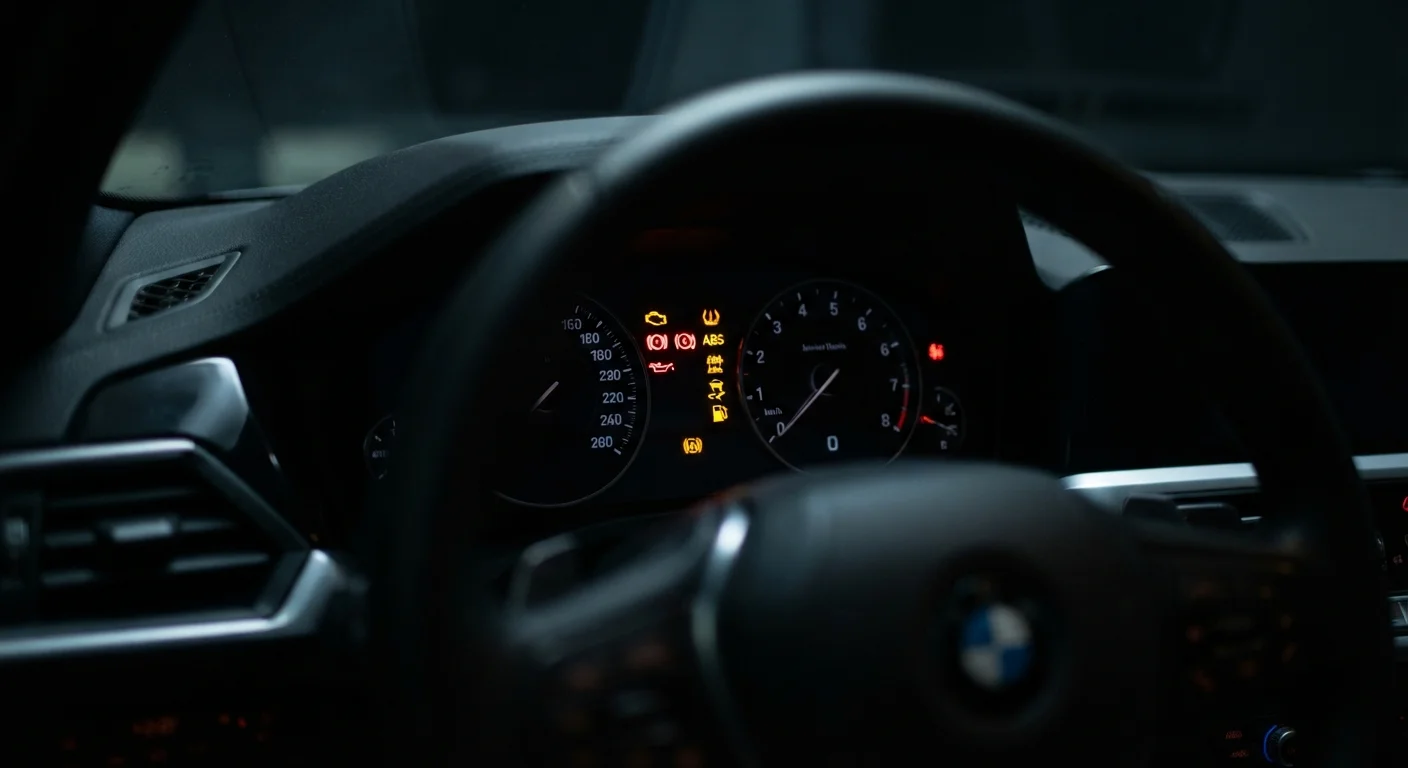
- Red signals an urgent condition - low oil pressure, overheating, a brake system fault. If a red light appears while driving, find a safe place to stop and assess before continuing.
- Amber or yellow means caution. The vehicle can usually be driven short distances, but you should schedule an inspection promptly. Examples include the check engine light and TPMS alert.
- Green or blue lights are informational - high beams are on, cruise control is active, or a turn signal is engaged. No action is required.
Think of it the way you'd read a traffic signal: red means stop and respond, yellow means proceed carefully, green means all is normal.
| Colors used for warning lights | Red, amber/yellow, green, blue (SAE International lighting standards) |
| Red light meaning | Immediate action required - stop safely when possible |
| Amber/yellow light meaning | Caution - have the vehicle inspected soon |
| TPMS required in U.S. vehicles since | Model year 2008 (NHTSA TPMS Final Rule) |
| OBD-II scan tool cost range | Under $30 for basic consumer models (General retail market range) |
| Most common CEL cause | Loose or faulty gas cap (evaporative emissions leak) (Commonly cited by ASE-certified technicians) |
The Most Common Warning Lights, Explained
Here's a plain-language breakdown of the lights most drivers encounter.
Check Engine Light (CEL)
A general-purpose warning triggered by the vehicle's onboard diagnostic system (OBD-II) when it detects a fault in the engine, transmission, or emissions system. It can indicate anything from a loose gas cap to a misfiring cylinder.
OBD-II
On-Board Diagnostics, second generation - a standardized system built into most vehicles sold in the U.S. after 1996 that monitors engine and emissions performance and stores fault codes readable by a scan tool.
Fault Code (DTC)
A Diagnostic Trouble Code stored by the vehicle's computer when a sensor reading falls outside acceptable range. A mechanic or scan tool can retrieve this code to pinpoint the source of a problem.
TPMS
Tire Pressure Monitoring System - a federally mandated system (required on U.S. vehicles from 2008 onward) that alerts the driver when one or more tires drops significantly below the recommended inflation pressure.
ABS
Anti-lock Braking System - a safety system that prevents wheels from locking during hard braking, allowing the driver to maintain steering control. An ABS warning light means this system may not function as intended.
Alternator
A generator driven by the engine belt that recharges the battery while the vehicle is running. A failing alternator causes the battery warning light to illuminate and can lead to a complete electrical failure.
Check Engine (CEL)
This amber engine outline is the most misunderstood light on the dash. It doesn't mean your engine is about to fail - it means the onboard diagnostic system detected a fault. A solid CEL usually allows normal driving until you can get a scan; a flashing CEL signals an active misfire that can damage the catalytic converter and warrants stopping soon. An inexpensive OBD-II scanner - available at most auto parts stores - can pull the fault code yourself, giving you useful information before visiting a mechanic. See our guide to car fluids for related under-the-hood checks worth doing at the same time.
Oil Pressure Warning
A red oil can icon means oil pressure has dropped dangerously low. Stop driving as soon as safely possible - continuing can cause severe engine damage within minutes. Check the oil level first; if it's adequate and the light remains on, have the vehicle towed rather than driven.
Temperature Warning
A thermometer in liquid indicates engine overheating. Pull over, turn off the engine, and allow it to cool before opening the hood. Never open a hot radiator cap.
Battery / Charging System
A battery icon usually means the alternator isn't charging properly, not that the battery itself is dead. The vehicle may run on battery reserve for a limited time. Minimize electrical load (radio, AC) and head directly to a service facility.
TPMS (Tire Pressure)
An exclamation point inside a tire cross-section means at least one tire is significantly underinflated. Check all four tires with a gauge - the light alone won't tell you which tire or by how much. Correct inflation improves safety, handling, and fuel economy.
ABS Warning
Your standard brakes still function when the ABS light is on, but the anti-lock system may not engage during hard stops. Avoid aggressive braking and have the system inspected promptly.
Warning Lights Aren't Universal Across Every Vehicle
While many symbols are standardized by SAE International, some automakers use proprietary icons or colors for certain systems. Always cross-reference your owner's manual when a light looks unfamiliar - it's the authoritative source for your specific vehicle. Digital versions of most owner's manuals are available free through manufacturer websites.
When to Act Immediately vs. Schedule a Visit
Not every warning light demands an emergency stop - but none should be permanently ignored. Use this general framework:
| Light / System | Appropriate Response |
|---|---|
| Oil pressure (red) | Stop immediately; do not drive |
| Engine temperature (red) | Stop immediately; allow cooling |
| Brake system (red) | Stop safely; do not drive |
| Check engine - flashing | Stop driving soon; avoid highway speeds |
| Check engine - solid | Schedule inspection within a few days |
| TPMS | Check pressure at next opportunity |
| ABS | Schedule inspection; drive cautiously |
| Battery | Reduce electrical load; go directly to service |
1 in 3
Drivers ignoring an active warning light
A CarMD Vehicle Health Index survey found roughly one-third of drivers put off addressing an illuminated check engine light for more than a month.
~$400
Average check engine light repair cost
According to CarMD's annual Vehicle Health Index, the average repair triggered by a check engine light has historically hovered near this figure, though costs vary widely by fault and vehicle.
Warning lights are the starting point for diagnosis - not the whole story. Many mechanical issues develop before any light appears. Our guide to non-light warning signs covers the sounds, smells, and vibrations worth paying attention to as well.
This article provides general educational information about vehicle warning systems. Always consult a qualified, ASE-certified mechanic for diagnosis and repair of your specific vehicle.