

Key Takeaways
- A repair estimate has three main cost categories: parts, labor, and fees - each warrants scrutiny.
- Labor is billed by flat-rate hours, not necessarily the actual time a technician spends on your car.
- OEM parts come from the original manufacturer; aftermarket parts are made by third parties and vary in quality.
- A diagnostic fee covers the technician's time to identify the problem and is often separate from repair costs.
- You have the right to ask for a written, itemized estimate before authorizing any repair work.
- Comparing estimates across shops is a standard, reasonable practice - not an insult to the mechanic.
What you will need
What You're Actually Looking At
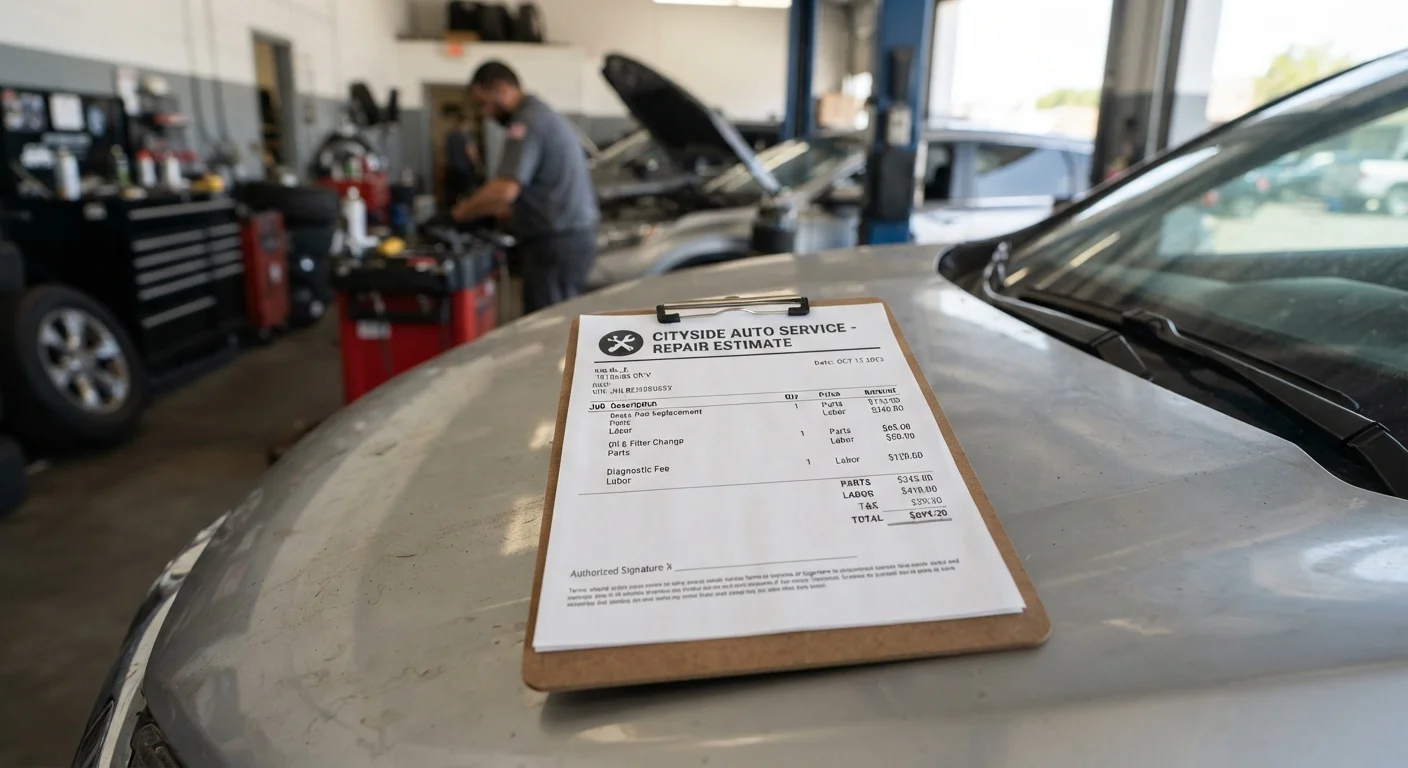
A mechanic's repair estimate is a formal document - and for good reason. It outlines what work a shop proposes to do, what parts will be used, how much labor is involved, and what everything will cost. Before you sign one, understanding its structure is essential.
Most estimates break down into three core areas:
- Parts: The physical components that will be replaced or installed.
- Labor: The charge for the technician's time to complete the work.
- Fees: Miscellaneous charges such as shop supplies, hazardous waste disposal, or a diagnostic fee.
Each line on the estimate should correspond to a specific task or part. If you see vague entries like "miscellaneous repairs" without further detail, ask the service adviser to break it down. Reputable shops will do this without hesitation.
What you will need
Decoding the Most Common Terms
Labor Hours and Flat-Rate Billing
Labor charges are almost always calculated using a flat-rate system - a standardized guide (often from the vehicle manufacturer or an industry database) that assigns a fixed number of hours to each repair task, regardless of how long it actually takes. For example, replacing a water pump might be listed as 2.5 hours whether the technician finishes in two hours or three.
This isn't deceptive; it's an industry-wide standard. However, it does mean you're paying for a time estimate, not a real-time clock. Ask what labor rate (the dollar amount per hour) the shop charges, and confirm the flat-rate hours assigned to your repair.
OEM vs. Aftermarket Parts
OEM stands for Original Equipment Manufacturer - these are parts made by or to the specifications of your vehicle's manufacturer. Aftermarket parts are produced by independent companies and can range from high quality to substandard. Aftermarket parts are often cheaper, but quality varies considerably. If the estimate specifies aftermarket parts, it's reasonable to ask about the brand and warranty coverage.
Diagnostic Fees
A diagnostic fee covers the labor involved in identifying the problem - connecting a scan tool, performing inspections, or conducting test drives. This is typically charged separately from the actual repair. In many shops, the diagnostic fee is applied toward the repair cost if you authorize the work. Confirm this policy upfront.
Ask About Warranty Coverage Upfront
Before authorizing any repair, ask what warranty the shop provides on both parts and labor. A written warranty gives you recourse if the same problem returns shortly after the repair. Most established shops offer at least a 12-month or 12,000-mile guarantee on their work.
How to Review and Compare Estimates
Once you have an estimate in hand, here's how to approach it critically without needing mechanical expertise:
Read Every Line Before Asking Questions
Go through the entire estimate before reacting. Note any terms you don't recognize or line items that seem vague. Writing down your questions first helps you stay focused during what can be an intimidating conversation.
Verify the Scope of Work Matches the Complaint
Confirm that the repairs listed correspond directly to the problem you brought the car in for. If the estimate includes additional work you weren't expecting, ask for an explanation of why each added item is necessary and whether it's urgent or can be deferred.
Clarify the Parts Specification
Ask whether parts listed are OEM or aftermarket, and confirm any warranty the shop provides on both parts and labor. A reputable shop will have a clear parts and labor warranty policy - commonly ranging from 12 months/12,000 miles to longer, depending on the shop.
Get a Second Estimate for Major Repairs
For any repair exceeding a few hundred dollars, consider getting a second written estimate from another shop. Bring the original estimate with you so the second shop is quoting the same scope of work. Price differences of 20-30% are not unusual, and comparing estimates is a completely normal consumer practice.
Authorize in Writing and Keep Your Copy
When you're ready to proceed, authorize the specific work in writing and retain a copy of the signed estimate. If the shop discovers additional issues mid-repair that require exceeding the quoted amount, they should contact you for approval before continuing - this is both a standard practice and, in many states, a legal requirement.
For broader context on what's worth repairing yourself versus delegating to a professional, see our guide to DIY vs. shop repairs. And if you want to understand how deferred decisions compound costs over time, deferred maintenance carries real financial risk worth knowing about.
Verbal Estimates Don't Protect You
Always get your estimate in writing before authorizing work. A verbal quote is difficult to enforce if the final bill comes in significantly higher. Most states give you the legal right to a written estimate - exercise it every time.
Your Rights as a Vehicle Owner
In most U.S. states, auto repair shops are legally required to provide a written estimate before beginning work and to obtain your authorization before exceeding a quoted amount. Requirements vary by state, so it's worth checking your state's consumer protection office for specifics.
You are never obligated to authorize work on the spot. A high-pressure push to approve repairs immediately is a warning sign worth noting. You can also request that worn or replaced parts be returned to you after the repair - a useful way to confirm the work was actually done.
Keeping a record of all estimates and invoices is part of responsible vehicle ownership, and can matter when selling your car or disputing a warranty claim. If you notice unusual symptoms before your next scheduled visit, our article on early warning signs that have nothing to do with dashboard lights can help you decide how urgently to act.
Never Sign a Blank or Incomplete Authorization
Signing an authorization form that has blank fields - particularly for total cost or scope of work - removes your leverage if the final bill is higher than expected. Ensure every field relevant to cost and approved work is filled in before you sign. If a shop resists providing a complete written estimate, that's a meaningful red flag.