

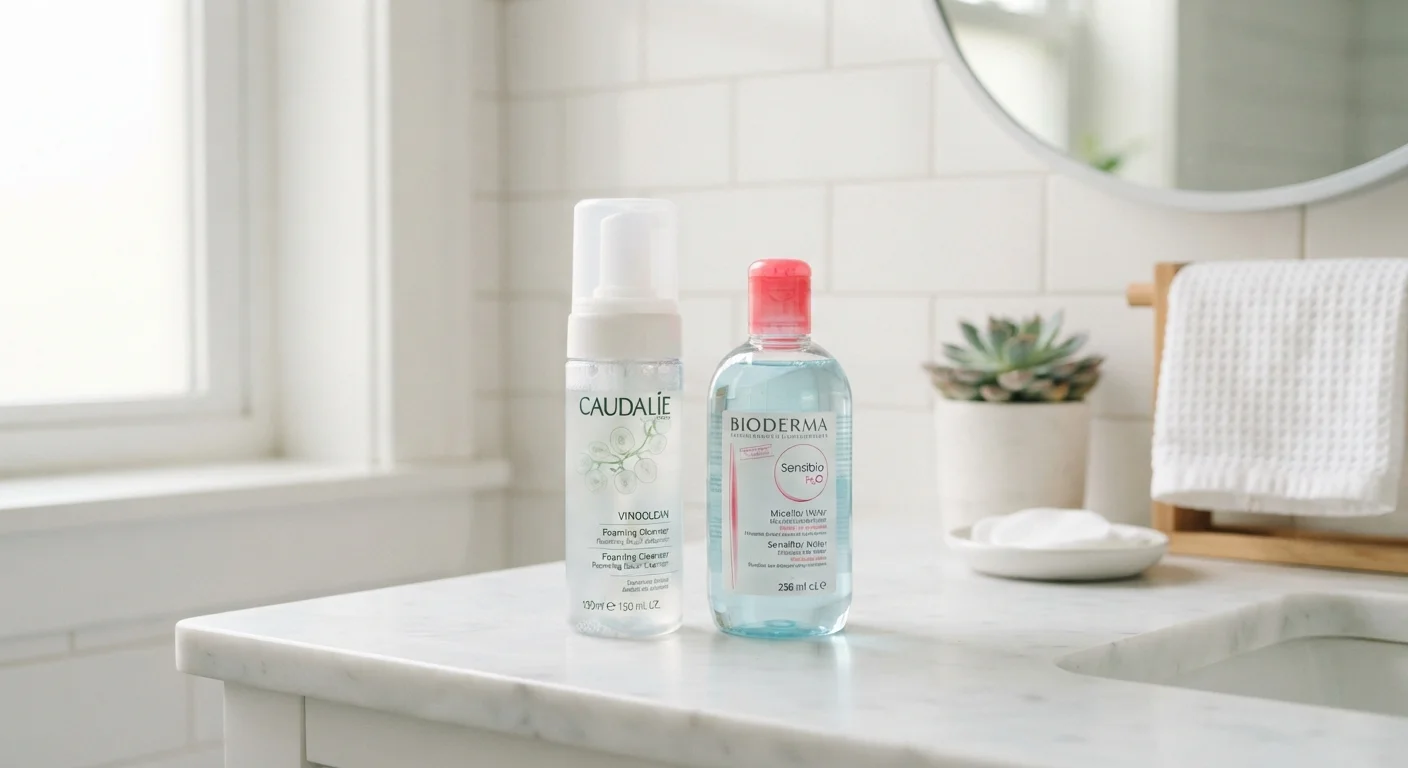
Key Takeaways
- Cleansers use surfactants and water to flush away oil, dirt, and buildup more thoroughly.
- Micellar water uses tiny micelle molecules to lift impurities without rinsing - gentler but less deep-cleaning.
- Neither is universally superior; the right choice depends on your skin type and routine needs.
- For heavy makeup or SPF, a proper cleanser (or double cleansing) generally does a more complete job.
- Micellar water works well as a first step, travel option, or gentle daily option for minimal-makeup days.
Option A
Facial Cleanser
The thorough, tried-and-true daily wash.
Best for: Anyone who wants a deep, complete cleanse - especially after a full day of makeup, sunscreen, or sweat.
Option B
Micellar Water
The gentle, no-rinse shortcut for sensitive or low-maintenance skin.
Best for: Light makeup removal, travel routines, sensitive skin, or a quick refresh between washes.
If you wear full-coverage makeup or SPF daily
Facial Cleanser
A rinse-off cleanser is more effective at breaking down heavy product buildup. Consider pairing it with a first-step micellar swipe for a double cleanse.
If you have sensitive or easily irritated skin
Micellar Water
Micellar water's no-rinse, low-friction formula is less likely to trigger redness or disruption in reactive skin types.
If you're traveling or have a minimal routine
Micellar Water
It requires no water or rinsing, making it a practical solution for on-the-go cleansing or low-effort evenings.
If you have oily or acne-prone skin
Facial Cleanser
A gentle foaming or gel cleanser helps manage excess sebum and keeps pores clearer, especially when formulated as non-comedogenic.
If you wear little to no makeup daily
Micellar Water
When buildup is light, micellar water can handle the job without the added step of rinsing.
How Each One Actually Works
Understanding what's happening at the molecular level makes the cleanser vs. micellar water debate a lot easier to navigate.
Facial cleansers - whether gel, foam, cream, or oil-based - rely on surfactants: compounds that attract both water and oil simultaneously. When you work a cleanser across your face and rinse, those surfactants grab onto dirt, excess oil, and product residue, then carry them down the drain. The rinsing step is essential to the process; it's what removes the impurities along with the cleanser itself.
Micellar water works differently. It contains tiny spherical structures called micelles - clusters of mild surfactant molecules suspended in soft water. When you swipe micellar water across your skin with a cotton pad, those micelles attract and trap oil-based impurities on their surface, lifting them off without any rubbing or rinsing required. The result is a clean-feeling face, but the mechanism is gentler and less thorough than a full lather-and-rinse.
Neither is magic - they're just chemistry working in different ways for different situations.
| Criterion | Facial Cleanser | Micellar Water |
|---|---|---|
| Cleansing mechanism | Surfactants + water rinse | Micelles lift impurities, no rinse |
| Rinsing required | Yes | No |
| Makeup removal power | Strong, including SPF and waterproof | Moderate; may miss heavy product |
| Gentleness on skin | Varies by formula; can be drying | Generally gentle and low-friction |
| Best skin types | Oily, acne-prone, all types | Sensitive, dry, combination |
| Convenience | Requires sink and towel | Works anywhere with a cotton pad |
| Role in routine | Primary cleanser | First step or standalone for light days |
Where Each One Falls Short
Cleansers, especially foaming varieties, can strip the skin's natural moisture barrier if overused or if the formula is too harsh. This is particularly relevant for dry or sensitive skin types, where a gentler or cream-based formula may serve better. Rinsing also takes time and requires a sink, which makes cleansers less convenient for travel or late nights.
Micellar water, despite its elegant simplicity, doesn't always remove every last trace of heavy-duty makeup, waterproof mascara, or thick sunscreen. Leaving residual product on skin - even a small amount - can contribute to clogged pores over time. That's why dermatologists often suggest following micellar water with a rinse-off cleanser if you've been wearing significant product. Explore the reasoning behind that approach in our piece on double cleansing.
A Note on Cotton Pad Friction
Wiping micellar water across the face with a cotton pad does involve some physical friction, which can irritate sensitive or compromised skin if done aggressively. A light pressing and gentle swipe - rather than scrubbing - minimizes that risk. If friction is a concern, a soft reusable cloth is worth considering.
Once your skin is clean, it's ready to absorb the good stuff. Check out our guide to hyaluronic acid, niacinamide, and vitamin C to understand which ingredients work best post-cleanse.
Building It Into Your Routine
The cleanser vs. micellar water question doesn't have to be an either/or decision - both can have a role depending on your lifestyle and skin goals.
A practical approach many people find useful: use micellar water as a first step to gently sweep away surface makeup, then follow with a rinse-off cleanser to fully clear the skin. This is especially helpful on days you've worn sunscreen, which tends to cling even after one cleanse. For lighter days - no makeup, no heavy SPF - micellar water alone may be all you need.
For your nighttime routine specifically, what actually needs to happen before bed matters more than most people realize. Starting with a clean base - genuinely clean - allows treatment products to absorb properly rather than sitting on top of residue.
And if you're choosing a cleanser, look for formulas labeled as non-comedogenic to reduce the risk of congestion, particularly for oily or breakout-prone skin. From there, layering in the right actives - covered in our breakdown of physical vs. chemical exfoliation - can complete a thoughtful, effective regimen.
~60%
Of cleansing products are rinse-off formulas
Rinse-off cleansers consistently make up the majority of facial cleansing product sales, reflecting their place as the default daily routine step for most consumers.
2-in-1
Role micellar water plays for many users
Many skincare users report using micellar water as both a makeup remover and a cleanser on low-makeup days, according to general consumer habit surveys.