

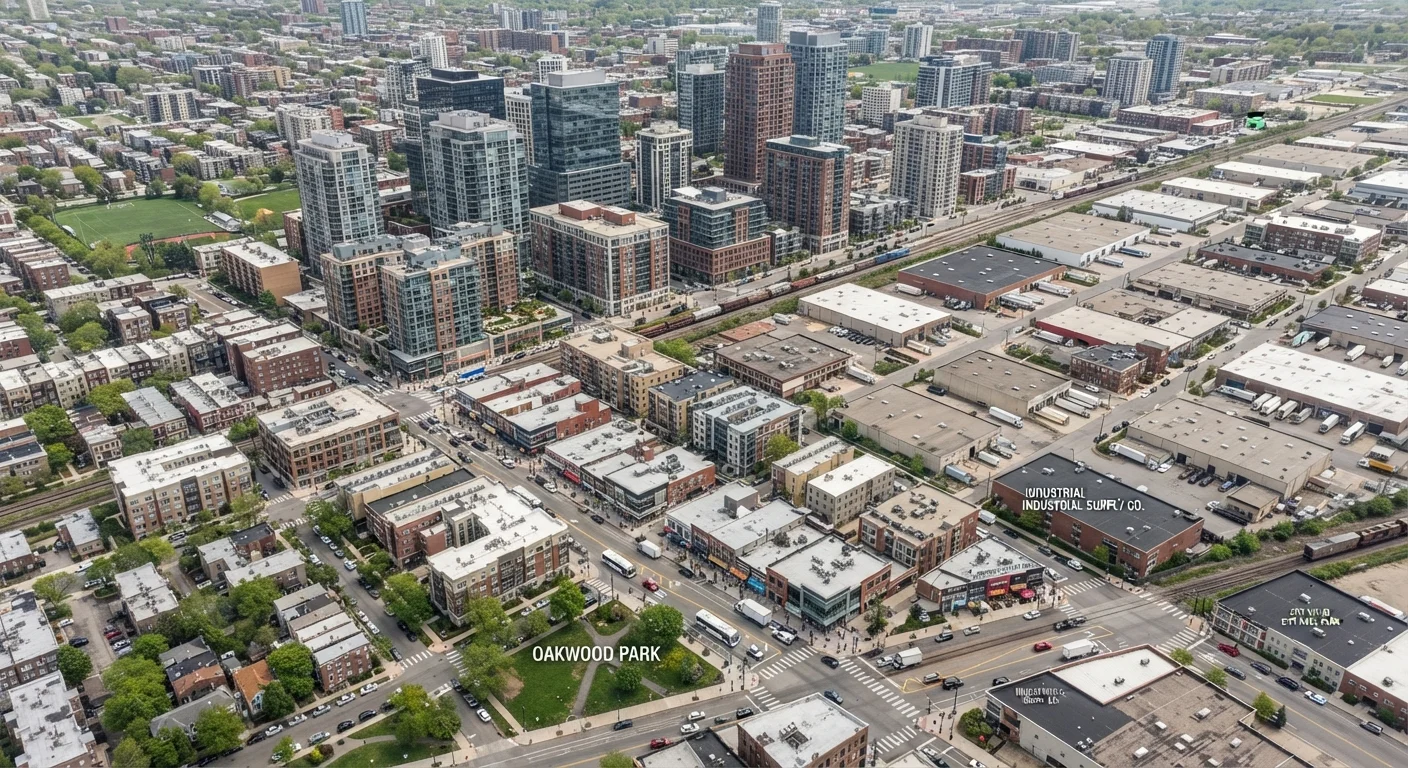
Key Takeaways
- Office, retail, industrial, and multifamily properties each respond to different economic forces and tenant demands.
- Lease structure - gross, net, or percentage - varies significantly across property types and affects income predictability.
- Industrial has seen rising demand driven by e-commerce logistics, while office faces structural challenges from remote work trends.
- Multifamily is the only major category where tenants are individuals rather than businesses, shaping its risk profile.
- Each sector carries distinct vacancy risks, capital requirements, and sensitivity to interest rate changes.
Our Verdict
No single commercial property type is universally superior - each sector offers a different balance of income stability, growth potential, and risk exposure. Office carries elevated structural uncertainty in the current environment, while industrial benefits from durable logistics demand. Retail varies enormously by subtype, and multifamily offers relatively consistent demand tied to housing fundamentals.
| Best for | Recommended |
|---|---|
| Those seeking steady, residential-demand-driven income | Multifamily |
| Investors interested in logistics and supply-chain growth trends | Industrial |
| Those comfortable with higher complexity and longer lease terms | Office |
| Location-focused investors in high-traffic consumer corridors | Retail |
What Sets These Four Property Types Apart
Commercial real estate is not a monolithic asset class. As explained in our overview of commercial real estate, properties used for business or investment purposes fall into several distinct categories, each governed by its own supply-and-demand dynamics, tenant base, and lease conventions.
The four major sectors - office, retail, industrial, and multifamily - collectively represent the vast majority of commercial property transactions in the United States. Understanding what drives value in each sector is essential before evaluating any specific property or investment. Each type responds differently to economic cycles, interest rate shifts, and demographic trends, which is why commercial real estate cycles often diverge from one another as well as from the housing market.
| Office | Retail | Industrial | Multifamily | |
|---|---|---|---|---|
| Primary Tenant Type | Businesses, corporations | Consumer-facing retailers | Logistics, manufacturing firms | Individual households |
| Typical Lease Length | 5-10 years | 3-10 years | 5-10 years | 12 months or less |
| Common Lease Structure | Gross or modified gross | NNN or percentage rent | Triple-net or absolute-net | Gross (landlord pays expenses) |
| Key Value Driver | Employment, tenant credit | Foot traffic, demographics | Logistics access, clear heights | Population growth, rents |
| Vacancy Risk Profile | Elevated post-pandemic | Subtype-dependent | Generally low recently | Diversified, lower per-unit |
| Rent Reset Frequency | Infrequent, long terms | Moderate | Moderate | Frequent, annual |
Office: Income Potential Meets Structural Headwinds
Office properties range from single-tenant suburban buildings to Class A downtown skyscrapers. Their value is closely tied to local employment levels, particularly in white-collar industries such as finance, law, and technology. Leases tend to run five to ten years, providing income visibility - but also limiting flexibility when market conditions shift.
Office buildings are typically leased on a gross or modified gross basis, meaning the landlord bears most operating expenses. This structure can compress net income when costs rise. The sector has faced well-documented pressure from remote and hybrid work patterns, pushing vacancy rates higher in many metropolitan markets. This makes thorough due diligence on tenant credit quality and lease expiration schedules especially important.
Office Vacancy Risks Deserve Careful Scrutiny
Elevated vacancy in many US office markets reflects structural - not merely cyclical - changes in how companies use workspace. Properties with near-term lease expirations or single large tenants carry meaningful rollover risk. Prospective investors should carefully analyze lease terms, tenant covenant strength, and submarket-specific vacancy trends before drawing conclusions about any individual asset.
Retail: Highly Location-Sensitive and Subtype-Dependent
Retail encompasses an enormous range of property types: neighborhood strip centers anchored by grocery stores, regional enclosed malls, freestanding single-tenant pads, and mixed-use street-level storefronts. What unites them is dependence on consumer foot traffic and spending patterns.
Retail leases often include a percentage rent clause, where the tenant pays base rent plus a share of gross sales above a threshold - directly linking landlord income to tenant performance. Triple-net (NNN) leases, common with single-tenant retailers, shift most operating expenses to the tenant, offering more predictable landlord cash flow. Retail values are highly sensitive to location quality, trade area demographics, and the health of anchor tenants. Location, lease quality, and local employment all shape commercial property value - factors that apply with particular force in retail.
Industrial: Logistics Demand Has Reshaped the Sector
Industrial properties include warehouses, distribution centers, manufacturing facilities, and flex spaces combining office and light industrial use. For much of the 20th century, industrial was considered a lower-profile sector. E-commerce growth has fundamentally changed that perception, driving sustained demand for last-mile distribution facilities near population centers.
Industrial leases are commonly structured as triple-net or absolute-net arrangements, making them attractive for income predictability. Ceiling heights, dock-door ratios, truck-court depths, and proximity to highways or rail lines are key physical attributes that determine a property's usefulness - and therefore its value. The sector generally benefits from lower tenant improvement costs compared to office or retail, and vacancy rates in many industrial submarkets have remained relatively tight.
~1.6B sq ft
US industrial space absorbed 2020-2023
CBRE research has documented record net absorption in US industrial and logistics real estate driven by e-commerce expansion in recent years.
~19%
Average US office vacancy rate
Moody's Analytics and CBRE have reported national office vacancy rates approaching or exceeding historical highs as hybrid work patterns persist.
Multifamily: Residential Scale, Commercial Fundamentals
Multifamily properties - apartment buildings with five or more units - occupy a unique position in commercial real estate. Unlike the other three sectors, tenants are individual households rather than businesses. This means demand is driven by population growth, household formation, and local housing affordability rather than purely by business cycles.
Leases are typically short (twelve months or less), which allows rents to reset to market rates more frequently than in other commercial sectors - an advantage when rents are rising, but a risk when markets soften. Income is also diversified across many small tenants rather than concentrated in a few large ones, which tends to smooth vacancy risk. For a broader comparison of how multifamily and other commercial assets compare to residential investment properties, see our guide on residential vs. commercial property investment.
Valuation across all four sectors ultimately follows the same foundational principles - income, cost, and sales comparison approaches - which are covered in detail in our article on the economics behind commercial real estate valuations.
This article is for general informational and educational purposes only and does not constitute financial, investment, legal, or tax advice. Readers should consult a qualified, licensed professional before making decisions about their own circumstances.