

Key Takeaways
- Commercial real estate includes office, retail, industrial, multifamily, and hospitality property types.
- CRE is primarily income-producing, meaning its value is closely tied to the rent it generates.
- Commercial leases are longer and more complex than typical residential rental agreements.
- CRE investment carries different risks and financing structures than buying a home.
- Everyday Americans interact with commercial real estate as tenants, consumers, and sometimes investors.
Commercial Real Estate (CRE)
Commercial real estate refers to property used primarily for business purposes rather than personal living. This includes office buildings, retail shopping centers, warehouses, apartment complexes, and hotels. Unlike a home you live in, commercial properties are typically purchased or leased to generate income or support a business operation.
In legal and lending contexts, properties with five or more residential units are generally classified as commercial, meaning large apartment buildings follow commercial financing rules even though people live in them.
What Counts as Commercial Real Estate?
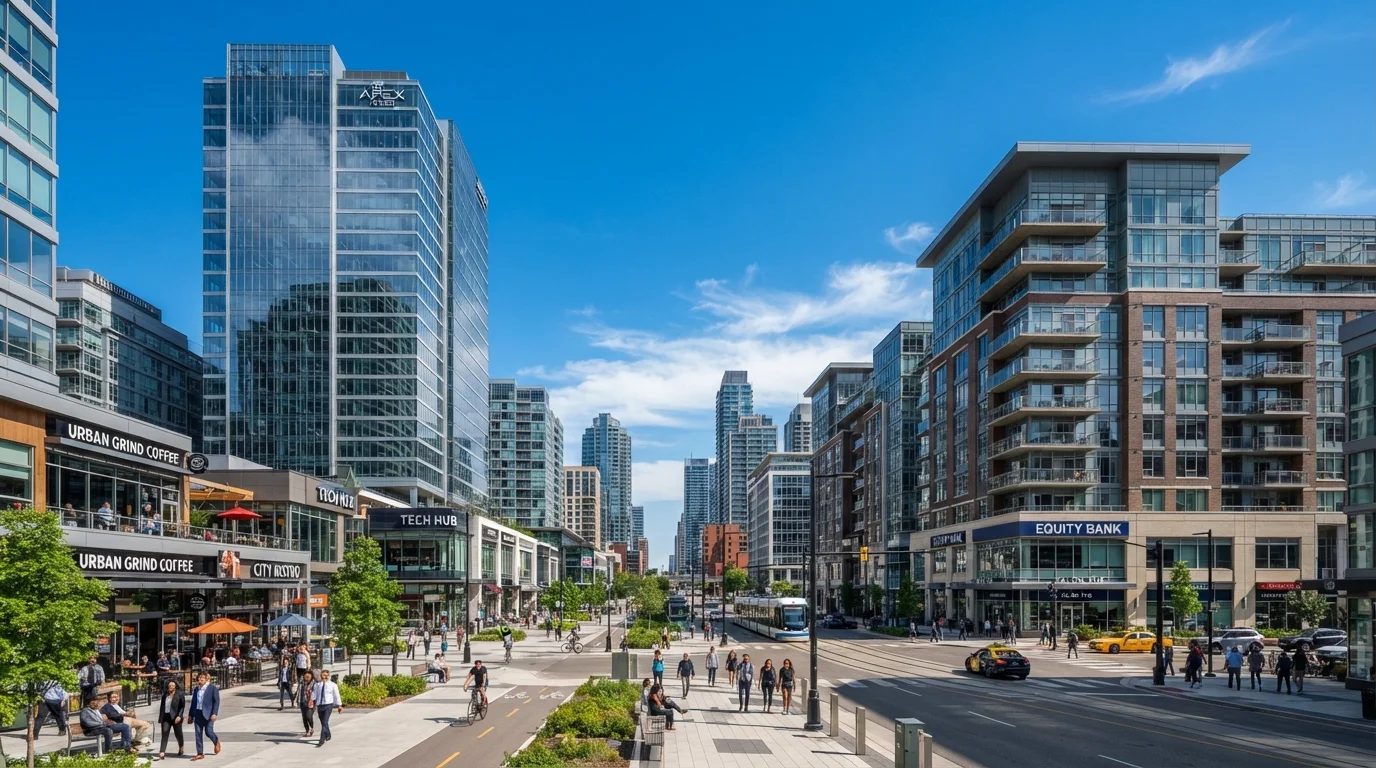
Commercial real estate (CRE) is any property used primarily for business or income-generating purposes. The category is broader than most people realize. It includes the office park where companies lease workspace, the strip mall anchored by a grocery store, the industrial warehouse fulfilling e-commerce orders, and the apartment complex where dozens of families rent their homes.
The five main property types recognized across the industry are:
- Office: From downtown skyscrapers to suburban professional buildings.
- Retail: Shopping centers, standalone storefronts, and restaurants.
- Industrial: Warehouses, distribution centers, and manufacturing facilities.
- Multifamily: Apartment buildings with five or more units.
- Hospitality: Hotels, motels, and extended-stay properties.
Each type has its own demand drivers, tenant profiles, and risk characteristics. For a deeper look at the terminology you'll encounter across these sectors, see our plain-English CRE glossary.
Mixed-Use Properties Blur the Lines
Mixed-use developments combine commercial and residential space in a single building - think ground-floor retail with apartments above. These properties involve elements of both sectors and are classified and financed based on the dominant use and local regulations. They are increasingly common in urban and suburban markets across the US.
How Commercial Differs from Residential Property
The most important distinction is purpose: residential property is where people live, commercial property is where business happens or income is generated. But that distinction ripples into nearly every practical detail.
Valuation: Homes are valued largely by comparing recent nearby sales. Commercial properties are valued primarily by the income they produce - specifically, the net operating income (NOI) divided by the local capitalization rate (cap rate). A property's value can rise or fall significantly if its tenants pay more or less rent.
Financing: Commercial mortgages typically require larger down payments (often 25-35%), shorter amortization periods, and more rigorous underwriting of the property's cash flow rather than just the borrower's personal income.
Leases: Commercial leases run for years - sometimes decades - and contain detailed clauses covering rent escalations, permitted uses, and who pays for operating expenses. This contrasts sharply with the standard one-year residential lease most renters know.
Those considering a home purchase for personal use will find a very different set of processes and priorities. The Buying a Home hub covers that pathway in depth.
$20+ trillion
Estimated US commercial real estate market size
The US CRE market is one of the largest asset classes in the world, according to industry research from CBRE and the National Council of Real Estate Investment Fiduciaries (NCREIF).
5-7 years
Typical average commercial lease term
Commercial leases are far longer than residential agreements, with office and retail leases often running five to ten years or more, according to industry norms.
170 million+
Americans invested in REITs
According to Nareit, more than 170 million Americans have exposure to real estate investment trusts through retirement accounts and direct investments.
Why Commercial Real Estate Matters to Everyday Americans
Even if you never own a commercial property, CRE shapes your daily life. The grocery store you shop at, the restaurant where you grab lunch, the warehouse that ships your online order - all of it sits on commercially leased or owned real estate. When commercial vacancy rates rise in a neighborhood, it can signal economic stress that affects local jobs, tax revenues, and even nearby home values.
For those interested in the investment side, CRE offers paths beyond direct ownership. Real Estate Investment Trusts (REITs) allow individuals to invest in portfolios of commercial properties through publicly traded shares, with no need to manage a building. Real estate crowdfunding platforms have also opened access to smaller investors, though these carry their own risk profiles.
Any investment in commercial real estate - direct or indirect - involves meaningful financial risk, including the possibility of loss. Market cycles, tenant defaults, and rising interest rates can all affect returns. This content is general educational information, not personalized investment advice. Consult a licensed financial adviser or attorney before making real estate investment decisions.
For a broader overview of real estate as an investment category, the Property Investment hub provides foundational context.
Start with Education Before You Invest
If you're exploring commercial real estate as an investment, build foundational knowledge before committing capital. Understanding how cap rates, NOI, and lease structures work will help you evaluate opportunities and ask better questions. Working with a licensed commercial real estate broker and a qualified financial adviser is strongly recommended for any direct investment.