

Key Takeaways
- Commercial real estate includes office, retail, industrial, and multifamily properties used for business purposes.
- Commercial leases are far more complex than residential leases - tenants often share operating costs.
- Properties are primarily valued by the income they generate, not comparable home sales.
- Deals typically involve specialized brokers, longer due diligence periods, and commercial financing.
- Understanding the basics helps you evaluate whether commercial real estate suits your goals.
Start here
What Is Commercial Real Estate?
Next
The Main Property Types
Then
How Commercial Leases Work
When you're ready
How Commercial Properties Are Valued
Final step
How Deals Get Done
What Is Commercial Real Estate?
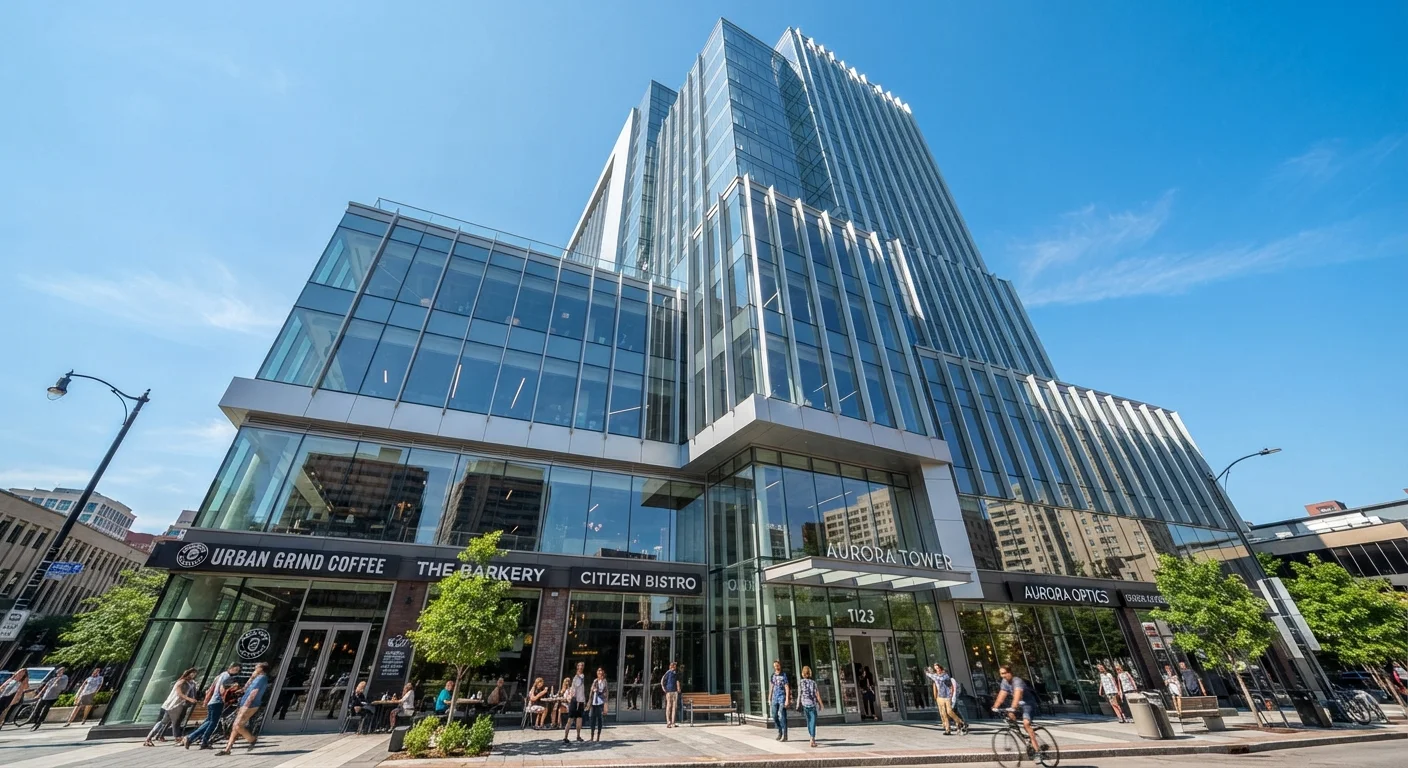
Commercial real estate (CRE) refers to property used primarily for business activity or income generation rather than personal residence. It is a broad category that encompasses everything from a neighborhood coffee shop to a million-square-foot distribution center. If you've ever rented an apartment in a large complex, shopped at a strip mall, or worked in an office building, you've interacted with commercial real estate.
The distinction from residential property matters in practical terms. Commercial properties are bought, sold, leased, and financed under different rules, with different metrics and different professional networks. Our plain-language explainer on commercial real estate covers the residential-versus-commercial divide in detail.
Net Operating Income (NOI)
The income a property generates after subtracting operating expenses - such as maintenance, insurance, and management fees - but before mortgage payments or taxes.
Cap Rate
Capitalization rate: a property's annual NOI divided by its purchase price, expressed as a percentage. Used to compare the relative value of income-producing properties.
Triple-Net Lease (NNN)
A lease structure where the tenant pays base rent plus property taxes, insurance, and maintenance costs in addition to utilities.
Due Diligence
The investigation period during which a buyer reviews a property's financial records, physical condition, legal standing, and compliance with local regulations before completing a purchase.
Rent Roll
A document listing every tenant in a property, their leased space, monthly rent, lease start and end dates, and any concessions - giving buyers a snapshot of current income.
Letter of Intent (LOI)
A non-binding document outlining the key terms a buyer and seller have tentatively agreed upon before drafting a formal purchase contract.
The Main Property Types
Commercial real estate is typically divided into several broad asset classes, each with its own supply-and-demand drivers:
- Office: Ranges from single-tenant suburban buildings to high-rise urban towers. Demand is tied closely to employment trends and remote-work patterns.
- Retail: Includes strip malls, enclosed shopping centers, and freestanding stores. Foot traffic, population density, and e-commerce competition all influence retail property performance.
- Industrial: Warehouses, distribution centers, and manufacturing facilities. Growth in e-commerce has increased demand for well-located industrial space in many markets.
- Multifamily: Apartment complexes with five or more units are classified as commercial for financing and valuation purposes, even though tenants use them as homes.
- Specialty: Hotels, self-storage facilities, medical offices, and data centers each follow their own performance patterns and often require specialized knowledge.
Investors weighing these categories against other options will find a useful framework in our complete guide to understanding real estate investment.
How Commercial Leases Work
Commercial leases are negotiated contracts, not standardized forms. Terms that residential tenants take for granted - who pays for utilities, insurance, or a broken HVAC unit - are open questions in commercial agreements. The most common lease structures are:
- Gross Lease
- The tenant pays a flat rent; the landlord covers operating expenses. Common in some office markets.
- Modified Gross Lease
- Expenses are split between landlord and tenant according to a negotiated formula.
- Triple-Net Lease (NNN)
- The tenant pays base rent plus property taxes, insurance, and maintenance costs. Common in retail and industrial properties.
Lease terms also tend to run much longer than residential agreements - three to ten years is typical, and anchor tenants in retail centers may sign 20-year leases. Before signing anything, first-time commercial tenants should understand the pitfalls; our article on red flags experienced commercial tenants check for is a practical starting point.
Negotiate Before You Sign
Commercial lease terms are rarely final on first presentation. Tenants routinely negotiate rent-free periods, tenant improvement allowances, and caps on expense increases. Engaging a tenant-representative broker - who is typically compensated by the landlord - costs you nothing and can result in materially better terms.
How Commercial Properties Are Valued
Unlike residential homes - which are largely valued by comparing recent sales of similar houses nearby - commercial properties are valued primarily on the income they produce. The two most common approaches are:
- Income Capitalization: Divide a property's NOI by the prevailing market cap rate to estimate value. If a building generates $100,000 in NOI and cap rates in that market are 5%, the implied value is $2 million.
- Discounted Cash Flow (DCF): Projects future income and expenses over a holding period, then discounts those cash flows back to today's dollars. More complex, but captures the time value of money.
A sales comparison approach is still used - particularly for smaller properties - but income potential remains the dominant lens. Understanding these metrics is essential before evaluating any deal. Our plain-English glossary of commercial real estate terms defines cap rates, NOI, and other key figures in accessible language.
Valuation Is Context-Dependent
Cap rates and income-based valuations reflect local market conditions, property type, and prevailing interest rates - all of which shift over time. A cap rate that signals fair value in one city or asset class may not be meaningful in another. Always interpret valuation metrics within the specific market and property context, and consult a licensed appraiser or broker for property-specific guidance.
How Deals Get Done
A commercial real estate transaction moves through several distinct phases, each more involved than the typical home purchase:
- Deal sourcing: Properties are often marketed through commercial brokers or off-market networks. Relationships and local market knowledge matter significantly.
- Letter of intent (LOI): Buyer and seller agree on basic terms - price, contingencies, and timeline - in a non-binding document before drafting a formal contract.
- Due diligence: The buyer investigates financials (rent rolls, operating statements), physical condition (environmental reports, inspections), zoning compliance, and title. This period typically runs 30 to 60 days or more.
- Financing: Commercial loans differ from residential mortgages. Lenders evaluate both the borrower's financial strength and the property's income-generating ability. Loan terms, down payment requirements, and interest rate structures vary considerably.
- Closing: Once financing is secured and due diligence is satisfied, the transaction closes with a transfer of title and settlement of costs.
Ownership brings both opportunity and obligation. Our article on the realities of owning a commercial property offers a balanced look at what comes after the closing table. And if you're evaluating common assumptions about this asset class, misconceptions about commercial real estate separates myth from fact.
This article is for general informational and educational purposes only and does not constitute financial, investment, legal, or tax advice. Consult a qualified professional before making any real estate or investment decisions.