

Key Takeaways
- Inspection reports list observed conditions - not necessarily reasons to walk away from a deal.
- Distinguishing cosmetic flaws from structural or safety defects is the most important skill a buyer can develop.
- Most reports follow a standard format; learning that format helps you read any report more efficiently.
- Not every finding warrants a repair request - prioritize items by cost, safety, and urgency.
- A real estate attorney or buyer's agent can help you decide what to negotiate based on findings.
What you will need
What a Home Inspection Report Actually Is
A home inspection report is a written record of the observable conditions of a property at a specific point in time. It is not a guarantee of the home's future performance, nor is it a pass/fail grade. Licensed home inspectors in the US follow standards of practice established by professional organizations - they evaluate accessible, visible systems and components, then document what they find.
Reports typically cover the roof, exterior, foundation, structural components, electrical systems, plumbing, HVAC, insulation, and interior finishes. Each section includes the inspector's observations, condition ratings, and often photographs. Reports for an average single-family home commonly run 30 to 60 pages or more - a length that can feel alarming but is entirely normal.
Understanding this document's purpose is the essential first step. It is a disclosure tool designed to inform your decision, not a list of demands or a reason to panic.
What you will need
Tools and Resources You'll Need
Having the right resources at hand makes the review process more productive and less stressful. Use the tools below to read, annotate, and act on your report effectively.
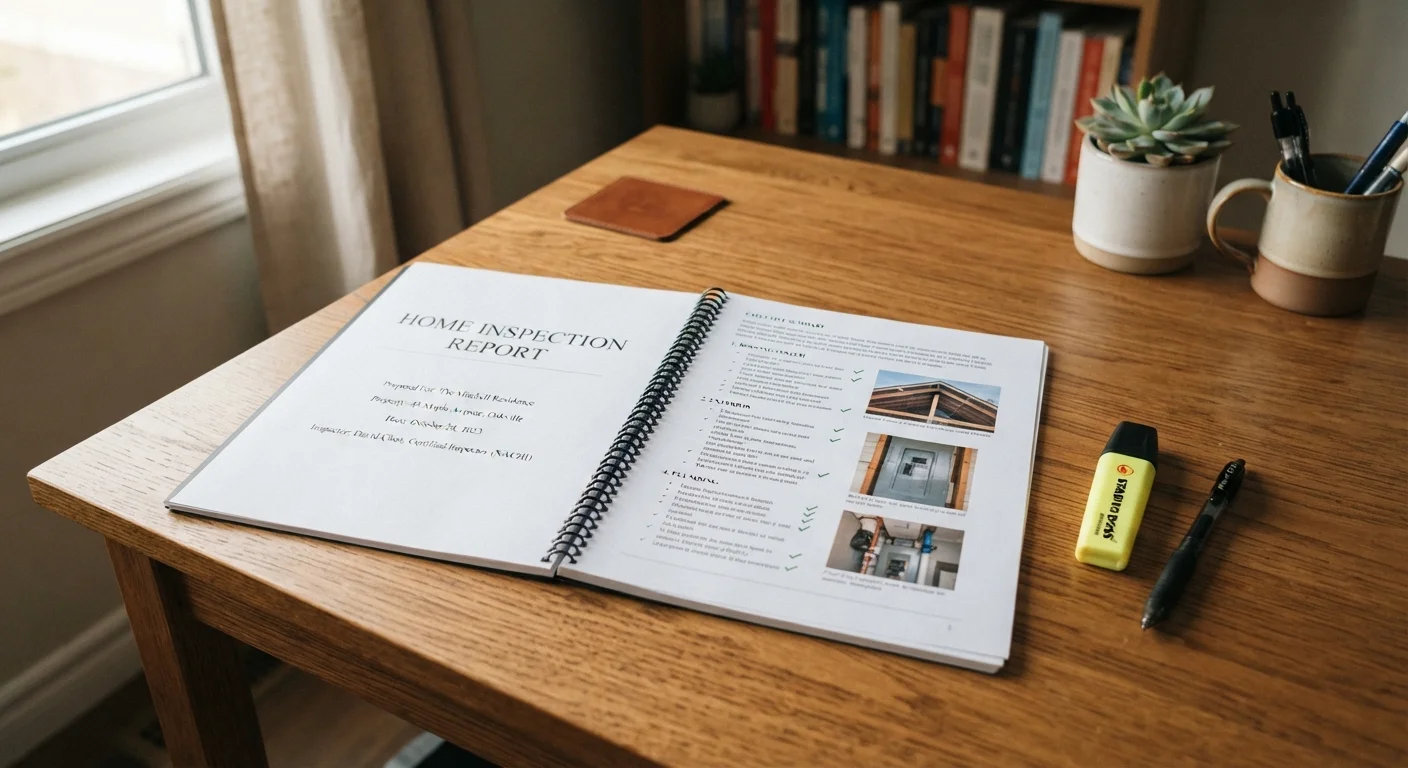
Home Inspection Report (written copy)
The primary document you will analyze - usually delivered as a PDF within 24-48 hours of the inspection.
Highlighter or annotation tool
Used to mark findings you want to discuss with your agent or inspector.
Licensed buyer's agent
Helps interpret findings in the context of local market norms and advises on what to request from the seller.
Specialist contractor estimates
Provides real cost context for major findings such as roof replacement, HVAC issues, or foundation concerns.
If you have ever worked through a similarly technical document - such as a contractor estimate - the structured approach is comparable. The guide to reading a mechanic's estimate uses a parallel method for decoding repair documents that some buyers find helpful as a comparison.
Step-by-Step: From Report to Negotiation
Follow these steps in order. Rushing to conclusions before completing the full read is the most common source of unnecessary stress - and missed leverage.
Read the Summary Page First - Then the Full Report
Most inspection reports open with a summary section that highlights items the inspector flagged as significant. Start here to get a high-level picture, but do not stop there. The summary is a navigation tool, not a complete record. The full report contains context, photos, and condition notes that give meaning to summary items. Reading only the summary is one of the most common mistakes buyers make.
Understand the Severity Rating System
Most US inspection reports use a coded rating system - often terms like Safety Hazard, Repair Needed, Monitor, and Maintenance Item. Definitions vary by inspector and report format, so locate the legend at the front of the document and keep it visible as you read. Do not assume a long list of "Monitor" items signals a troubled property - these often describe normal wear and age.
Separate Findings Into Three Categories
As you read, sort every finding into one of three buckets:
- Safety or Structural: Issues affecting the building's integrity or occupant safety - foundation cracks, active water intrusion, faulty electrical panels, gas leaks, failing roofs.
- Mechanical Systems: HVAC, plumbing, water heater, and appliance deficiencies that affect function and carry defined replacement costs.
- Cosmetic or Maintenance: Scuffed paint, minor caulking gaps, worn weatherstripping - items that are normal in any lived-in home.
This triage shapes your negotiation strategy. Sellers generally expect to address safety and structural issues; they may push back on cosmetic requests. See the tip below for a practical way to organize this.
[tip_callout]Get Cost Context on Major Findings
Before deciding what to negotiate, get a rough repair estimate for any item in the safety/structural or mechanical category. Your inspector can often provide a cost range, but a call to a licensed contractor - roofer, HVAC technician, electrician - gives you grounded numbers. These estimates transform vague anxiety into concrete figures you can bring to the negotiating table. For investment properties, this step is especially critical; see the investment property evaluation checklist for a structured approach to condition assessment.
Decide What to Negotiate - and What to Accept
Not every finding warrants a repair request. In most US markets, buyers typically focus requests on items that affect health, safety, or major systems. Asking a seller to repaint a scuffed wall or replace a cracked outlet cover can signal inexperience and weaken your position. For perspective on how small missteps affect leverage, review why buyers lose negotiating power.
Your options generally include: requesting repairs before closing, asking for a price reduction, requesting a seller credit at closing, or - in cases of significant undisclosed defects - reconsidering the purchase under your inspection contingency. Your agent or attorney can help you choose the most appropriate approach for your market.
[important_callout]Follow Up on Agreed Repairs Before Closing
If the seller agrees to make repairs, request documentation: receipts from licensed contractors, permits where required, and - for major work - a re-inspection by your home inspector. Never assume agreed-upon repairs were completed correctly without verification. A final walk-through of the property before closing is a standard and important step for confirming the condition of the home matches expectations set during negotiations.
Don't Skip the Inspector Walk-Through
The written report is only part of the picture. Attending the inspection in person - or at minimum the final walk-through with the inspector - lets you see the severity of findings firsthand. A crack described identically in two reports may look very different in reality. If you cannot attend, ask your inspector to provide photos and a verbal summary call.