

| Typical CVI validity window | 10 days from date of exam (USDA APHIS; individual airline and state rules may vary) |
| USDA APHIS endorsement required for | Most international pet travel (USDA APHIS Pet Travel guidelines) |
| Standard ISO microchip digits | 15 digits (ISO 11784/11785) (International Standards Organization) |
| Rabies titer test waiting period | Up to 180 days before entry (country-dependent) (EU and select country import rules) |
| Minimum import permit lead time | Weeks to several months (Varies by destination country) |
| Airlines requiring health certificates | Most major U.S. carriers for cabin or cargo pets (Individual airline policies; verify before booking) |
What Is a Pet Health Certificate and When Do You Need One?
A Certificate of Veterinary Inspection (CVI) - commonly called a health certificate - is the foundational document for pet travel. Issued by a licensed, USDA-accredited veterinarian after a physical examination, it confirms your pet is healthy and free of signs of communicable disease at the time of travel.
You'll typically need one when:
- Flying with a pet in cabin or as checked baggage on most U.S. airlines
- Crossing certain state lines with dogs, cats, or birds
- Entering another country with any pet
Because CVIs expire quickly - usually within 10 days of the exam date - timing your vet visit is critical. Book your appointment as close to departure as your schedule allows, while leaving enough time for any USDA endorsement steps if traveling internationally. For a broader overview of the travel planning process, see our complete guide to traveling with pets.
For details on exactly why airlines and state authorities request this document, our dedicated article on why health certificates are required explains the regulatory context.
| Typical CVI validity window | 10 days from date of exam (USDA APHIS; individual airline and state rules may vary) |
| USDA APHIS endorsement required for | Most international pet travel (USDA APHIS Pet Travel guidelines) |
| Standard ISO microchip digits | 15 digits (ISO 11784/11785) (International Standards Organization) |
| Rabies titer test waiting period | Up to 180 days before entry (country-dependent) (EU and select country import rules) |
| Minimum import permit lead time | Weeks to several months (Varies by destination country) |
| Airlines requiring health certificates | Most major U.S. carriers for cabin or cargo pets (Individual airline policies; verify before booking) |
International Travel: USDA Endorsement, Microchips, and Import Permits
Taking a pet abroad involves several layers of documentation beyond the standard CVI. Understanding each layer - and its timeline - prevents last-minute surprises.
Certificate of Veterinary Inspection (CVI)
An official document, commonly called a health certificate, signed by a licensed veterinarian confirming that a pet has been examined and appears healthy for travel. Most airlines and many states require a CVI issued within 10 days of departure.
USDA Endorsement
An additional authentication applied by the U.S. Department of Agriculture's Animal and Plant Health Inspection Service (APHIS) to a health certificate, required for international travel. It verifies the signing veterinarian's credentials and the document's validity.
ISO Microchip
A 15-digit microchip that meets the international standard (ISO 11784/11785). Many countries, including EU member states, require an ISO-compliant chip before accepting a pet's health documentation.
Import Permit
A government-issued authorization required by certain countries before a pet may enter. Permits often have processing lead times of weeks to months and must be obtained before travel.
Rabies Titer Test
A blood test that measures the level of rabies antibodies in a pet's system. Some countries use it to verify adequate vaccination protection rather than accepting vaccine records alone.
Accredited Veterinarian
A licensed veterinarian who has been approved by the USDA APHIS to issue official health certificates. Only accredited vets can sign documents eligible for USDA endorsement.
USDA Endorsement
For most international destinations, a CVI must be endorsed by the USDA APHIS before departure. Endorsement authenticates the signing veterinarian's credentials and the document itself. USDA APHIS endorsement offices can process documents in person or by mail; processing times vary, so build this step into your preparation timeline well in advance.
Microchip Requirements
Many countries - particularly EU member states - require pets to carry an ISO 11784/11785-compliant 15-digit microchip before any vaccinations or titer tests are recorded. If your pet is microchipped with an older 10-digit chip, you may need to add a compliant chip or carry a compatible scanner. Consult your veterinarian about your pet's current chip status early in planning.
Rabies Titer Tests and Import Permits
High-biosecurity destinations (including several island nations and parts of Asia and the Pacific) require a passing rabies titer test result in addition to vaccination records. Some also require a minimum waiting period of up to 180 days between a passing result and entry - making early planning essential.
Certain countries additionally require an import permit obtained weeks or months in advance from the destination government. Our article on international pet entry rules walks through the types of requirements you're likely to encounter by region.
10 days
Maximum CVI age accepted by most airlines
The USDA APHIS and the majority of U.S. carriers require the health certificate exam to have occurred within 10 days of travel.
180 days
Rabies titer test waiting period for some countries
Several countries, including Japan and certain Pacific island nations, require a minimum wait after a passing titer result before a pet may enter.
3-6 months
Recommended documentation lead time for international travel
Veterinary and government travel advisors generally recommend starting the documentation process at least three to six months before an international departure.
For vaccination context, our overview of core vs. non-core pet vaccines can help you understand which immunizations are likely to appear on documentation requirements.
Always Verify Requirements Directly With Authorities
Entry rules, required documents, and processing timelines change. Before any trip, confirm current requirements with the destination country's official veterinary or agricultural authority and your airline. This guide provides general educational context only - it is not a substitute for up-to-date official guidance.
Interstate Travel Has Requirements Too
Crossing U.S. state lines with a pet can also trigger documentation requirements, particularly for dogs, cats, and birds. Some states mandate a current CVI; others require proof of specific vaccinations. See our interstate pet travel overview for a starting point, and always verify with the destination state's agricultural department.
Keeping Your Records Organized
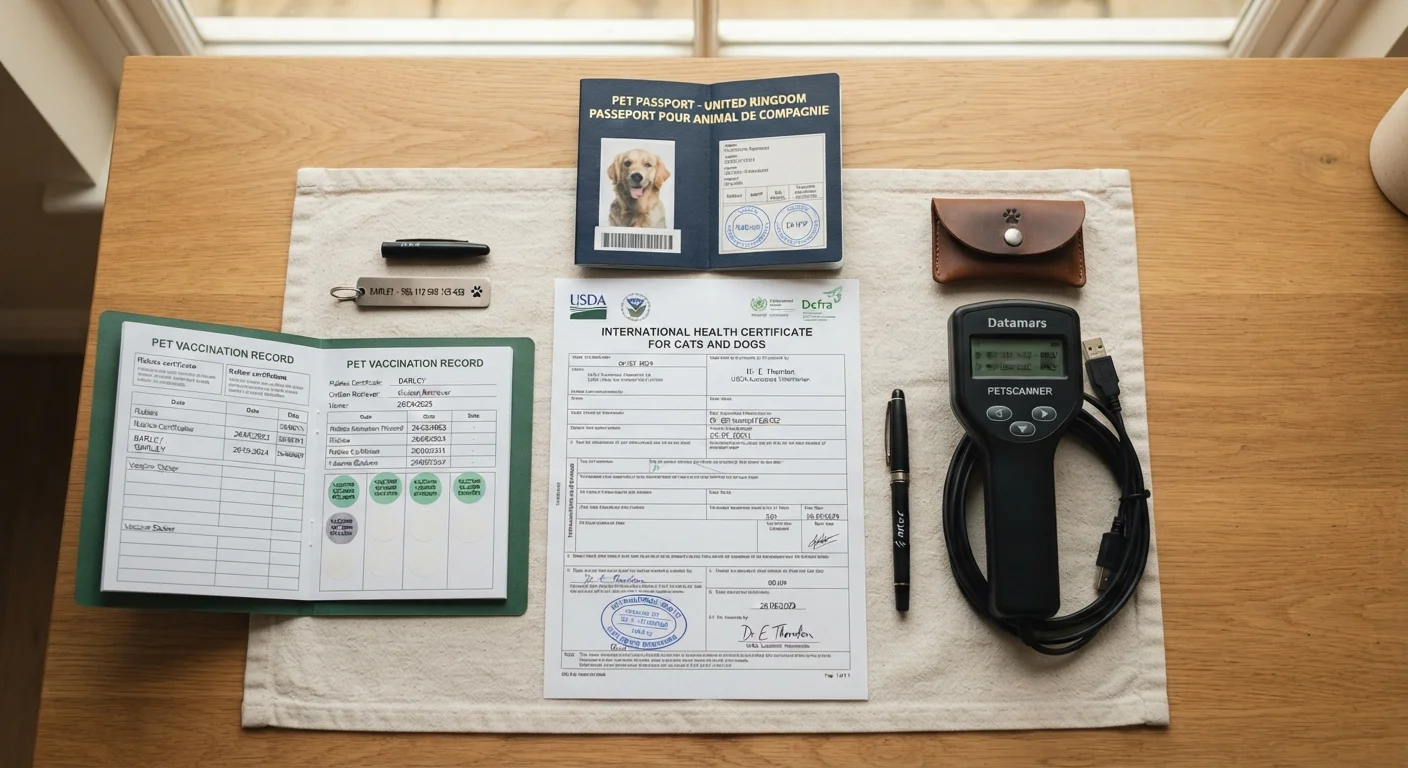
Whether traveling domestically or internationally, carrying a complete, well-organized document packet reduces stress at check-in, border crossings, and unexpected veterinary stops. A practical packet typically includes:
- Current CVI (original copy, not just digital)
- Vaccination history, including rabies certificate with lot number and expiration
- Microchip documentation showing chip number
- USDA-endorsed health certificate (international trips)
- Titer test results and import permit copies, if applicable
- Your regular vet's contact information for emergencies
Digital backups stored in cloud storage or email are a useful safety net, but many authorities require original paper documents. Our pre-trip checklist for pet travel offers a printable reference so nothing gets overlooked. You'll also want to include documentation in your broader pet travel kit alongside food, medication, and comfort supplies.
This article is for general informational purposes only and does not constitute veterinary, legal, or regulatory advice. Requirements change frequently - always verify current entry and airline rules with official government sources and your veterinarian before travel.