

Key Takeaways
- "Pet-friendly" is an unregulated marketing term with no universal standard across the travel industry.
- Size limits, breed restrictions, pet fees, and deposit requirements vary widely by property and location.
- National parks, beaches, and restaurants each have their own rules that can differ dramatically from one site to the next.
- Always call ahead and read the fine print - online listings frequently omit key restrictions.
- Service animals have distinct legal protections that are completely separate from general pet policies.
Pet-Friendly
"Pet-friendly" is a marketing label used by hotels, vacation rentals, parks, restaurants, and airlines to signal that animals are permitted on their premises or services. Unlike regulated terms such as "ADA accessible," there is no universal legal standard for what pet-friendly must include. In practice, it means only that some animals are allowed under some conditions - the specifics vary enormously.
Accommodations that accept animals under the Americans with Disabilities Act (service animals) are legally required to do so regardless of their stated pet policy - pet-friendly status and ADA service-animal compliance are entirely separate obligations.
A Label Without a Rulebook
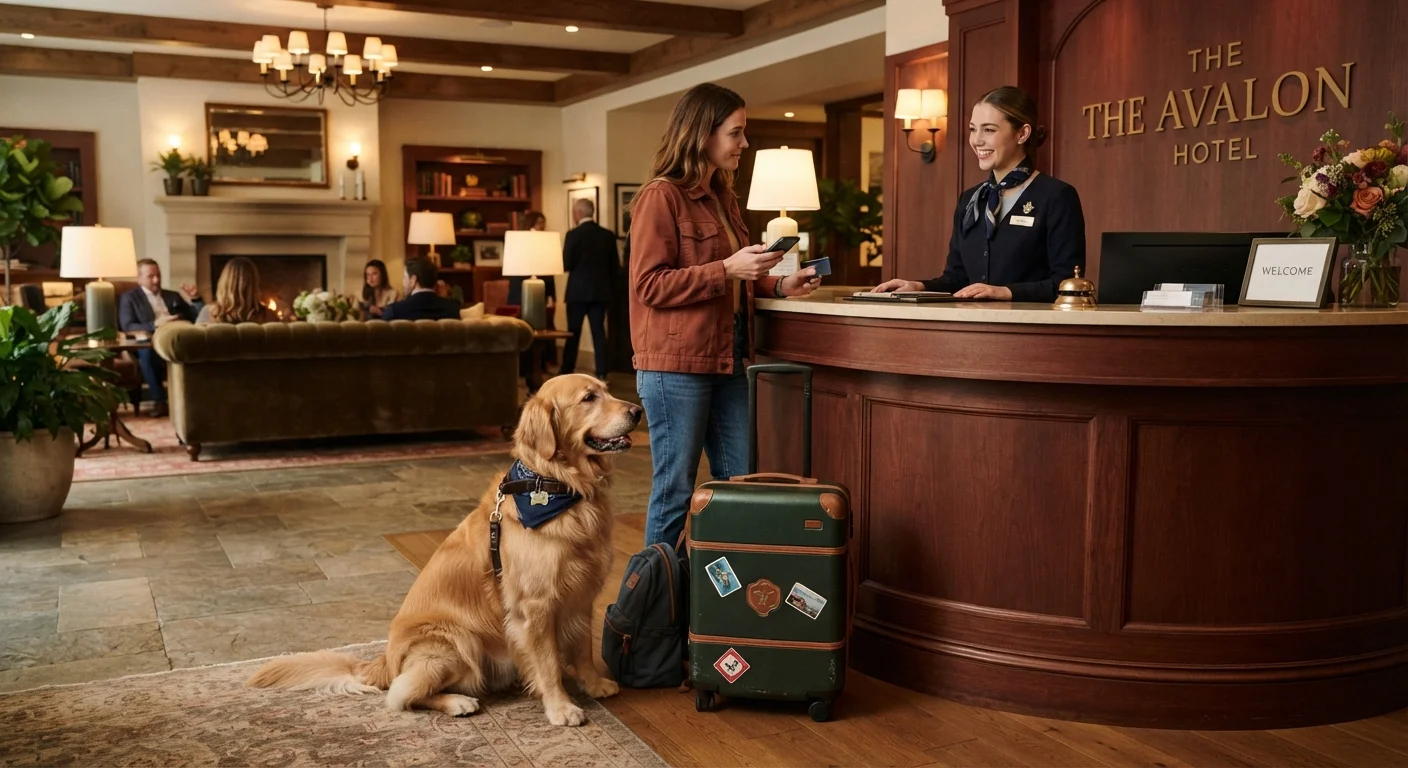
When a hotel advertises itself as pet-friendly, it has made a promise - but not a specific one. There's no federal or state standard that defines what the label must include, so two properties using identical language can offer wildly different experiences. One might welcome any dog up to 80 pounds, provide a welcome kit, and allow pets in the lobby. Another might accept only cats under 20 pounds, charge a nightly surcharge, and require animals to be crated whenever guests leave the room.
This ambiguity runs through the entire travel industry. As part of a broader picture of what pet travel in the U.S. actually involves, the pet-friendly label is one of the most misunderstood pieces of the puzzle. Treating it as a green light - rather than a starting point for further research - is where families run into trouble.
"Pet-Friendly" vs. "Pet-Tolerant"
Industry observers sometimes distinguish between properties that are genuinely set up for animal guests - with outdoor relief areas, pet amenity kits, and staff trained to assist - and those that simply don't prohibit pets but offer no accommodations for them. The same label covers both. Asking specific questions before booking is the only way to tell the difference.
How Hotels and Rentals Define It Differently
For traditional hotels, pet-friendly status usually comes with a specific fee structure. A one-time, non-refundable pet fee is common; some properties charge a nightly rate per animal on top of the room cost. Weight limits (frequently 25-50 lbs) and breed restrictions (often targeting certain large or short-muzzled breeds) are standard. Some properties limit the number of pets per room.
Vacation rentals add another layer of complexity. Individual owners set their own rules, so a listing marked pet-friendly on a rental platform might still prohibit dogs over a certain size, ban multiple pets, or require an additional security deposit. The fine print on pet-friendly lodging frequently includes conditions that don't appear in search filter results - they're buried in the house rules section of the listing.
Ask These Questions Before You Book
When contacting a property, ask: What is the weight and breed limit? Is the pet fee per night or a flat charge, and is it refundable? Which areas of the property are pets allowed in? Are pets permitted to be left alone in the room? Getting clear answers to each of these prevents the most common arrival-day surprises.
Parks, Beaches, and Restaurants: Different Worlds
Outdoor venues use pet-friendly even more loosely. National parks generally allow leashed pets in developed areas - parking lots, campgrounds, and paved paths - while banning them from hiking trails, ranger-led programs, and wilderness zones. The rules are set park by park and sometimes trail by trail, so what's true at one park may be completely different at another.
Beaches vary by municipality. Some allow dogs year-round; others only in off-peak hours or seasons; still others ban them entirely. Restaurants that market outdoor seating as pet-friendly are subject to local health codes, which in many jurisdictions technically prohibit animals near food service - the enforcement of those codes varies considerably.
82%
Hotels charging a pet fee or deposit
According to the American Hotel & Lodging Association, the vast majority of pet-accepting hotels impose a fee or deposit on top of the room rate.
~400
National Park Service sites with pet restrictions
The NPS maintains distinct pet rules for each of its roughly 400+ managed sites, meaning conditions vary substantially from park to park.
The Service Animal Distinction
One critical thing the pet-friendly label does not cover: service animals. Under the Americans with Disabilities Act, any business open to the public is legally required to allow trained service animals - dogs and, in limited circumstances, miniature horses - regardless of whether the establishment has a pet policy at all. A property that bans pets entirely still must accommodate a legitimate service animal.
Emotional support animals (ESAs) occupy a different legal space. Airlines and many landlords have narrowed ESA accommodations significantly in recent years, and hotels have no federal obligation to accept them under the ADA. Families traveling with ESAs should verify current policies directly with each venue. For a closer look at how airline rules in particular play out, see what airline cabin pet policies actually mean.
How to Actually Verify Before You Go
The most reliable approach is direct contact. Call the property, ask specific questions - weight limit, breed restrictions, fee structure, areas where pets are allowed, and any crating requirements - and document the answers. Online listings and booking platforms are often outdated or incomplete on pet policy details.
For parks and outdoor destinations, use official government websites rather than travel aggregators. The National Park Service, state park agencies, and local municipality sites publish current rules and are more reliable than third-party summaries.
Planning a multi-stop itinerary? A full-trip approach to pet-inclusive family vacations walks through how to vet each element of a trip systematically so nothing slips through the cracks. It's also worth reviewing common pet travel myths before you finalize plans - some widely shared assumptions about what's allowed can lead families into avoidable headaches.
This article is for general informational purposes only. Policies and regulations vary by location and change over time. Always verify current rules directly with the relevant venue, park authority, or government source before traveling.