

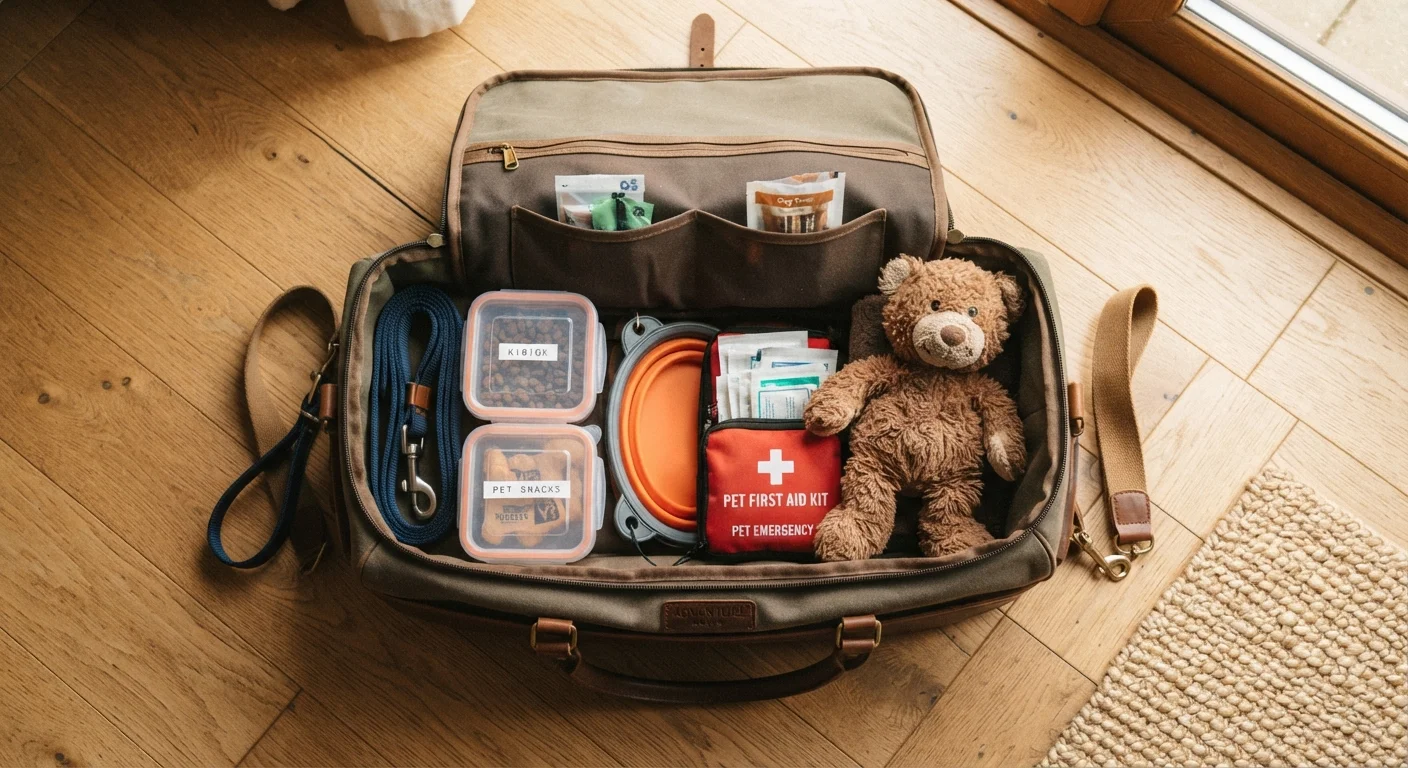
Why a Dedicated Pet Travel Kit Matters
Throwing your dog's food into a grocery bag five minutes before departure isn't a packing strategy — it's a recipe for forgotten medications, spilled kibble, and a very anxious animal. A purpose-built pet travel kit keeps critical supplies organized, accessible, and ready for whatever the road throws at you.
The goal isn't to pack everything your pet owns. It's to anticipate the categories of need — nutrition, health, identification, comfort, and safety — and cover each one deliberately. Whether you're driving two hours to a rental cabin or flying across the country, the fundamentals remain consistent. For a broader look at what traveling with a pet actually involves, see our comprehensive overview of pet travel in the U.S..
The Five Core Categories of a Pet Travel Kit
1. Food and Water Supplies
Pack enough of your pet's regular food for the entire trip, plus one or two extra days as a buffer. Abrupt food changes during travel can upset digestion, so resist substituting with whatever's available at a convenience store. Bring collapsible bowls, a sealed water container filled with your pet's usual tap water (some animals react to sudden water source changes), and a small manual can opener if you use wet food.
2. Health and Medication Essentials
Any prescription medications your pet takes regularly should travel in their original labeled containers. Include a written list of medications, dosages, and your veterinarian's contact information — this becomes invaluable if you need to visit an unfamiliar vet clinic mid-trip. A basic pet first-aid kit covering gauze, antiseptic wipes, tweezers, and a digital thermometer rounds out this category. Always consult your vet before travel regarding any adjustments to medication schedules.
3. Documentation
Vaccination records, a current health certificate (required for some destinations and all air travel), and a copy of your pet's microchip registration should live in a waterproof folder inside the kit. If your pet takes prescription medication, include that documentation too. Pair physical copies with digital backups on your phone. Our pre-trip checklist for traveling with pets walks through exactly what documents you'll want in order before leaving home.
4. Comfort and Familiarity Items
Travel disrupts routine, which is stressful for most animals. A familiar blanket, a favorite toy, or an unwashed t-shirt carrying your scent can measurably reduce anxiety. Keep these items accessible rather than buried in luggage — your pet may need them in the car or at your first overnight stop. For ideas on keeping pets mentally engaged during the disruption of travel, the guidance in enrichment activities for pet mental well-being translates surprisingly well to travel contexts.
5. Safety and Containment Gear
A sturdy leash and a backup collar with current ID tags are non-negotiable. Consider a harness for animals prone to slipping collars when startled. If your pet isn't already microchipped, discuss that option with your vet well before any trip. A spare leash takes almost no space and has saved many a trip from disaster.
What Most Owners Forget to Pack
Beyond the five core categories, a handful of easy-to-overlook items consistently prove their worth on the road:
- Waste bags and a portable litter option — rest stops and unfamiliar environments demand extra preparedness.
- A pet-specific stain and odor neutralizer — motion sickness and anxiety can strike even well-traveled animals.
- Photographs of your pet — current, clear photos stored on your phone help enormously if a pet goes missing in an unfamiliar location.
- Your destination's nearest 24-hour emergency veterinary clinic address — look this up before you leave, not when you need it.
- A recent weight measurement — useful if a veterinary visit is necessary and you don't have records on hand.
For a deeper dive into the items many owners overlook entirely, the pet travel packing list most owners don't think to build covers the less-obvious essentials in detail. And if you want to understand how a travel kit differs from a home emergency kit, see our guide to building a pet emergency kit.
This article provides general informational guidance for pet owners and is not a substitute for advice from a licensed veterinarian. Always consult your vet before traveling with a pet, particularly regarding medications, health certificates, and your individual animal's needs.