

Key Takeaways
- Mental enrichment helps prevent boredom-driven behaviors like excessive barking, chewing, or anxiety.
- Enrichment falls into several categories - sensory, cognitive, social, and food-based - each serving different needs.
- Simple, low-cost activities done consistently can meaningfully improve your pet's quality of life.
- Dogs and cats have different enrichment needs; tailor activities to your specific animal's instincts.
- Rotating activities keeps novelty high and prevents pets from losing interest over time.
Why Mental Enrichment Matters for Pets
Most pet owners understand the importance of daily walks and regular vet visits - but physical health is only part of the picture. A pet's mental well-being deserves equal attention. Without adequate mental stimulation, even well-fed, well-exercised animals can develop signs of stress, frustration, or boredom: destructive chewing, excessive vocalization, repetitive behaviors, or withdrawal.
Enrichment activities are structured opportunities for pets to engage their minds, express natural instincts, and experience novelty. Veterinary behaviorists widely recognize enrichment as a cornerstone of animal welfare, not an optional extra. And the good news? Many effective enrichment strategies cost little to nothing and can be woven into your existing daily routine.
Pair mental enrichment with the preventive care habits covered in our guide to preventive pet care, and you'll be supporting your companion from the inside out.
Puzzle Feeders and Food-Based Challenges
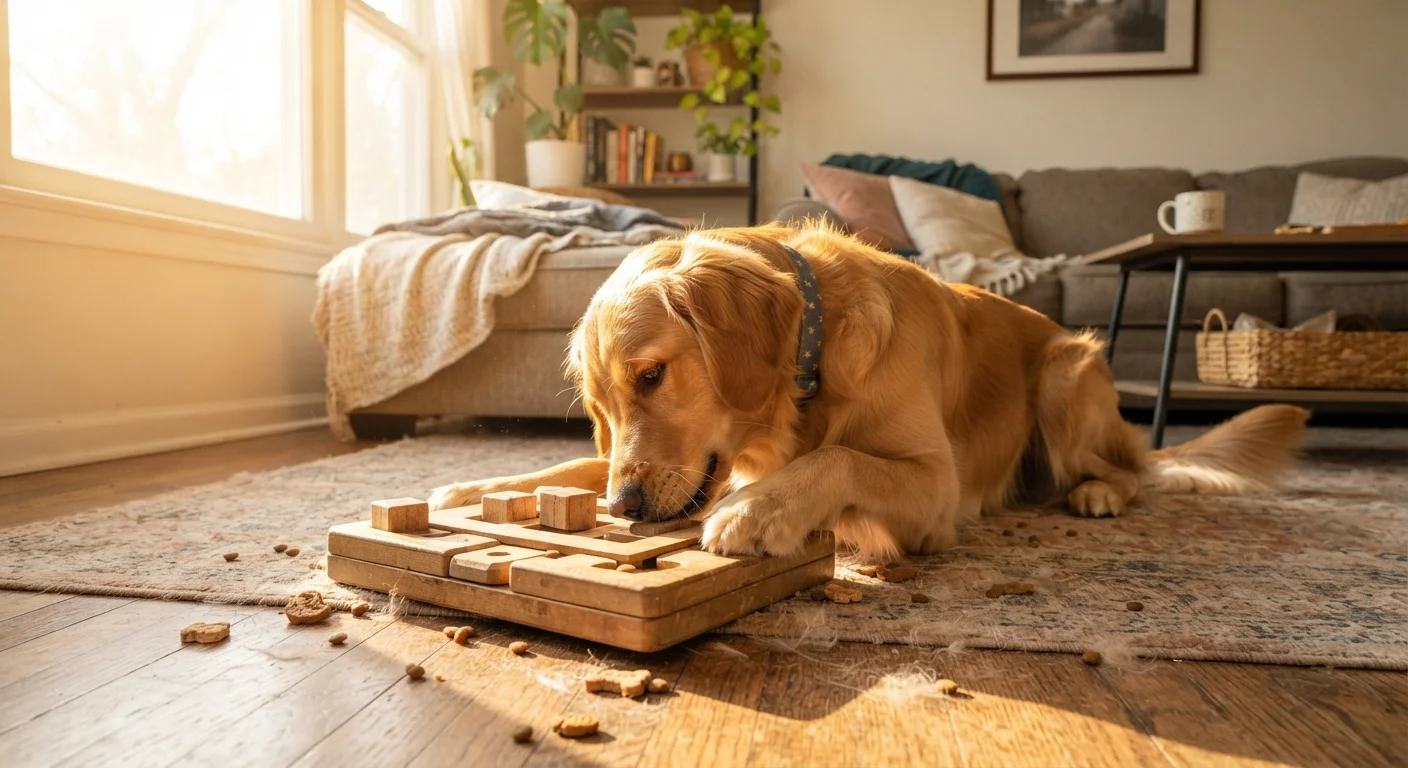
Food-based enrichment is one of the most accessible entry points for pet owners. Instead of serving meals in a standard bowl, use a puzzle feeder, snuffle mat, or Kong-style toy that requires your pet to work for their food. This taps into natural foraging instincts - particularly important for dogs, who are descended from animals that spent significant energy hunting and scavenging.
For cats, scatter feeding on a textured mat or hiding small portions around the room mimics prey-stalking behavior. Even a simple muffin tin covered with tennis balls creates a low-cost problem-solving challenge. The cognitive effort involved in food-based enrichment can tire a pet out as effectively as moderate physical exercise.
Working for food taps natural foraging instincts and delivers real cognitive exercise.
Scent Work and Nose Games
A dog's sense of smell is estimated to be tens of thousands of times more sensitive than a human's - and engaging that superpower is deeply satisfying for them. Nose work, or scent detection games, involves hiding a specific scent or treat and encouraging your dog to find it using their nose alone.
You don't need formal training classes to start. Begin by hiding treats under cups or in boxes and letting your dog sniff them out. Gradually increase the complexity. Many dogs who struggle with leash reactivity or excess energy find nose work calming and confidence-building. Cats also benefit from scent enrichment - rotating novel scents like dried herbs or safe plant materials (always verify safety with your vet) stimulates curiosity and exploration.
Nose work is one of the most mentally tiring and calming activities a dog can do.
Training Sessions as Cognitive Workouts
Short, positive reinforcement-based training sessions are among the most underrated enrichment tools available. Teaching your pet a new trick or reinforcing known commands requires focus, memory, and problem-solving - all of which challenge the brain in productive ways.
Keep sessions brief: five to ten minutes is often enough, especially for younger animals or those new to training. The goal isn't performance - it's the mental engagement itself. Commands like "find it," "spin," or object-naming games stretch cognitive capacity while also strengthening the bond between pet and owner. Research in animal cognition suggests that dogs, in particular, thrive when given opportunities to make choices and earn rewards through their own effort.
Even a five-minute training session offers meaningful cognitive challenge and bonding.
Sensory Enrichment: New Sounds, Textures, and Environments
Pets benefit from controlled exposure to novel sensory experiences. For indoor cats, this might mean a bird feeder placed near a window, a fish tank to watch, or nature sounds played softly in the background. For dogs, a new walking route exposes them to fresh smells, sounds, and sights that a familiar neighborhood path simply can't provide.
Safe outdoor time in a securely fenced yard - or on a long line for dogs - allows animals to experience wind, insects, grass textures, and ambient noise. Even rearranging furniture or introducing a new cardboard box can provide novel sensory input for curious cats. The key is novelty delivered at a pace your pet finds stimulating rather than overwhelming.
A new walking route delivers more mental stimulation than a familiar one ever can.
Social Enrichment: Interaction with People and Other Animals
Social connection is a fundamental need for most domestic animals. Regular, positive interaction with their human family members - not just feeding and basic care, but engaged play and calm companionship - supports emotional stability. For dogs especially, social deprivation is a documented stressor that can worsen anxiety and behavioral problems.
Carefully managed play dates with compatible dogs, or supervised introductions to friendly cats, can provide valuable social enrichment. For single-pet households, increasing intentional one-on-one playtime goes a long way. The quality of social interaction matters more than quantity - ten minutes of focused play beats an hour of passive coexistence. Just as humans benefit from genuine social connection (a topic explored in our complete mental well-being overview), so do our pets.
Focused, intentional playtime beats passive coexistence for your pet's emotional health.
Rotating Toys and Environmental Changes
Familiarity breeds indifference - at least when it comes to toys. Pets habituate quickly to items that remain available all the time. A simple strategy: divide your pet's toys into groups, rotate them every few days, and reintroduce "old" toys as if they're new. Most pets respond to a familiar toy pulled from a bin with renewed enthusiasm.
Environmental modifications also count as enrichment. Cat trees, window perches, tunnels, and cardboard boxes create vertical space and hideaways that align with feline instincts. For dogs, a digging box in the yard (a designated sandbox for safe digging) satisfies an innate urge without sacrificing your garden. Small environmental changes cost little but signal to your pet that their world is dynamic and interesting.
Rotating toys every few days makes old items feel new again - and keeps curiosity alive.
Making Enrichment a Lasting Habit
The most effective enrichment isn't a one-time event - it's a rhythm. Start with one or two activities that suit your pet's species, age, and personality, then gradually expand the variety. Rotating toys and challenges every few days prevents habituation, keeping your pet's curiosity alive.
Start Small and Build Gradually
If your pet is new to enrichment activities, introduce one new challenge at a time rather than overwhelming them with several changes at once. Watch for signs of frustration - pawing, walking away, vocalizing - and dial back the difficulty if needed. The goal is engagement and success, not perfection. Over time, as your pet builds confidence, you can layer in more complex activities.
Remember that enrichment looks different for every animal. A senior cat may benefit most from gentle sensory experiences, while a young herding dog might need intensive problem-solving challenges. Observe your pet's reactions and let their engagement guide your choices. When in doubt, consult your veterinarian or a certified animal behaviorist for personalized recommendations.