

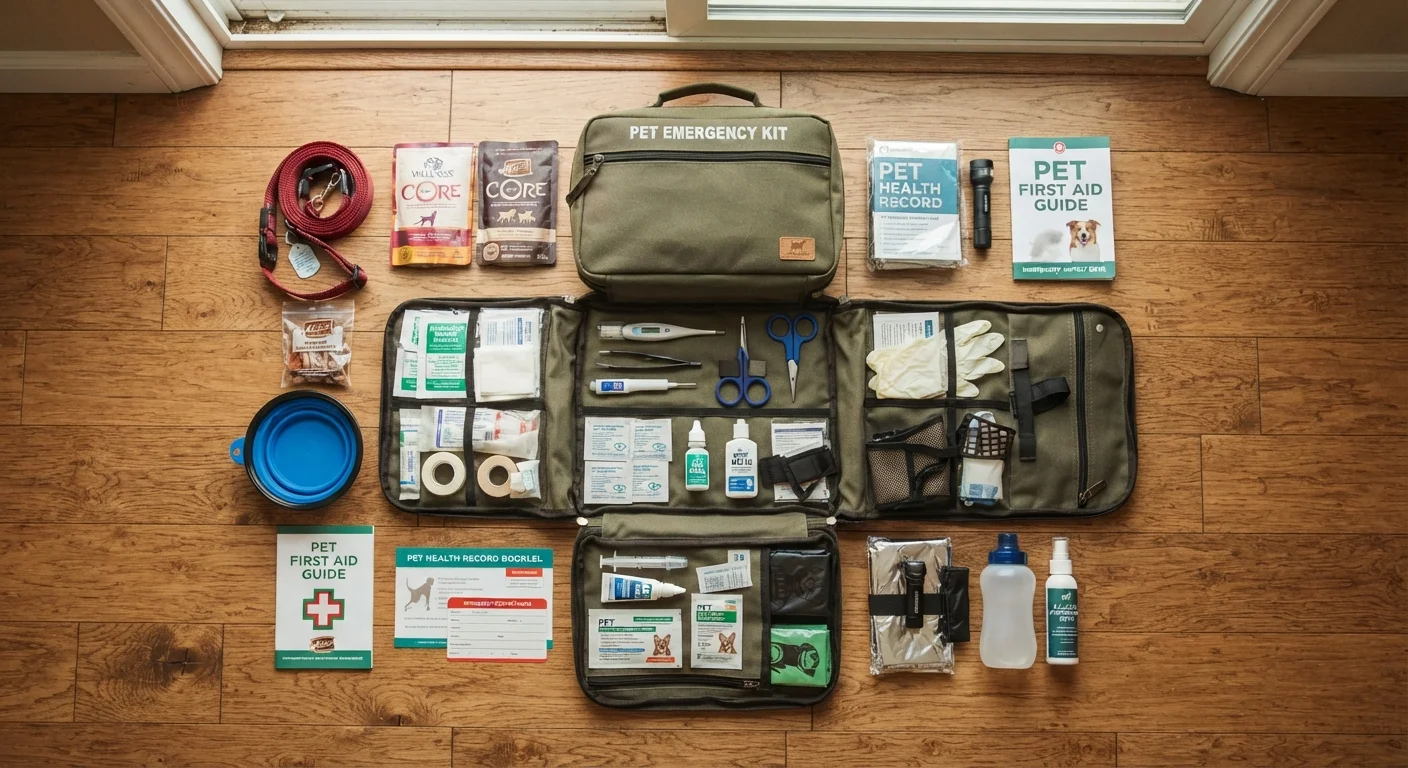
Key Takeaways
- Your pet emergency kit should be ready before a crisis happens, not assembled during one.
- Medical records, medications, and ID documents are among the most critical items to include.
- Kits should be tailored to your specific pet's species, size, and health needs.
- Store the kit in an easily accessible, waterproof container and check it every six months.
- A pet emergency kit also serves as the foundation for a travel emergency bag.
Summary
22 items · 30-60 minutes
Why Every Pet Owner Needs This Kit
Emergencies rarely come with advance notice. A wildfire evacuation order, a sudden illness, a burst pipe flooding your home - any of these situations can unfold within minutes, leaving you little time to hunt down your dog's prescription, dig out a spare leash, or find your cat's vaccination records. A dedicated pet emergency kit changes that dynamic entirely.
Think of it as pet preparedness infrastructure: something you build once, maintain periodically, and hope you never need in a hurry. For households that also travel with their animals, there's meaningful overlap with a travel bag - see our pet travel packing list for how these kits can pull double duty on the road.
The checklist below is organized into logical groupings. Work through each section, gather what you're missing, and store everything in a waterproof, clearly labeled container that every adult in your household knows how to find.
Waterproof storage container or duffel bag
Keeps all kit contents dry and organized during evacuations or outdoor emergencies.
Pet carrier or travel crate
Required for safe containment during evacuation; shelters and hotels often require one.
Pet first aid reference guide
A printed quick-reference card or booklet on handling common pet injuries and emergencies.
Permanent marker and label tape
For marking food containers, water bottles, and medication with dates and pet names.
The Complete Pet Emergency Kit Checklist
Use the categories below to build or audit your kit. Items marked must are non-negotiable for most households; should items are strongly recommended; nice-to-have items round out a thorough kit but can be added over time.
Medical Records & Identification
Food, Water & Feeding Supplies
Medications & First Aid
Safety, Restraint & Containment
Comfort & Sanitation
Never Use Human Medications on Your Pet
Many common over-the-counter medications safe for humans - including ibuprofen, acetaminophen, and certain antacids - are toxic to dogs and cats. Do not add human medicines to your pet kit as a substitute for veterinary-prescribed treatments. If your pet needs emergency medication support, contact a veterinarian or an animal poison control line for guidance.
Keeping Your Kit Current
Building the kit is step one - maintaining it is what actually makes it useful. Set a calendar reminder every six months to cycle through these checks:
- Replace any food, water, or medications approaching their expiration dates.
- Update your pet's records if vaccinations, prescriptions, or contact information have changed.
- Confirm your pet's ID tags and microchip registration reflect your current address and phone number.
- Reassess quantities if you've added a pet to your household.
Staying ahead of routine pet care makes these check-ins easier. Our guide to preventive pet care habits can help you build a rhythm that keeps your records and supplies up to date year-round.
Prescription Medications Expire - Check Regularly
Prescription medications lose potency or can become unsafe past their expiration date. If your pet's medication is within two months of expiring, contact your veterinarian to discuss a refill before rotating it into your emergency kit. Don't wait until a crisis to discover you're holding an expired supply.
This article provides general preparedness information for pet owners and is not a substitute for professional veterinary advice. Always consult your veterinarian regarding your pet's specific medical needs, medications, and emergency care.