

Key Takeaways
- Schedule your pet's first vet visit within a week or two of bringing them home.
- Bring any prior health records, vaccination history, and a fresh stool sample if possible.
- The first exam typically covers weight, temperature, heart, lungs, eyes, ears, and teeth.
- Prepare a list of questions in advance so you don't forget anything during the appointment.
- Keeping your pet calm during transport helps reduce stress before the exam even begins.
What you will need
Why the First Vet Visit Matters So Much
Bringing a new pet home is exciting - and a little overwhelming. One of the most important early steps is scheduling that first veterinary exam. Whether you've adopted a puppy, kitten, adult rescue dog, or adult cat, a baseline health assessment gives your vet the information they need to support your pet for years to come.
This first visit isn't just about vaccinations. It's a full nose-to-tail introduction: your vet will evaluate your pet's overall condition, flag any concerns early, and help you build a preventive care schedule. It also gives your pet their first experience with the clinic environment - which matters more than most new owners realize.
This article is part of our broader series on new pet ownership. If you're still getting your bearings, our first-time pet owner guide covers the full picture from setup to health basics.
What you will need
What to Bring to the Appointment
Arriving prepared helps the appointment run smoothly and gives your vet the most complete picture possible. Here's what to gather before you go:
Pet carrier or leash
Safely transports your pet to and from the clinic and keeps them secure in the waiting room.
Prior health records or vaccination paperwork
Gives your vet a starting point for your pet's history and avoids duplicate vaccinations.
Fresh stool sample (in a sealed bag or container)
Allows the vet to screen for intestinal parasites during the visit.
Written list of questions
Ensures you cover every concern without forgetting anything in the moment.
Treats or a comfort toy
Helps keep your pet calm and creates a positive association with the clinic.
If your pet came from a shelter or breeder, they may have received some early vaccinations or deworming treatments. Bring whatever paperwork you have - even partial records are helpful. And don't stress if you have nothing at all; your vet is used to starting from scratch.
What Actually Happens During the Exam
Most first exams follow a predictable structure, though your vet may adjust based on your pet's age, species, or any concerns you raise. Here's a step-by-step walkthrough of what to expect:
Check-in and waiting room
When you arrive, clinic staff will confirm your appointment and collect any paperwork you've brought. Your pet will be weighed - often in the waiting area - and a technician may take a brief health history before the vet enters.
Physical examination
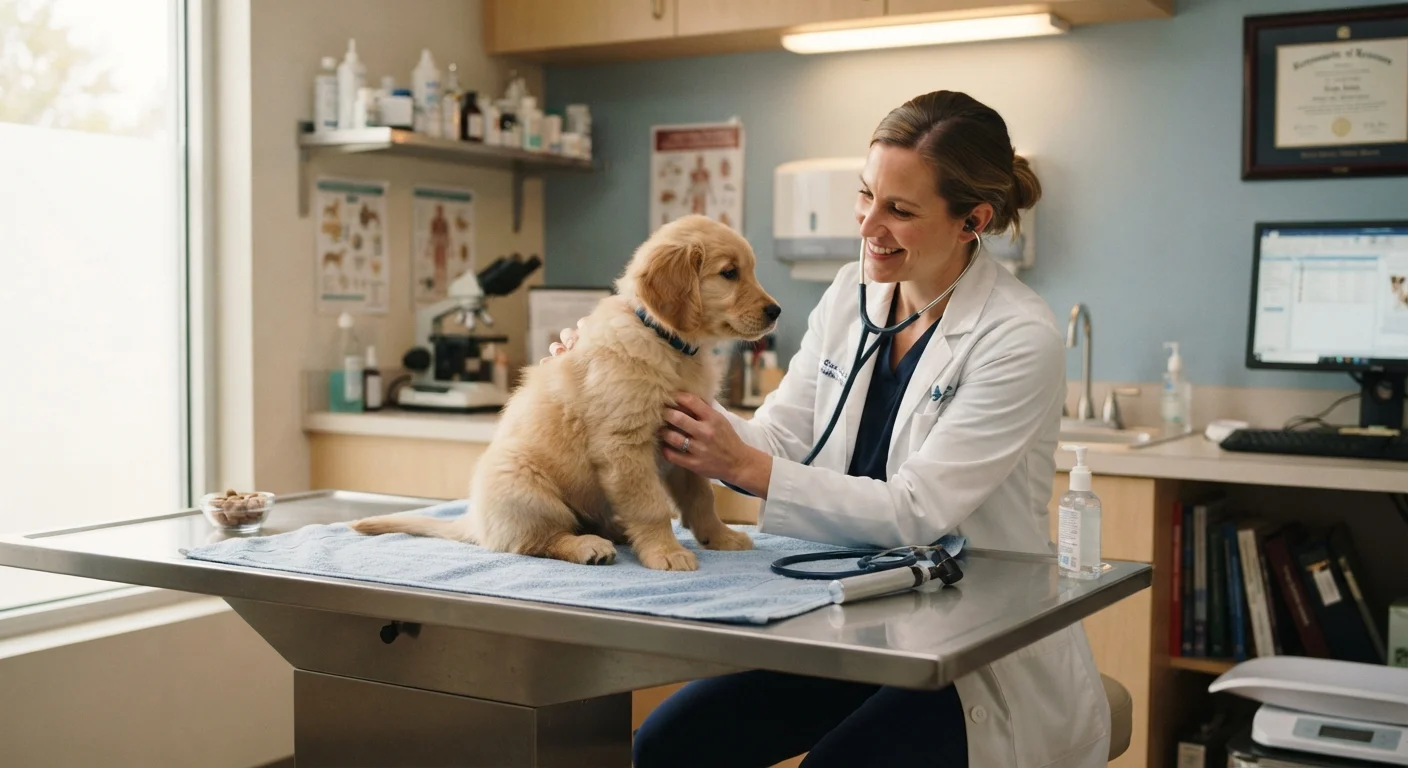
The veterinarian will perform a head-to-tail assessment. This typically includes checking the eyes, ears, nose, mouth and teeth, coat and skin, abdomen, and listening to the heart and lungs. The vet will also assess your pet's body condition score - a measure of healthy weight relative to body size.
Vaccinations and parasite screening
Based on your pet's age and prior records, your vet will administer any core vaccines due at this stage. A stool sample (if you brought one) will be submitted for parasite testing. The vet may also recommend a heartworm test for dogs or discuss flea, tick, and heartworm prevention options.
Your questions and the care plan
This is your time to ask anything on your list - feeding schedules, behavior concerns, spay/neuter timing, dental care, or anything else. Your vet will outline recommended next steps, including when to return and what preventive products to consider.
After the exam is done, your vet will typically outline a recommended care plan - including a vaccination schedule, parasite prevention options, and when to return. To understand how those future visits are structured, learn about routine exam frequency across your pet's life stages.
Reducing Stress for You and Your Pet
Anxiety is normal - for pets and their people. A few simple strategies can make a real difference in how the visit goes.
Make the Carrier Your Pet's Friend
Start leaving your pet's carrier out at home a week before the visit with a familiar blanket or toy inside. For the car ride, avoid feeding your pet a large meal right beforehand to reduce motion sickness risk. Arriving a few minutes early also gives your pet time to settle before entering the exam room.
For cats, a carrier that stays out in the home (rather than appearing only on vet-visit days) helps them associate it with safety rather than dread. For dogs, a short car ride before the day of the appointment can help reduce travel-related anxiety.
Once your pet is comfortable with regular vet care, you may find travel becomes easier too. Routine health visits often overlap with pre-trip checkups - and what vets recommend before a long trip with your pet is worth reading before any big adventure. Down the road, preventive care habits will help you stay ahead of health issues between visits.
This article provides general pet care information for educational purposes only. Always consult a licensed veterinarian for advice specific to your pet's health, age, species, and individual needs.