

Key Takeaways
- Rushing a first meeting often creates lasting tension that takes months to undo.
- Scent swapping before any face-to-face contact is one of the most effective early steps.
- Both animals need their own dedicated safe space throughout the entire introduction period.
- Body language, not a fixed calendar, should determine when you advance to the next stage.
- Most introductions take one to four weeks; some take longer, and that is completely normal.
What you will need
Why the Introduction Period Matters More Than You Think
Bringing a second pet home is exciting - but for your resident animal, it can feel like an ambush. Animals are territorial by nature, and an unannounced newcomer sharing their food bowls, sleeping spots, and human attention is a genuine stressor. A staged introduction reduces that stress by letting each animal process the other's presence gradually, in their own time.
The good news: a little patience up front pays off in a much calmer, more stable multi-pet household over the long run. If you're still deciding whether a second pet fits your current situation, our first-time pet ownership guide covers the foundational considerations worth revisiting before you bring anyone new home.
What you will need
Step-by-Step: The Staged Introduction
Follow these steps in order. The temptation to skip ahead is real - especially when both animals seem calm - but each stage builds the trust the next one depends on.
Set Up a Dedicated Safe Room for the New Pet
Before the new animal sets a paw inside your home, prepare a separate room stocked with everything they need: food, water, a litter box or puppy pads, bedding, and enrichment. This room is their home base for the first phase. The resident pet keeps full access to the rest of the house.
Swap Scents Before Any Visual Contact
Spend two to five days exchanging scent items between the two animals. Place a blanket or towel that smells of the new pet near the resident animal's resting area, and vice versa. Feed both animals near the closed door so they begin associating each other's scent with something positive (food).
Introduce Scent Under the Door
Once both animals are eating and behaving normally in their respective spaces, move food bowls to either side of the closed door - close enough that they can smell each other while eating, but not so close that either animal stops eating or shows stress. Gradually move the bowls closer over one to two days.
Use a Barrier for the First Visual Introduction
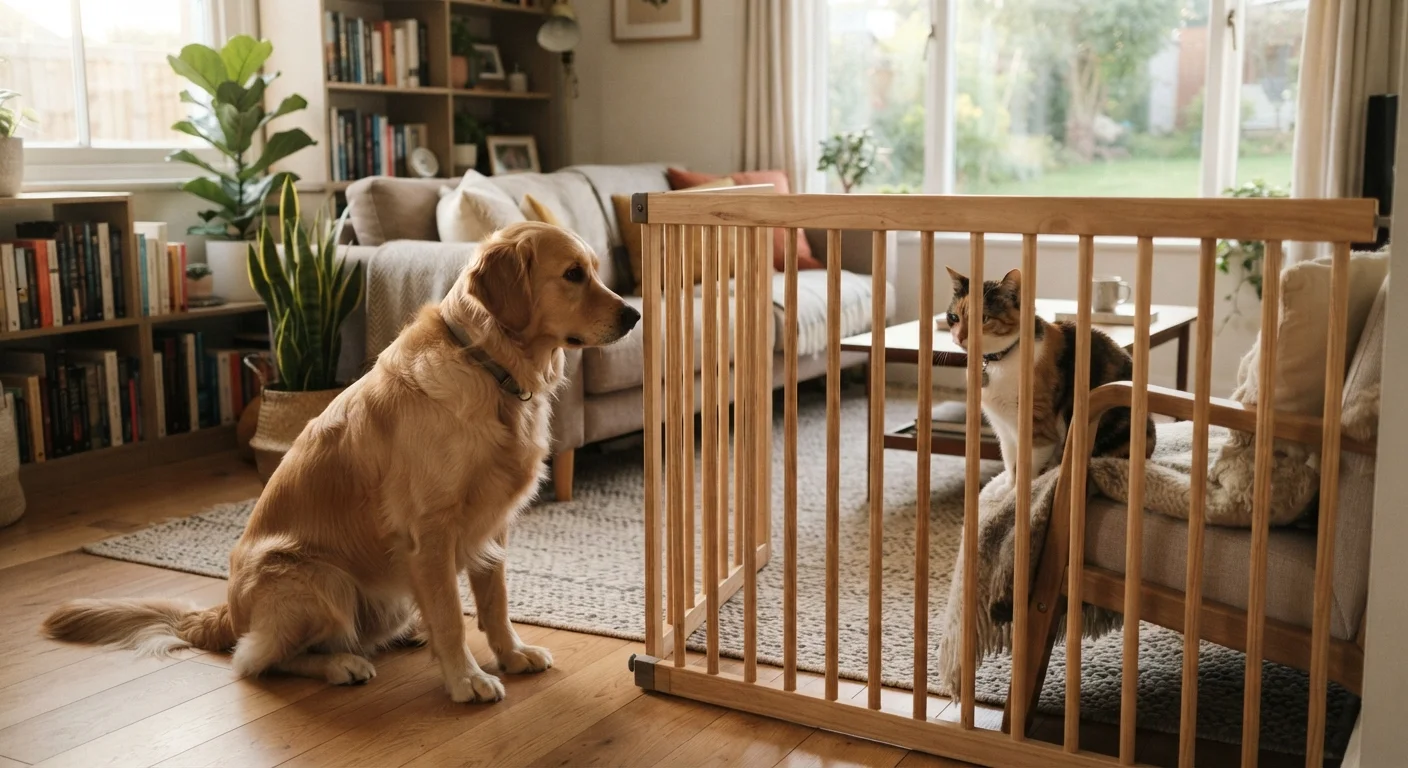
Replace the closed door with a baby gate or crack the door a few inches, allowing the animals to see and smell each other without physical access. Keep these sessions short - five to ten minutes - and use treats on both sides to reinforce calm behavior. Do this several times daily until both animals appear relaxed at the barrier.
Allow Supervised Shared-Space Time
Only when both animals are consistently calm at the barrier should you allow them into the same space together - and always with direct supervision. Keep initial sessions brief. Redirect any tension with movement or treats rather than physical intervention where possible, and end sessions on a calm note before either animal escalates.
Gradually Expand Shared Time and Remove Barriers
As positive interactions accumulate, extend shared time and begin removing physical barriers. Continue ensuring each animal has a retreat space they can access independently. Full integration - where both animals coexist without constant supervision - typically takes one to four weeks, though some pairs need longer.
Normalize Separate Retreats Long-Term
Even after a successful introduction, both animals benefit from having their own spots to decompress - separate beds, perches, or rooms they can retreat to. A multi-pet household where animals can choose distance when they need it tends to have far fewer ongoing conflicts than one where animals are constantly in each other's space.
Reading the Room: What to Watch For
Progress through the stages based on behavior, not the calendar. Signs you can move forward include: relaxed body posture, eating normally, voluntary approach to the barrier, and play behavior. Signs to slow down include: persistent growling or hissing, refusal to eat, hiding beyond the first day or two, or any aggressive lunging.
If tension remains high after several weeks despite following a careful protocol, consulting a veterinary behaviorist or certified animal behavior consultant is a reasonable next step - not a sign of failure. Every animal pair is different, and professional guidance can save a relationship that might otherwise deteriorate.
Don't Punish Growling or Hissing
These vocalizations are communication, not misbehavior. Punishing an animal for growling or hissing removes their warning signal without removing the underlying stress - and can make future aggression more sudden and harder to predict. Redirect and slow the process down instead.
Once your pets are comfortably coexisting at home, you may eventually think about traveling together. That introduces its own layer of planning - our piece on traveling with multiple pets is a practical starting point for when that day comes.