

Key Takeaways
- Credit utilization typically accounts for roughly 30% of a FICO score, making it the second-largest scoring factor.
- Keeping utilization below 30% is a widely cited guideline, but lower is generally better for your score.
- Utilization is recalculated each time card issuers report balances - usually once per billing cycle.
- Paying down balances or requesting a credit limit increase can lower utilization relatively quickly.
- Closing a credit card reduces your available credit and can raise your utilization ratio unexpectedly.
Credit Utilization
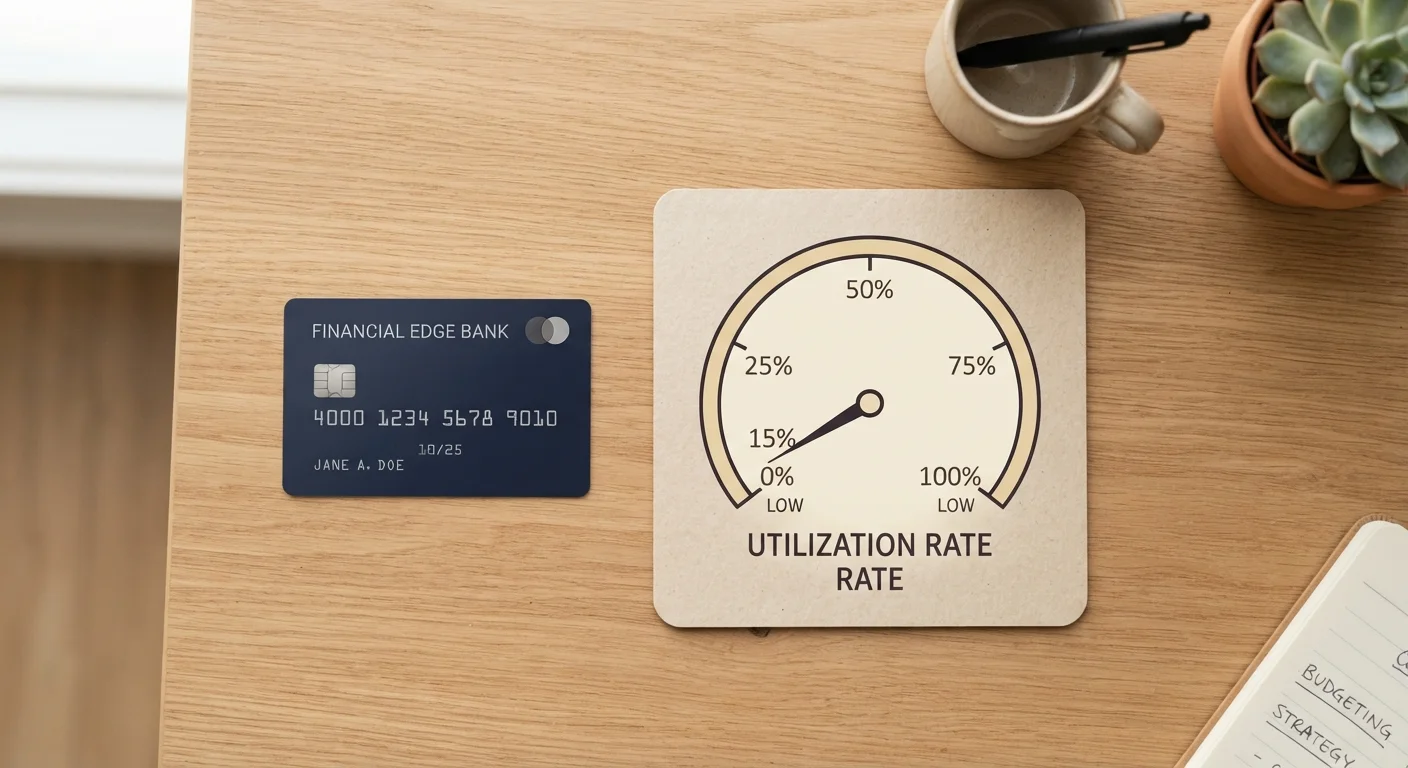
Credit utilization is the percentage of your total available revolving credit that you are currently using. It is calculated by dividing your total credit card balances by your total credit limits across all cards. For example, if you have $2,000 in balances and $10,000 in total limits, your utilization is 20%. Lenders and scoring models treat this ratio as a signal of how dependent you are on borrowed money.
Most scoring models - including FICO and VantageScore - weight utilization both at the aggregate level (all cards combined) and at the individual account level, so a single maxed-out card can hurt your score even if your overall ratio looks healthy.
Why Utilization Carries So Much Weight
When lenders evaluate your creditworthiness, they look beyond whether you pay on time. They also want to know how much of your available credit you're actually drawing on. That's exactly what credit utilization measures - and it carries more scoring influence than most people expect.
Under the FICO scoring model, utilization falls under the "amounts owed" category, which makes up approximately 30% of your score. Only payment history, at 35%, carries more weight. That means a high utilization ratio can significantly drag down an otherwise solid score - even if you've never missed a payment. To understand how this fits into the broader scoring picture, see our full breakdown of credit score factors.
~30%
Share of FICO score tied to amounts owed
The FICO scoring model assigns roughly 30% of its weighting to the "amounts owed" category, of which credit utilization is the dominant component.
<10%
Utilization ratio among highest scorers
Consumers with FICO scores above 800 typically maintain aggregate credit utilization well below 10%, according to published FICO score data.
30%
Commonly cited utilization threshold
Staying below 30% utilization is a widely referenced guideline among credit educators, though lower ratios generally correlate with better scores.
Scoring models view high utilization as a potential sign of financial stress - someone leaning heavily on credit may be at greater risk of missing future payments. This is why reducing your balances can produce a faster score improvement than almost any other action.
How Utilization Is Actually Calculated
The math is straightforward. Divide your total revolving balances by your total revolving credit limits, then multiply by 100 to get a percentage. If you have three cards with a combined limit of $15,000 and you're carrying $4,500 in balances, your aggregate utilization is 30%.
But scoring models don't stop there. They also evaluate utilization on each individual card. A card that is 90% utilized can hurt your score even if your aggregate ratio is low. This means spreading balances across multiple cards - rather than concentrating debt on one - may be marginally beneficial, though paying balances down is always the more effective solution.
Check Your Statement Closing Date
Your credit card's statement closing date - not your payment due date - is typically when your issuer reports your balance to the credit bureaus. If you want to lower your reported utilization, aim to pay down your balance before that closing date each month. You can usually find your closing date on your statement or in your card issuer's online portal.
One detail that catches many people off guard: the balance that gets reported to credit bureaus is usually the statement balance on your closing date - not necessarily what you owe on your due date. If your statement closes with a $3,000 balance and you pay it in full two weeks later, the $3,000 was already reported. Paying before your statement closes, when possible, can result in a lower reported balance and a better-looking utilization ratio.
Common Situations That Spike Your Ratio
Utilization can rise quickly in ways that aren't always obvious. Understanding these scenarios helps you avoid unintentional score damage.
- Large one-time purchases: Charging a vacation, home repair, or medical expense to a single card can temporarily push that card's utilization near its limit - even if you plan to pay it off immediately.
- Closing a card: Eliminating a card with a high limit shrinks your total available credit. If your balances stay the same, your ratio rises. This is a common pitfall discussed further in our guide on habits that quietly damage your credit.
- Issuer-initiated limit reductions: Card issuers sometimes lower limits - particularly during periods of economic uncertainty - without the cardholder requesting it. This can raise your utilization overnight.
- Opening a new card and shifting spending: Concentrating purchases on a new rewards card while the others sit idle can raise individual card utilization even if your aggregate looks fine.
Practical Ways to Lower Your Utilization
Because utilization is calculated using currently reported balances, improvements can show up in your score relatively quickly - often within one to two billing cycles after a lower balance is reported. Here are the most effective approaches:
- Pay down existing balances: The most direct method. Even a partial paydown lowers both your aggregate and per-card ratios.
- Request a credit limit increase: If your issuer approves a higher limit and your spending stays constant, your ratio drops. Be aware this may involve a hard inquiry on your report.
- Strategically time your payments: If you know your statement closes on a specific date, consider making a payment before that date to reduce the balance that gets reported.
- Avoid closing unused cards: Unless there is a compelling reason (such as an annual fee you can't justify), keeping old accounts open preserves your available credit and your utilization ratio. For a broader annual review of your credit accounts, our annual credit health checklist can help.
This article is for general informational and educational purposes only and does not constitute personalized financial advice. Consult a qualified financial professional for guidance specific to your situation.