

Key Takeaways
- Payment history is the single most influential factor, accounting for roughly 35% of a FICO Score.
- Credit utilization - how much of your available credit you're using - makes up about 30% of the score.
- A credit score is calculated from the data in your credit report, not from your income or assets.
- Multiple scoring models exist; the score a lender sees may differ from the one you check yourself.
- Even small, consistent habits - like paying on time - have a measurable, compounding effect over months.
Credit Score
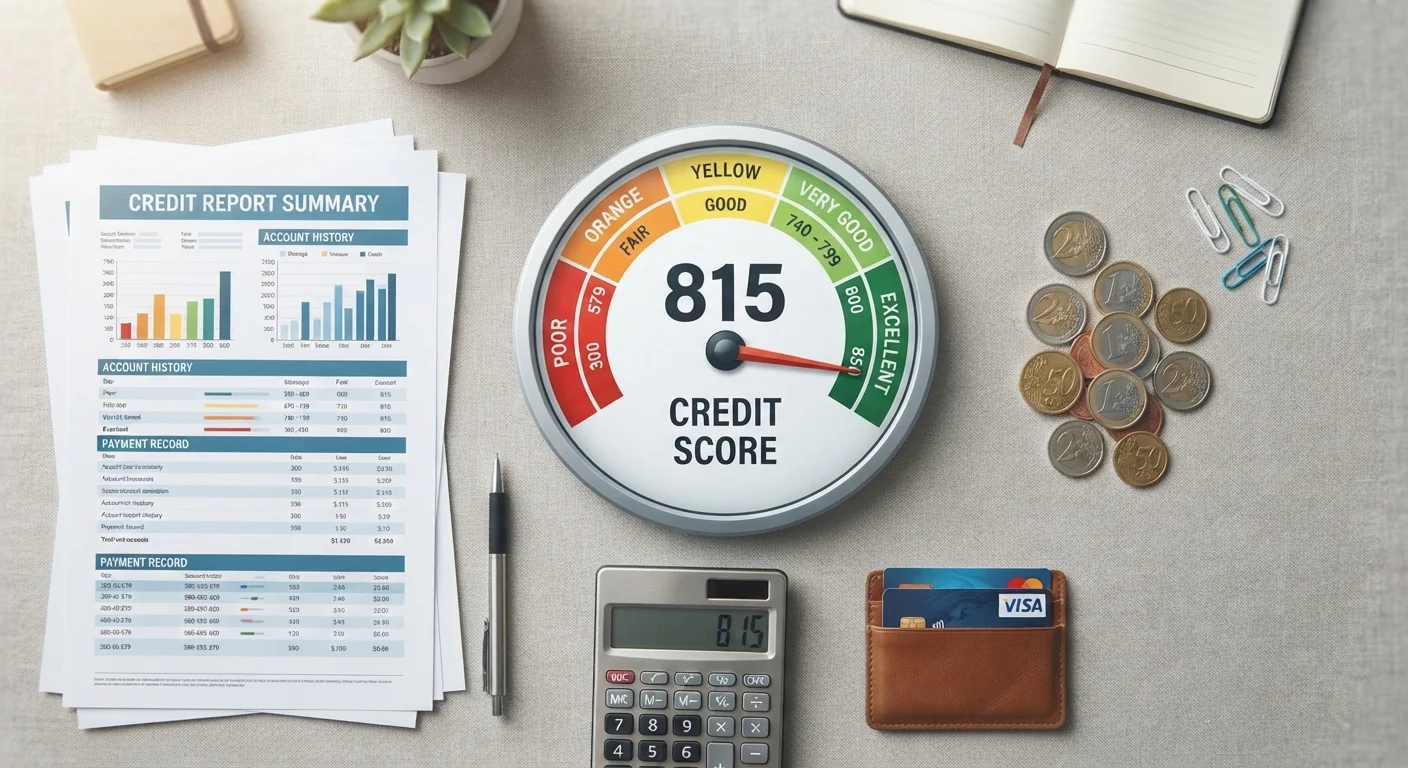
A credit score is a three-digit number, typically ranging from 300 to 850, that summarizes how reliably a person has managed borrowed money over time. Lenders use it to quickly assess the likelihood that a borrower will repay a new debt on schedule. The higher the number, the lower the perceived lending risk.
The most widely used scoring model in the U.S. is the FICO Score, developed by Fair Isaac Corporation, though VantageScore is also used by many lenders. Each model weights credit report data somewhat differently.
Where the Number Comes From
A credit score isn't generated by a bank or a government agency - it's produced by a scoring company using a formula applied to your credit report data. The most prevalent model in lending decisions is the FICO Score, which reads the information compiled by the three major credit bureaus: Equifax, Experian, and TransUnion.
Because each bureau may hold slightly different account data, you technically have multiple scores at any given moment. The score a mortgage lender pulls may differ from the one shown on a personal finance app. Neither is wrong - they're using the same underlying logic on slightly different datasets.
For a score to be calculated at all, your credit file generally needs at least one account that is six months or older and has been reported to the bureau within the past six months. Before that threshold, you're considered "unscorable." See our plain-language walkthrough of every credit report section to understand exactly what data feeds into this process.
The Five Factors - and How Much Each One Weighs
FICO organizes credit score inputs into five categories, each weighted by its predictive power for future repayment behavior:
35%
Weight of payment history in FICO Score
According to FICO's publicly published score factor breakdown, on-time payment history carries more weight than any other single category.
30%
Weight of credit utilization in FICO Score
FICO's model treats the ratio of balances to credit limits as the second-largest predictor of repayment behavior.
300-850
Standard FICO Score range
The base FICO Score scale has been used by lenders in the U.S. since the late 1980s and remains the dominant model in consumer lending.
- Payment history (≈35%): Whether you pay on time is the most influential variable. A single missed payment - especially one that goes 30 days past due - can cause a meaningful score drop that lingers for years.
- Amounts owed / credit utilization (≈30%): This measures how much of your revolving credit limits you're currently using. High utilization signals financial strain even if you pay your bills in full. Credit utilization shifts fast and is one of the levers most responsive to short-term action.
- Length of credit history (≈15%): Longer track records give the model more data to assess reliability. This includes the age of your oldest account, your newest account, and the average across all accounts.
- Credit mix (≈10%): A combination of revolving credit (credit cards) and installment loans (auto, mortgage, student loans) is viewed more favorably than relying on a single type.
- New credit / recent inquiries (≈10%): Applying for several new accounts in a short window can signal financial stress. Hard inquiries typically lower scores by a few points temporarily.
These percentages are approximate and can shift depending on the overall profile - someone with a thin credit file may see factors weighted differently than someone with decades of history.
What a Credit Score Does Not Measure
Understanding the score's limits is just as important as understanding its inputs. A credit score does not factor in your income, savings, retirement balances, investment portfolio, or current employment status. A high earner with poor repayment habits will have a low score; someone with modest income and disciplined credit use will likely have a high one.
The score also doesn't measure your overall financial health - it measures one specific behavior: how reliably you repay borrowed money. That's why lenders pair the score with other data (income verification, debt-to-income ratio, employment history) when making final decisions on larger loans like mortgages.
Scores Vary by Model and Version
FICO alone has released multiple scoring versions (FICO 8, FICO 9, FICO 10), and lenders are not required to use the most current one. Mortgage lenders, for example, still commonly use older FICO versions. VantageScore, a competing model jointly developed by the three credit bureaus, uses the same 300-850 range but weights factors slightly differently. This is why the same borrower can legitimately see different scores from different sources.
Many consumers are surprised to learn that widely circulated beliefs about score mechanics are simply inaccurate. For a closer look at harmful misconceptions, see credit score myths that cost people money.
Why Lenders Treat It as a Snapshot
The word "snapshot" is apt: your score reflects your credit file on the day it's pulled, not a permanent judgment. This means scores can improve - sometimes meaningfully - when underlying data changes. Pay down a high balance, and utilization drops. Get past the seven-year mark on a derogatory item, and it falls off the report entirely.
“Credit scores are fundamentally about predicting future behavior from past behavior. The model doesn't know your circumstances - it knows your pattern.”
— Consumer Financial Protection Bureau, U.S. federal agency overseeing consumer financial products and services
Thinking of the score as a living summary, rather than a fixed grade, changes how most people approach credit management. The habits that build a strong score - paying on time, keeping balances low, avoiding unnecessary new applications - tend to reinforce each other over time, creating a compounding effect that benefits borrowers across every major financial decision they make.
This article is for general informational purposes only and does not constitute financial or legal advice. Consult a qualified financial professional for guidance tailored to your specific situation.