

Key Takeaways
- Suction wattage measures motor power, not cleaning effectiveness on real floors.
- Brush roll design and airflow path determine how well debris is actually lifted.
- Filtration quality affects air quality in your home, not just what stays in the bin.
- Sealed system design matters as much as filter rating for allergen control.
- Maintenance gaps - dirty filters, full bins - can reduce real-world suction by half.
The Number on the Box Isn't the Performance of the Machine
Walk through any appliance aisle and vacuum boxes compete on a single dimension: power. Wattage figures, Pascal ratings, and suction pressure numbers dominate the packaging. The implicit promise is straightforward - bigger number, cleaner floor. That assumption is wrong, and understanding why can save you from buying a machine that underperforms in your home.
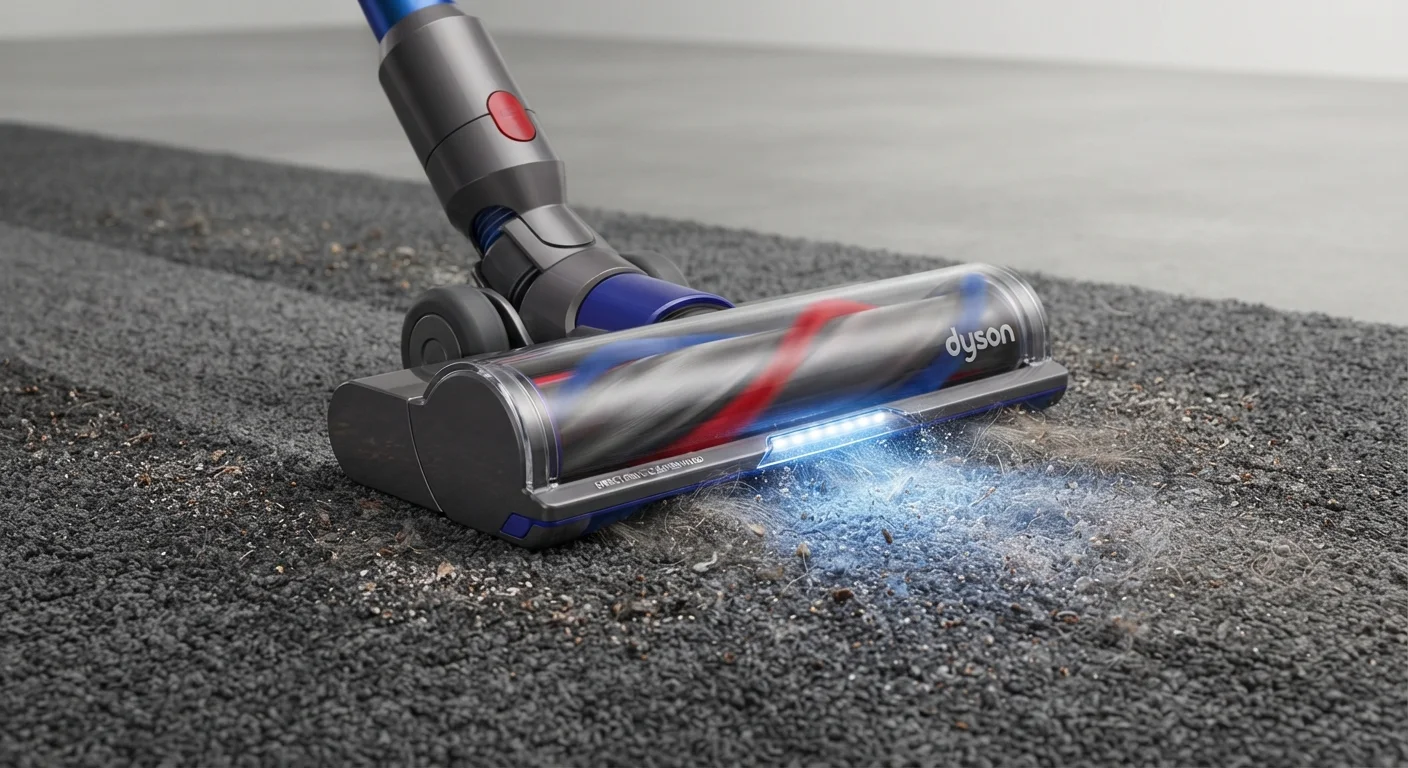
Vacuum performance is the product of at least four interacting factors: motor power, airflow path efficiency, brush roll mechanics, and filtration integrity. A high-wattage motor paired with a poorly designed airflow path - full of tight bends, cheap seals, and unnecessary transitions - may deliver less cleaning at the nozzle than a mid-range motor in a well-engineered housing. The motor rating tells you how much electricity the machine consumes, not how much of that energy reaches the floor.
Wattage Is Not a Cleaning Rating
Vacuum manufacturers are not required to standardize suction measurements, so wattage, airwatts, and Pascal ratings are calculated differently across brands. A higher number from one manufacturer may represent less real-world cleaning power than a lower number from another. Always look beyond the single headline spec before evaluating a vacuum's performance.
Common Mistakes Shoppers Make When Evaluating Vacuums
Most purchasing errors come down to evaluating a vacuum on one spec while ignoring the system it belongs to. The mistakes below are consistent patterns - understanding them helps you ask better questions before committing to a machine.
Choosing a vacuum based solely on suction wattage or motor power rating.
Why it happens: Marketing materials prominently feature large numbers - 2,000W, 25,000 Pa - because they're easy to compare at a glance. Shoppers reasonably assume a higher number means a better clean.
Ignoring brush roll design when selecting a vacuum for carpeted floors.
Why it happens: The brush roll is less visible in product listings than the motor spec, and its engineering is harder to communicate in a bullet point.
Overlooking whether the vacuum has a sealed filtration system.
Why it happens: Buyers often focus on whether a filter is labeled HEPA without checking if the entire vacuum body is sealed against air leaks.
Neglecting regular filter and bin maintenance, then blaming the vacuum.
Why it happens: It's easy to forget maintenance intervals, and many users don't realize how dramatically a clogged filter or full bin affects real-world airflow.
Assuming one vacuum type handles all floor surfaces equally well.
Why it happens: Versatility claims in marketing imply a single vacuum does everything, so buyers don't investigate surface-specific performance.
What Actually Predicts Real-World Cleaning Performance
Independent testing organizations - including consumer advocacy groups and engineering labs - evaluate vacuums by measuring the percentage of embedded test particles removed from standardized carpet samples, fine dust pickup on hard floors, and particle emissions from the exhaust. These metrics correlate poorly with wattage claims.
Airflow, measured in cubic feet per minute (CFM), is a more meaningful number because it reflects how much air volume the machine moves through the cleaning head. High airflow combined with appropriate brush agitation physically transports debris from the surface into the bin. Low airflow, regardless of motor size, leaves debris behind.
~40-50%
Suction loss from a clogged filter
Maintenance data from vacuum engineering studies consistently shows that filter restriction at half-capacity can cut effective airflow by nearly half.
CFM
Airflow - the more meaningful spec
Cubic feet per minute (CFM) measures the volume of air moved through the nozzle and correlates more directly with debris pickup than wattage alone.
Filtration quality rounds out the picture. For households managing allergies or asthma, the question isn't just whether the floor looks clean - it's whether the vacuum redistributes fine particles into the air during operation. Understanding HEPA filtration standards is essential context here, particularly the distinction between a HEPA-rated filter and a fully sealed filtration system.
The most reliable approach is to treat manufacturer specs as a starting point, not a conclusion. Prioritize independent test data, match the vacuum's design strengths to your actual floor types, and build regular maintenance into your ownership plan from day one.