
The Household Cleaning Products You Can Safely Combine - and the Ones You Can't

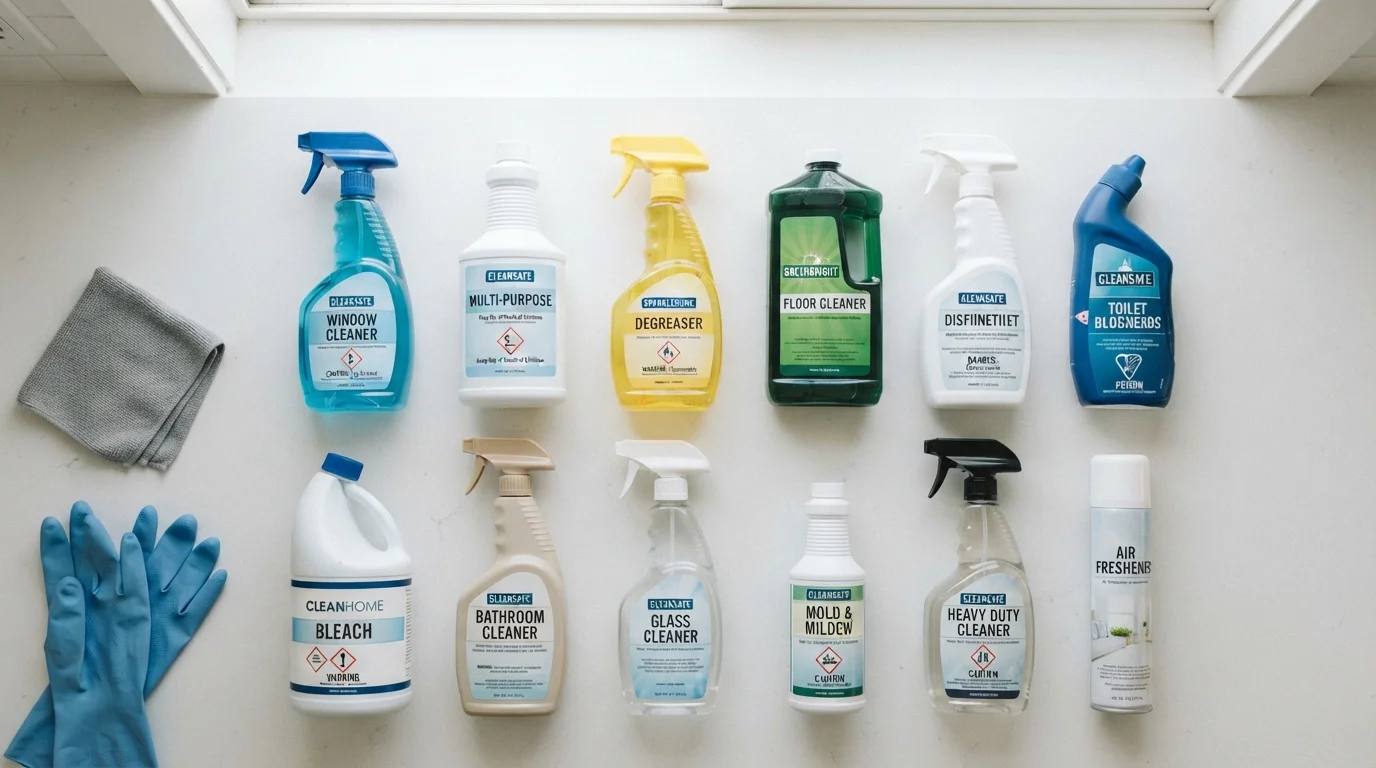
| Most dangerous single combination | Bleach + ammonia (produces chloramine vapors) |
| US Poison Control Center | 1-800-222-1222 (American Association of Poison Control Centers) |
| Common ammonia sources | Many glass cleaners, multi-surface sprays, some floor cleaners |
| Safe solo disinfectant | Diluted bleach or diluted hydrogen peroxide - never combined (CDC general guidance on household disinfection) |
| Ventilation requirement | Always ventilate when using any chemical cleaner |
Why Mixing Cleaning Products Is Riskier Than It Looks
Most people combine cleaning products for a practical reason: they want faster results or assume more ingredients means more cleaning power. In reality, mixing certain household chemicals can produce toxic gases, corrosive compounds, or violent reactions - none of which make your home cleaner or safer.
The risk isn't theoretical. Poison control centers in the US receive thousands of calls each year related to unintentional chemical exposures at home, and cleaning product combinations are a documented cause. Understanding the basic chemistry - without needing a lab degree - is a genuinely useful household skill.
For a broader look at how cleaning routines can be structured safely and efficiently, see Building a Home Cleaning Routine That Actually Sticks.
| Most dangerous single combination | Bleach + ammonia (produces chloramine vapors) |
| US Poison Control Center | 1-800-222-1222 (American Association of Poison Control Centers) |
| Common ammonia sources | Many glass cleaners, multi-surface sprays, some floor cleaners |
| Safe solo disinfectant | Diluted bleach or diluted hydrogen peroxide - never combined (CDC general guidance on household disinfection) |
| Ventilation requirement | Always ventilate when using any chemical cleaner |
The Combinations You Must Always Avoid
These pairings are well-established as hazardous based on known chemistry. They should never be used together, in the same space at the same time, or applied sequentially without thorough rinsing in between.
Bleach + Ammonia
This is among the most commonly encountered dangerous combinations in homes. Many glass cleaners, multi-surface sprays, and some floor cleaners contain ammonia. When ammonia and sodium hypochlorite (bleach) react, they produce chloramine vapors - irritating gases that cause respiratory distress, chest pain, and eye irritation even at low concentrations. Higher exposures can be seriously harmful.
Bleach + Acidic Cleaners (Vinegar, Lime Removers, Toilet Bowl Cleaners)
Mixing bleach with any acid - including white vinegar or commercial descalers - releases chlorine gas, which is highly toxic even in small amounts. This combination is particularly common because both vinegar and bleach are marketed as effective cleaning agents, leading some people to assume combining them amplifies the effect. It does not. It creates a health hazard.
Bleach + Rubbing Alcohol
Combining sodium hypochlorite with isopropyl or ethyl alcohol produces chloroform and other chlorinated compounds. These are toxic to the liver and kidneys and are classified as probable carcinogens. This reaction can occur when people try to make a stronger disinfectant by adding bleach to an alcohol-based spray.
Hydrogen Peroxide + Vinegar (Applied Together)
Used separately on a surface, each is effective. Mixed directly in one container or applied one immediately after the other without rinsing, they form peracetic acid - a corrosive compound that can irritate eyes, skin, and respiratory tissue. Letting one dry completely before applying the other substantially reduces this risk.
Chloramine vapor
A toxic gas produced when bleach reacts with ammonia. Even at low concentrations, chloramine vapors irritate the respiratory tract, eyes, and throat. Prolonged exposure can cause serious harm.
Chlorine gas
A yellow-green toxic gas released when bleach is mixed with acidic substances like vinegar. It was historically used as a chemical weapon and is dangerous even in small household quantities.
Peracetic acid
A corrosive compound formed when hydrogen peroxide and acetic acid (vinegar) are combined directly. It irritates the eyes, skin, and mucous membranes and should not be created unintentionally.
Sodium hypochlorite
The active ingredient in most household liquid bleach products. It is an effective disinfectant when used alone but reacts dangerously with ammonia, acids, and alcohols.
Surfactant
A compound that reduces surface tension between water and oils or dirt, helping cleaning solutions lift and remove grime. Dish soap is a common household surfactant.
What You Can Safely Combine
Not every combination is dangerous. Some pairings are genuinely practical and chemically stable.
A Note on "Natural" Cleaners
Products marketed as natural or eco-friendly are not automatically safe to combine with each other or with conventional cleaners. Vinegar (acetic acid) and hydrogen peroxide, for example, are both naturally derived but can form a corrosive compound when mixed directly. The same chemical rules apply regardless of how a product is marketed. Always check labels and treat any concentrated cleaner with appropriate caution.
- Dish soap + warm water: A reliable, low-risk general cleaner for most non-porous surfaces.
- Baking soda + dish soap: The mild abrasion of baking soda combined with surfactant action in dish soap works well for scrubbing sinks and tubs. No hazardous reaction occurs.
- Castile soap + water: Effective on many surfaces; mixing castile soap with other products (especially acids like vinegar) can break down its cleaning effectiveness, so water is the safest diluent.
- Commercial products as directed: Products formulated as ready-to-use or dilutable should be used according to label instructions - the manufacturer has already done the chemistry to ensure stability and efficacy at those ratios.
The safest general rule: use one product at a time, rinse surfaces thoroughly before switching products, and store chemicals in their original labeled containers. This mirrors the kind of careful, methodical thinking covered in our guide to managing kitchen hygiene risks.
Practical Safety Habits for Every Household
Chemistry knowledge is only useful if it translates into daily habits. A few straightforward practices significantly reduce your risk:
- Read product labels before every use - many include explicit warnings about incompatible products.
- Ventilate your space - open windows or run an exhaust fan when using any chemical cleaner, even individually.
- Never mix in closed containers - pressure can build rapidly and cause bottles to burst.
- Rinse surfaces between products - if you need to switch from one cleaner to another, rinse with water and allow to dry first.
- Store products separately - bleach-based products should not be stored directly next to acids or ammonia-based cleaners in case of accidental leakage.
- Contact Poison Control immediately if exposure occurs - in the US, the number is 1-800-222-1222. Don't wait for symptoms to worsen.
The same principle of understanding what goes together - and what doesn't - applies to product formulations in other contexts too. If you're interested in how ingredient interactions work in a different category, The Ingredients You Should Not Mix in the Same Routine covers similar logic for personal care products.
This article is intended for general informational purposes only. For questions about chemical exposures or poisoning, contact the US Poison Control Center at 1-800-222-1222 or your local emergency services. Do not rely on this article as a substitute for professional guidance in emergency situations.