

Key Takeaways
- The glycemic index measures how fast a food raises blood sugar, not how nutritious it is overall.
- Portion size, food combinations, and cooking method all affect a food's real-world blood sugar impact.
- Glycemic load is often a more practical measure because it accounts for typical serving sizes.
- GI is most clinically relevant for people managing diabetes or prediabetes, under professional guidance.
- A low GI score does not automatically make a food a healthy choice.
Glycemic Index (GI)
The glycemic index is a numerical ranking system that measures how quickly a carbohydrate-containing food raises blood glucose (blood sugar) levels compared to a reference food - typically pure glucose or white bread. Foods are scored on a scale of 0 to 100: low GI foods (55 or below) cause a slower, more gradual rise in blood sugar, while high GI foods (70 and above) cause a faster, sharper spike. Medium GI foods fall in between.
GI values are measured under controlled conditions using a fixed portion of digestible carbohydrate (usually 50g), and results can vary significantly between laboratories, ripeness of produce, and individual metabolic responses.
How the Glycemic Index Is Measured
To assign a GI value, researchers feed a group of volunteers a portion of a test food containing 50 grams of digestible carbohydrate, then measure their blood glucose at regular intervals over two hours. Those responses are plotted as a curve and compared against the same person's response to a reference food - usually pure glucose, which is assigned a GI of 100. The test food's score reflects the size of that blood sugar curve relative to glucose.
This standardized method has real value, but it also has well-documented limitations. GI values are averages drawn from small groups of people, and individual blood sugar responses to identical foods can vary considerably based on gut microbiome composition, stress levels, sleep quality, and metabolic health. Published GI tables give a useful directional signal, not a precise personal prediction.
GI Values Can Vary Between Sources
Different published GI tables sometimes report different values for the same food. This happens because GI is influenced by the specific variety of a food, its preparation, the reference food used, and the population tested. Treat any single GI value as an approximation rather than a fixed fact.
Glycemic Index vs. Glycemic Load: The More Complete Picture
One of the most common criticisms of GI is that it ignores how much of a food you actually eat. Watermelon has a GI of around 72 - technically high - but a standard slice contains so little carbohydrate per gram that its impact on blood sugar is modest. That's where glycemic load (GL) comes in.
Glycemic load is calculated by multiplying a food's GI by the grams of carbohydrate in a serving, then dividing by 100. A GL of 10 or less is considered low; 20 or more is high. This extra step makes GL a more realistic measure of how a typical portion will actually affect your blood sugar. When researchers study dietary patterns and long-term health outcomes, GL tends to be the more informative variable.
~55
GI threshold for 'low' classification
According to the international GI classification system used by researchers and dietitians, foods scoring 55 or below are categorized as low glycemic index.
72
Approximate GI of watermelon
Despite a high GI score, watermelon's glycemic load per standard serving is low - around 4 - because a typical portion contains relatively few grams of carbohydrate.
~40%
Variation in GI response between individuals
Research published in Cell (2015) by Zeevi et al. found that blood glucose responses to identical foods varied substantially between individuals, highlighting the limits of population-level GI tables.
When GI Actually Matters - and When It Doesn't
The glycemic index has genuine clinical relevance for certain groups. People living with type 2 diabetes or prediabetes may benefit from paying attention to GI and GL as part of a broader carbohydrate management strategy, always in consultation with a registered dietitian or physician. Some research also associates lower glycemic dietary patterns with reduced risk of developing type 2 diabetes in the first place, though diet quality as a whole is the stronger predictor.
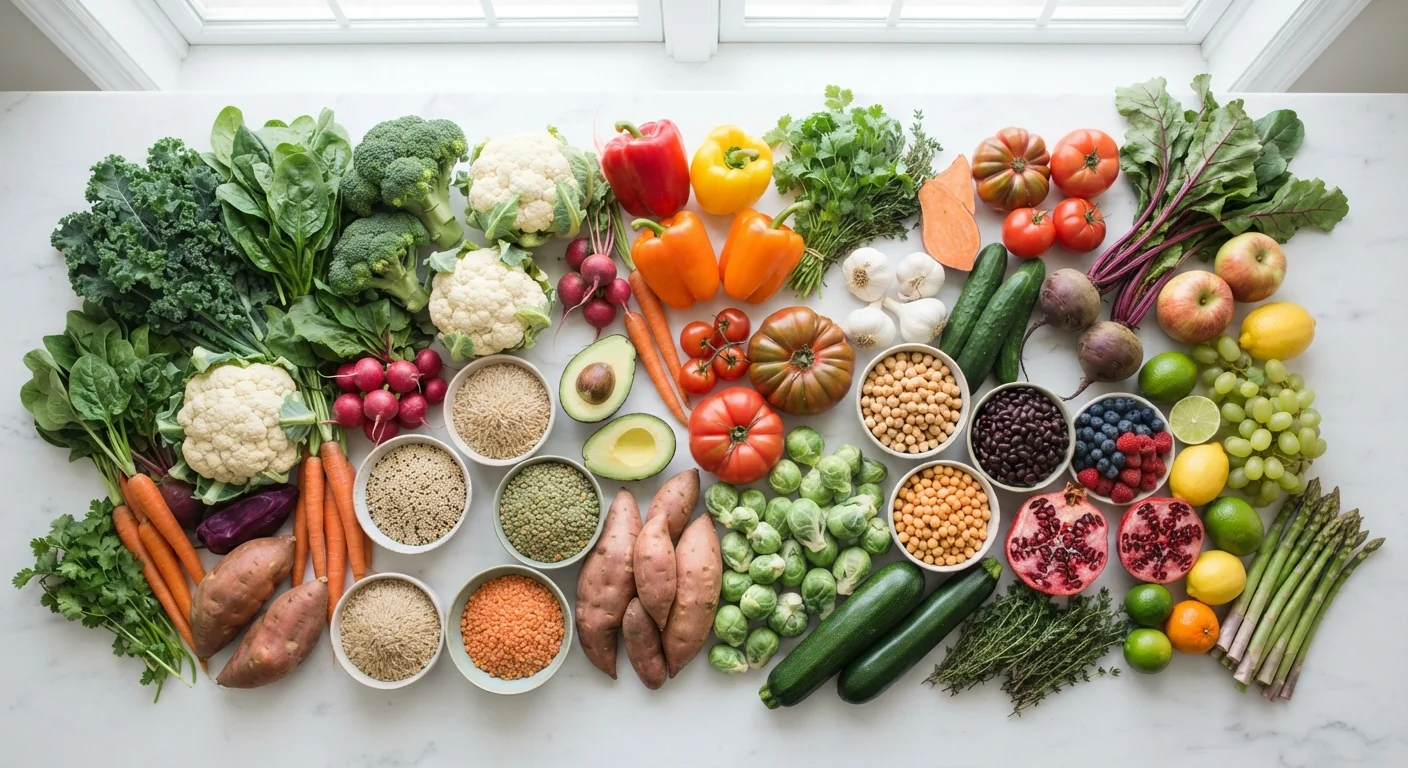
For the general healthy adult population, the evidence does not strongly support obsessing over GI numbers. A whole food diet built around vegetables, legumes, whole grains, and lean proteins will naturally trend low-to-moderate GI without requiring a lookup table. Fixating on GI can also create a misleading hierarchy: chocolate has a lower GI than some whole-grain breads, but that doesn't make it the smarter nutritional choice. Always consider fiber, micronutrients, and overall dietary pattern alongside any single metric.
To build a clearer picture of what you're eating, pairing GI awareness with strong nutrition label literacy gives you a much more complete toolkit.
Build Low-GI Meals Without a Chart
You don't need to memorize GI scores to eat in a lower-glycemic way. Fill half your plate with non-starchy vegetables, pair grains or starchy foods with a source of protein and healthy fat, and choose minimally processed whole foods most of the time. These habits naturally shift your meals toward a lower glycemic impact without requiring constant reference to a table.
Practical Factors That Change a Food's GI in Real Life
GI values published in tables are measured under controlled, isolated conditions - conditions that rarely reflect how people actually eat. Several everyday factors meaningfully shift a food's blood sugar impact:
- Food combinations: Eating carbohydrates alongside fat, protein, or fiber slows digestion and lowers the effective glycemic response of a meal.
- Cooking and processing: Longer cooking times generally raise GI. Whole oats have a lower GI than instant oats; al dente pasta ranks lower than soft-cooked pasta.
- Ripeness: Riper fruits typically have a higher GI than less ripe versions because starches have converted to simpler sugars.
- Cooling cooked starches: When starchy foods like potatoes or rice cool after cooking, some starch converts to resistant starch, which lowers GI.
Understanding these nuances helps explain why a rigid GI table can be a starting point rather than a final answer. Context - what else is on the plate, how the food was prepared, and the size of the portion - matters enormously.
This article is for general informational and educational purposes only and is not a substitute for professional medical or dietary advice. If you have concerns about blood sugar management or a related health condition, please consult a qualified healthcare provider.