

Key Takeaways
- Your premium can rise even if you haven't had an accident, ticket, or claim.
- Insurers factor in location, credit history, vehicle type, and broad market trends.
- Rising repair costs and increased claims across your region can push everyone's rates higher.
- Life changes - moving, adding a driver, or buying a new vehicle - trigger rate recalculations.
- Shopping your policy at renewal and asking about discounts are among the most effective ways to manage costs.
Insurance Premium Rate Factors
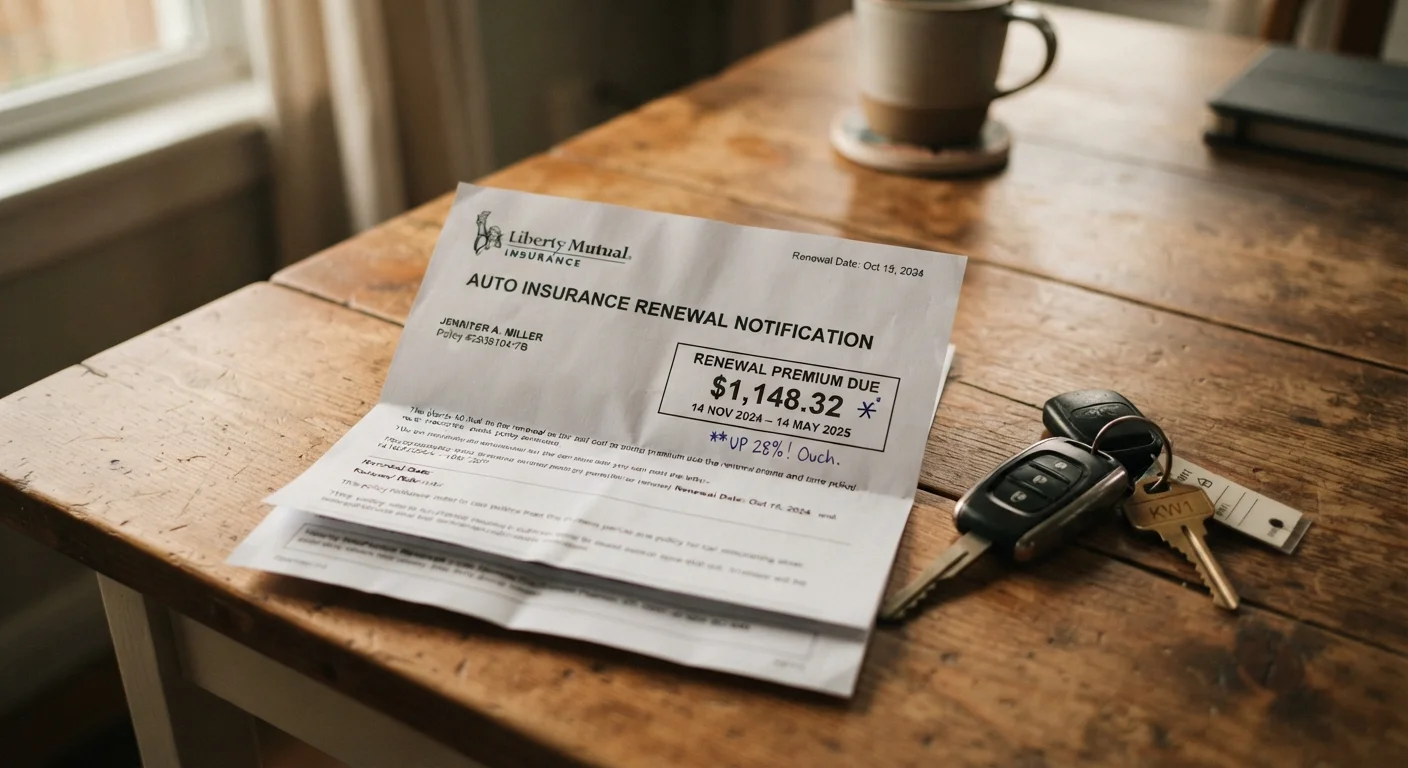
Car insurance premiums are calculated using a combination of personal, vehicle, and market-level data points that insurers use to estimate the likelihood and cost of future claims. When any of those inputs change - whether caused by your own driving record or by broader economic trends - your rate can move up or down at renewal. Many drivers are surprised to find that their premium increased even though they filed no claims and maintained a clean record.
Insurers use actuarial models that pool risk across large groups of policyholders. Individual rate changes are often influenced by statewide loss trends and regulatory filings, not just personal behavior.
The Variables Insurers Actually Weigh
Auto insurance pricing isn't a single calculation - it's a layered scoring process that draws on dozens of data inputs. Understanding the major categories helps explain why your quote looks different from one renewal to the next.
Driving record: Violations, at-fault accidents, and claims remain the most direct personal rate factors. A single at-fault collision can elevate your premium for three to five years, depending on your state and insurer. A DUI conviction typically triggers the largest individual surcharge and may last longer.
Credit-based insurance score: In most states, insurers use a version of your credit history - not your FICO score, but a related metric - as a predictor of future claims. If your credit profile deteriorated during the policy period, that alone can explain a rate change. A handful of states prohibit this practice entirely.
Vehicle: The make, model, age, safety ratings, and repair cost of your car all factor into the calculation. A vehicle with expensive parts, a high theft rate, or poor crash-test outcomes will generally cost more to insure than one with the opposite profile.
Coverage selections and limits: Higher liability limits, lower deductibles, and add-ons like roadside assistance or rental reimbursement each add to your base premium. See our breakdown of what each policy section covers for more on how coverage choices affect your overall cost.
~70%
Of U.S. states permit credit-based insurance scoring
The majority of states allow insurers to factor a credit-based score into auto insurance pricing, though regulations on its use vary by state.
3-5 years
Typical surcharge window for an at-fault accident
Most insurers apply a rate surcharge for at-fault accidents for three to five years, after which the incident typically no longer affects the premium.
40%+
Rise in vehicle repair costs over recent years
Industry data from multiple insurer filings and reports from the Insurance Information Institute reflect dramatic increases in average auto repair costs, driven largely by parts complexity and labor rates.
Market Forces That Raise Rates Without Any Fault of Yours
A significant share of recent premium increases across the country have had nothing to do with individual driver behavior. Several economy-wide forces have pushed insurers to file for rate increases in state after state.
Vehicle repair costs: Modern vehicles are increasingly equipped with advanced driver-assistance systems, cameras, sensors, and complex structural materials. Even a minor fender-bender can involve calibrating radar sensors or replacing reinforced bumper assemblies - dramatically raising repair costs compared to older, simpler vehicles.
Medical cost inflation: Bodily injury claims are a major component of insurer payouts. As healthcare costs rise, the average payout on injury claims rises with them, and that cost gets distributed across all policyholders in a region.
Weather and catastrophe exposure: Hail storms, flooding, and severe weather events have increased the frequency and severity of comprehensive claims in many parts of the country. If your region experienced significant weather events, regional loss ratios likely pushed rates higher - even for drivers who never filed a claim.
Regional claims trends: Insurers price by geography. If claim frequency or severity increases in your county or state - due to increased traffic, higher theft rates, or a rise in uninsured drivers - everyone in that pool can see a rate adjustment. This is why two identical drivers in different ZIP codes can pay very different premiums. Our article on common auto insurance myths addresses how many drivers misunderstand this geographic pricing logic.
“Insurance rates are fundamentally a reflection of what it costs to pay claims - and those costs have risen sharply in recent years due to factors entirely outside any individual policyholder's control.”
— Insurance Information Institute, U.S. insurance industry research and communications organization
Life Changes That Trigger a Recalculation
Even without a market shift or a driving record change, ordinary life events can cause your insurer to re-evaluate your risk profile at renewal.
- Moving: A new address - especially to a different ZIP code - resets your location-based risk factors entirely.
- Adding or removing drivers: Adding a teenage driver is one of the largest single-event premium triggers. Conversely, removing a high-risk driver from the policy can bring rates down.
- Change in vehicle: Buying a new or different car initiates a full rating for that vehicle's specific profile.
- Annual mileage changes: If you're now commuting farther or driving significantly more, higher annual mileage increases exposure - and your rate may reflect it. Our overview of the financial realities of high-mileage vehicles explores how usage intersects with insurance costs.
- Lapse in coverage: A gap in your insurance history - even a brief one - is treated as elevated risk by most insurers and can result in higher rates.
Set a Calendar Reminder Before Each Renewal
Give yourself at least 30 days before your policy renews to review your coverage, check your motor vehicle record for accuracy, and request competing quotes. Many insurers apply automatic renewals with rate increases that take effect without any active notification beyond a mailed or emailed notice. Acting ahead of the renewal date gives you leverage and options.
What You Can Actually Do About It
While some rate factors are outside your control, others are manageable with deliberate action.
Request an explanation: Ask your insurer to detail exactly what changed. Errors in your motor vehicle record or claims history do occur, and correcting them can reverse an unjustified increase.
Compare quotes at renewal: Loyalty doesn't always pay in insurance. Getting competing quotes at each renewal cycle is one of the most effective ways to ensure you're paying a rate consistent with the current market for your profile.
Ask about discounts: Many insurers offer discounts for bundling policies, completing a defensive driving course, maintaining low annual mileage, or installing a telematics device that monitors driving behavior. Not all discounts are advertised prominently.
Reconsider your coverage structure: If your vehicle has depreciated significantly, carrying comprehensive and collision coverage may no longer be cost-effective. Our article on when dropping full coverage makes sense walks through that calculation in detail. Be aware, though, that reducing coverage introduces gaps - something our guide on auto coverage gaps examines thoroughly.
This article is for general informational purposes only and does not constitute insurance or financial advice. Coverage terms, rating practices, and regulations vary by state. Consult a licensed insurance professional for guidance specific to your situation.