

Key Takeaways
- State-minimum liability limits are often far too low to cover serious accident costs.
- Rental reimbursement, gap coverage, and uninsured motorist protection are frequently excluded from standard policies.
- Personal property inside your vehicle is generally not covered under auto insurance.
- Reviewing your declarations page annually helps catch coverage gaps before a claim reveals them.
Why Standard Policies Aren't One-Size-Fits-All
Auto insurance is required nearly everywhere, but being insured and being adequately insured are two different things. A policy that satisfies your state's minimum requirements may leave you personally responsible for costs that far exceed your coverage limits - and most drivers only discover this after a claim is denied or a check falls short.
The structure of auto insurance invites these gaps. Policies are built from separate, stackable components - liability, collision, comprehensive, medical payments, uninsured motorist, and optional add-ons - and insurers don't always volunteer information about what you're missing. Understanding the most common oversights can help you have a more informed conversation with your insurer before an incident forces the discussion.
For a closer look at how two of the most commonly confused components actually work, see our guide on comprehensive vs. collision coverage.
Minimum Coverage Is a Floor, Not a Safety Net
Every state sets minimum liability requirements, but those thresholds were designed to satisfy legal requirements - not to fully protect you financially. A serious accident involving medical bills, lost wages, and vehicle damage can easily surpass state minimums by tens of thousands of dollars. The difference becomes your personal liability. Review your limits against realistic worst-case costs, not just legal compliance.
The Most Costly Coverage Gaps - and How to Close Them
The mistakes below represent the situations where drivers most often find themselves underprotected. Each one is preventable with a policy review and a candid conversation with your insurer.
Relying on state-minimum liability limits and assuming they're adequate protection.
Why it happens: Drivers often select the cheapest policy that satisfies legal requirements without considering what a serious at-fault accident could actually cost.
Not carrying uninsured or underinsured motorist coverage, leaving you exposed when the at-fault driver has no insurance.
Why it happens: This coverage is optional in many states, so it's easy to drop it to lower premiums without fully understanding the risk.
Assuming comprehensive and collision coverage protects personal belongings stolen from or damaged inside the vehicle.
Why it happens: The word 'comprehensive' implies broad protection, which leads many drivers to believe it extends to laptops, clothing, or tools left in the car.
Skipping gap coverage on a financed or leased vehicle, not realizing insurance pays market value - not what you owe.
Why it happens: Buyers focus on monthly loan or lease payments and don't consider that a new car's market value drops quickly while the loan balance stays higher.
Overlooking rental reimbursement coverage and being surprised by out-of-pocket costs while your car is being repaired.
Why it happens: Rental reimbursement is a low-cost optional add-on that doesn't seem urgent - until a repair takes a week or two and daily rental fees add up fast.
It's also worth periodically reconsidering how much coverage makes sense for your vehicle's current value. Our article on when dropping full coverage makes sense walks through the financial factors that inform this decision.
1 in 8
U.S. drivers estimated to be uninsured
According to the Insurance Research Council, roughly one in eight motorists on American roads carries no auto insurance, creating direct exposure for other drivers without uninsured motorist coverage.
20%+
Typical new-car depreciation in year one
Industry data consistently shows new vehicles can lose more than 20% of their value in the first year, creating a gap between market value and outstanding loan balances that standard policies do not bridge.
Reviewing Your Policy Before You Need It
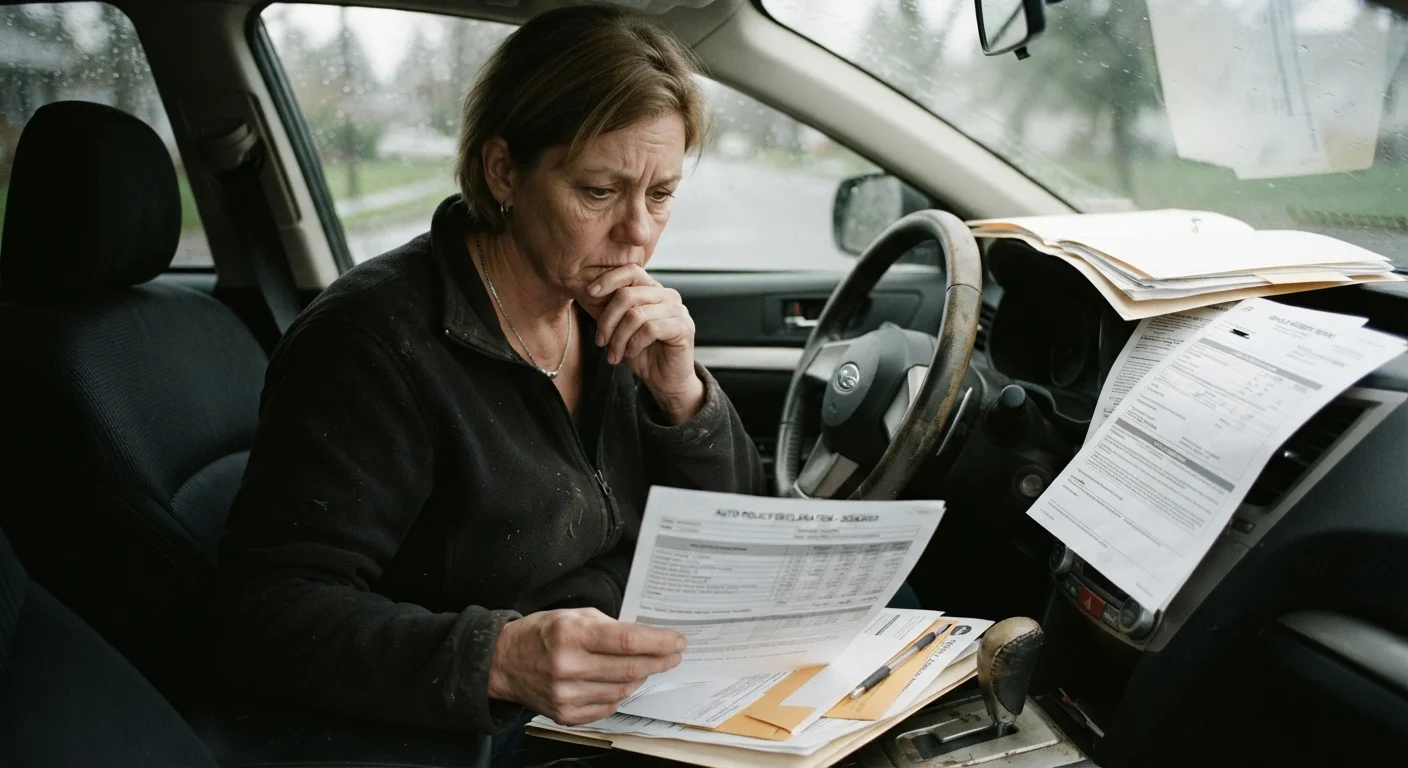
The declarations page - the summary document at the front of your policy - is the clearest place to see exactly what coverage you carry and at what limits. Reading it once a year, especially at renewal, takes less than 15 minutes and can surface gaps before they become expensive surprises.
Gaps Surface at Claim Time - Not Before
Most drivers don't discover what their policy doesn't cover until they file a claim. By then, the financial damage is already done. Reading your declarations page and speaking with your insurer about exclusions before an incident is the only reliable way to know where you stand. Don't assume a policy feature is included - verify it in writing.
When your situation changes - buying a new car, adding a teen driver, moving to a different state, or financing a vehicle - treat it as an automatic trigger to re-examine your coverage. If a claim does arise, understanding the process in advance helps you navigate it without compounding the problem. Our walkthrough on filing an auto insurance claim without making things worse covers what to expect from documentation through settlement.
This article provides general information about auto insurance concepts and is not a substitute for advice from a licensed insurance professional familiar with your specific policy and circumstances. Coverage terms, exclusions, and requirements vary by state and insurer.