

Key Takeaways
- Inspection requirements and covered items differ significantly from state to state.
- Safety inspections focus on brakes, tires, lights, steering, and structural components.
- Emissions inspections read your car's onboard diagnostic (OBD-II) system and measure exhaust output.
- A check engine light alone can cause an automatic emissions failure in many states.
- Addressing small maintenance issues before your appointment reduces the chance of a costly re-inspection.
Annual Vehicle Inspection
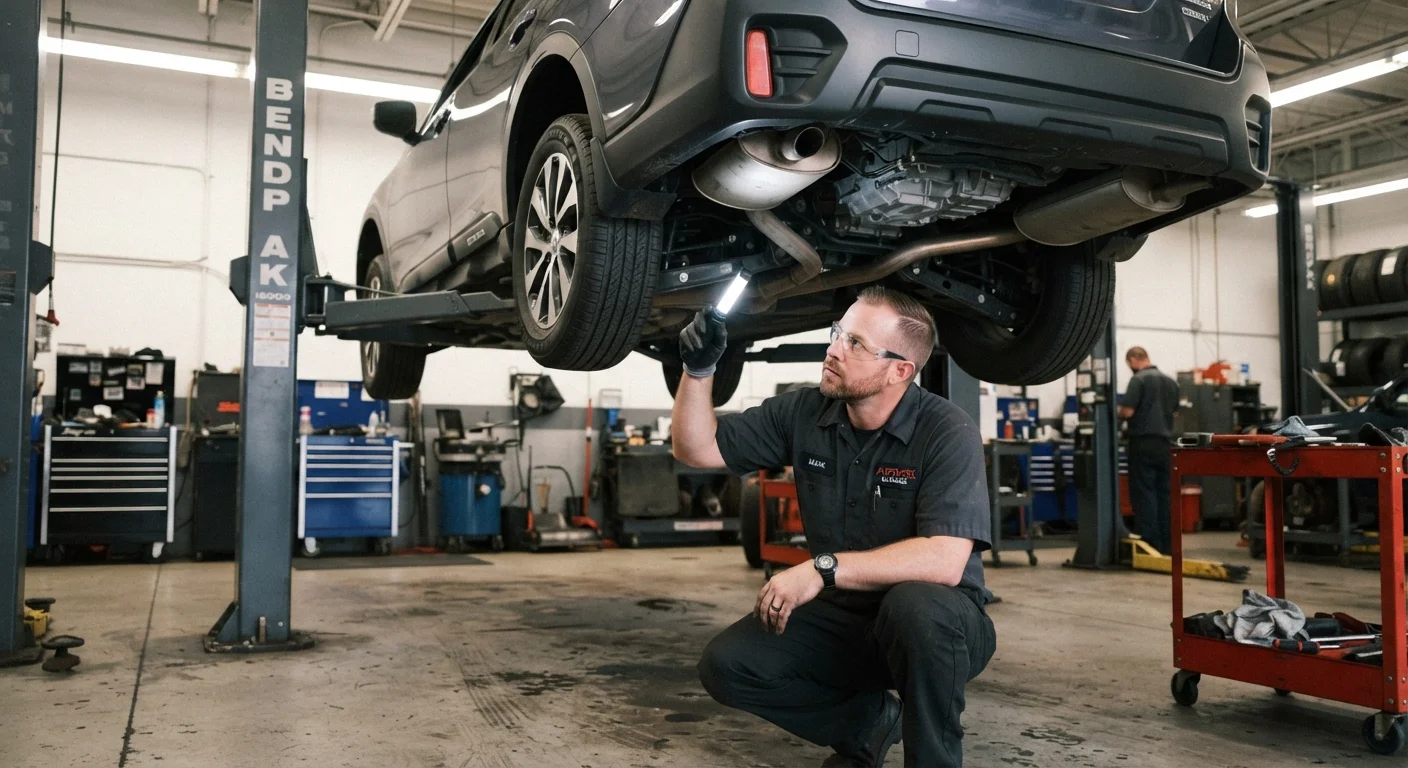
An annual vehicle inspection is a government-mandated evaluation of your car's safety systems and, in many states, its emissions output. A licensed inspector runs through a standardized checklist to confirm your vehicle meets minimum road-safety standards. Passing earns you a sticker or certificate required to legally register and operate the vehicle.
Inspection requirements, fees, and covered items vary by state. Some states have no mandatory inspection program at all, while others combine safety and OBD-II emissions diagnostics into a single appointment.
Why Inspection Programs Exist
State vehicle inspection programs have one core purpose: to keep demonstrably unsafe vehicles off public roads. A car that looks fine from the outside can have worn brake pads, cracked steering components, or exhaust emissions well above legal limits - hazards invisible to other drivers. Regular, standardized inspections create a baseline floor of roadworthiness that private maintenance habits alone can't guarantee across an entire driving population.
Emissions programs serve a parallel goal: reducing the pollutants that contribute to air quality problems, particularly in metropolitan areas. The federal Clean Air Act gives states flexibility in how they structure these programs, which is why your inspection experience in New Jersey looks nothing like one in Texas - or may not exist at all if you live in a state with no mandatory program.
Not Every State Runs the Same Program
Some states require both safety and emissions inspections annually; others require only one or neither. A handful of states conduct emissions testing only in specific counties with air quality concerns. Always check your own state's department of motor vehicles website for the exact requirements, intervals, and fees that apply to your vehicle type and registration location.
What Safety Inspections Cover
Safety inspection checklists vary by state, but they draw from a consistent set of vehicle systems that directly affect the ability to control and stop a car:
- Brakes: Inspectors measure brake pad and rotor thickness and check brake lines for leaks or corrosion. Hydraulic brake fluid condition may also be noted, though a deep fluid analysis isn't typically part of the check. For more on fluid basics, see our Car Fluids 101 guide.
- Tires: Tread depth is checked against the state minimum - commonly 2/32 of an inch - and tires are examined for visible sidewall damage, bulges, or uneven wear.
- Lights: Every exterior light must function: headlights (low and high beam), taillights, brake lights, turn signals, hazard lights, and reverse lights.
- Steering and suspension: Inspectors check for excessive play in the steering wheel and worn suspension components such as ball joints, tie rods, and wheel bearings.
- Windshield and wipers: The windshield must be free of cracks in the driver's line of sight, and wipers must clear the glass effectively.
- Horn and mirrors: Both side mirrors and the horn are confirmed functional.
Do a Light Check the Night Before
Park in front of a wall or garage door and walk through every exterior light: headlights on low and high beam, brake lights (use a friend or a brick against the pedal), turn signals front and rear, and reverse lights. Catching a burned-out bulb the night before costs you a few dollars; catching it at the inspection station costs you the inspection fee and a return trip.
If your car has been showing subtle signs of mechanical wear - vibrations, pulling to one side, or a spongy brake pedal - address those before inspection day, not after.
How Emissions Testing Works
Modern emissions testing in most states relies primarily on the OBD-II (On-Board Diagnostics) port, which has been standard on all U.S. passenger vehicles since 1996. An inspector plugs a scan tool into the port, usually located beneath the dashboard on the driver's side, and reads the system's readiness monitors - internal self-tests the vehicle's computer runs continuously.
If too many monitors show as "not ready" (which can happen after a recent battery disconnect or repair), the vehicle may be turned away even without a fault. This catches drivers who might clear warning codes just before an appointment.
~25
U.S. states with active emissions programs
The EPA notes that vehicle emissions testing programs are concentrated in areas with air quality challenges, leaving roughly half of states without mandatory testing.
2/32"
Common minimum tire tread depth for inspection
Most states that check tires use 2/32 of an inch as the legal minimum, though safety organizations generally recommend replacing tires before they reach that point.
Older or high-emission-area programs may also use a tailpipe probe to directly measure exhaust gases such as hydrocarbons, carbon monoxide, and oxides of nitrogen. Diesel vehicles often face opacity (smoke) tests rather than OBD-II scans.
How to Arrive Ready
The single most effective pre-inspection step is to address any active warning lights before your appointment. A check engine light, in particular, is nearly always an automatic emissions failure. Have the diagnostic code read at an auto parts store (many do this free) so you know what you're dealing with.
Walk around your car and test every exterior light yourself. Replace any burned-out bulbs - they cost a few dollars and take minutes. Check tire pressure and look at tread depth with a quarter: if the top of Washington's head is visible when inserted into a tread groove, the tires are likely borderline or worse.
For a thorough pre-inspection routine, the road trip preparation checklist covers the same mechanical systems inspectors evaluate, making it a practical double-use resource.
This article provides general educational information about vehicle inspection programs and is not a substitute for guidance from a licensed mechanic or your state's official inspection authority. Requirements vary by location - always verify current rules with your state's motor vehicle agency.